Northumbria's world-leading research showcased to UK's national science funders
The governing body of UK Research and Innovation (UKRI) has visited Northumbria University…
International
Ideally situated in the 5th best student city in the UK (QS Best Student Cities 2026), Northumbria University is a UK Top 40 University (Complete University Guide 2026) with a diverse community of 34,500 students from over 140 countries.
View our Global FootprintBusiness
Northumbria University is proud to offer a range of Professional, Statutory and Regulatory Body (PSRB) approved & accredited courses and programmes. Explore our list of courses and programmes under our Education and Training page.
More on our Business ServicesResearch
Northumbria is a research-rich, business-focused, professional university with a global reputation for academic quality. We conduct ground-breaking research that is responsive to the science & technology, health & well being, economic and social and arts & cultural needs for the communities
Discover more about our ResearchAlumni
Northumbria University is renowned for the calibre of its business-ready graduates. Our alumni network has over 253,000 graduates based in 178 countries worldwide in a range of sectors, our alumni are making a real impact on the world.
Our AlumniThe Data-Driven Discovery and Informatics (3DI) Group brings together researchers from diverse disciplines within the Department of Applied Sciences, including bioinformatics, genomics, spectrometry, chemi-informatics and forensic science. We apply computational methods and data analysis techniques to large and complex datasets to uncover novel insights, develop innovative tools, and drive scientific progress.
Through using cutting-edge computational tools and algorithms, the analysis of big data enables the identification of patterns and corrrelations that would be difficult to identify using traditional experimental methods. Key areas of research include:
Genomics
•Method development for population genetics and genome-wide analysis
•Application of these methods to improve human health outcomes.
Bioinformatics
•Development of tools for systems biology research
•QTL analysis in agriculture and models of obesity
•Analysis of big data for translational oncology.
•Development of software and infrastructure for microbiome analysis and their application for better living.
Chemo-informatics
•Computational modelling of self-assembly processes in ordered materials and rationalising experimental trends in ordered systems using computational methods
Forensic Science
•Proteomics and methylomics for age-at-death and post-mortem-interval estimation
•Development of statistical frameworks for analysing forensic data
The group is inherently interdisciplinary and works closely with other research groups from Northumbria University and elsewhere to tackle complex scientific questions.
The governing body of UK Research and Innovation (UKRI) has visited Northumbria University…

Northumbria University has announced that Professor Andy Dougill will become its new Deputy…

Northumbria University is expanding and enhancing the support it provides to students receiving…
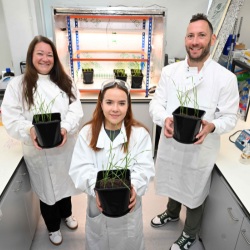
With the global population expected to reach 10 billion by 2050 and crop yields declining annually,…

An Assistant Professor at Northumbria University won the Royal Society of Chemistry’s Award…
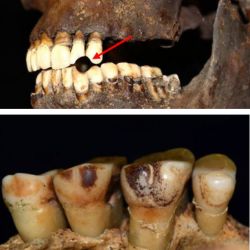
Researchers from Northumbria University have discovered that smokers have tell-tale signs of…