MA/MSc Product Design Futures
Part-Time
 Option for Placement Year
Option for Study Abroad

Option for Placement Year
Option for Study Abroad
The Product Design Futures course at Northumbria University is highly specialised in combining the creative elements of technology, engineering, creative expression, and business entrepreneurship into industrial design. It is designed to encourage a deep understanding of how our sustainable development challenges can be addressed by applying design-for-people-and-planet theory and methodologies to smart products and services supported by emerging technologies, with particular emphasis on AI.
On our Masters course, you’ll be encouraged to create better products, services, and business models that are needed to meet changing priorities in society.
Our course features two focused pathways:
1. MA Product Design Futures specialising in designing Services for connected futures
2. MSc Product Design Futures specialising in designing Products for connected futures
MA Product Design Futures is designed for graduates with backgrounds in Arts, Social Sciences (such as Business), or Design. You will collaborate across disciplines, applying artistic, social, and business-innovation expertise to drive innovation in product and manufacturing service systems.
MSc Product Design Futures is designed for graduates with backgrounds in Engineering, Computing, or Design. You will collaborate across disciplines, applying digital and technological innovation expertise to drive innovation in smart products.
If you have a design background, you can choose either pathway to enhance your design knowledge, processes and skills by learning and integrating emerging technology (such as AI and Digital modelling) into your practice.
This course is also available as a full-time study.
Applicants should normally have:
A minimum of a 2:2 honours degree in design, Business, Engineering and computing or a related discipline. Applicants with appropriate work experience and/or a relevant professional qualification will be considered.
International qualifications:
If you have studied a non- UK qualification, you can see how your qualifications compare to the standard entry criteria, by selecting the country that you received the qualification in, from our country pages. Visit www.northumbria.ac.uk/yourcountry
English language requirements:
International applicants are required to have a minimum overall IELTS (Academic) score of 6.5 with 5.5 in each component (or approved equivalent*).
*The university accepts a large number of UK and International Qualifications in place of IELTS. You can find details of acceptable tests and the required grades you will need in our English Language section. Visit www.northumbria.ac.uk/englishqualifications
Full UK Fee: £9,950
Tuition fees in the academic year 2027/28* will be £10,050 (subject to Parliamentary approval, along with 2026/27 fees) Fees are set in line with the UK Government's tuition fee cap. The University may increase fees in subsequent years in line with any changes to the tuition fee cap. Increases will be linked to inflation. For example, increases may be linked to RPIX (Retail Price Index excluding mortgage interest payments) Students will be notified of any increase ahead of it taking effect. Student fee loans rise in line with the tuition fees cap.
*if your course is longer than one year
Full International Fee: £19,850
This is the tuition fee for your first year of study. You should expect to pay tuition fees for every year of study. The University may increase fees in the second and subsequent years of your course at our discretion in line with any inflationary or other uplift. Students will be notified of any increase ahead of it taking effect.
Scholarships and Discounts
ADDITIONAL COSTS
There are no Additional Costs
Module information is indicative and is reviewed annually therefore may be subject to change. Applicants will be informed if there are any changes.
DE7037 -
Design Futures with Emerging Technologies (Core,20 Credits)
This module will give you what you need to know to get to grips with design for the future. This will build on design thinking and how we can use design theory, methods, and practices to creatively shape the products, processes, and practices of tomorrow. You will bring together design processes, methods and practices to tackle real world challenges following the United Nations Sustainable Development Goals (SDGs), all in the context of shaping a positive future for people, place, and planet. This will culminate into a team project which may be a national or international design competition. You will come away with skills in:
Design methods and emerging technologies to realise innovative, future design solutions
Design thinking and creative design theory to develop and work with future design processes
Design methods for creativity and research to let you shape and thrive in future design practice
To support this, you will be taught a range of processes, methods, and reflective practices all informed by emerging technologies (such as AI), drawing on contemporary research in how design can contribute to a positive future. Further, you will explore how this knowledge can be adapted and applied effectively in contexts ranging from personal creativity to social missions, as well as more classic large- and small-scale business endeavours.
DE7039 -
Sustainable and Regenerative Design (Core,20 Credits)
Building on the foundation introduced in the Design Futures with Emerging Technologies module (DE7037), this module will equip you with the knowledge, skills, and mindset to address human interactions within complex systems while considering environmental impacts. You will explore sustainable and regenerative design solutions using a holistic, whole-systems approach that moves beyond sustainability, setting a new standard for ecological performance.
Your designs will not only minimize harm but actively work to regenerate the natural environment and enhance human well-being, reflecting a holistic worldview. Whether applied to architecture, product design, fashion, or other fields, regenerative design offers innovative solutions that are both functional and beneficial to the environment and society.
This module will incorporate guest lectures from academia and industry to introduce key principles and aspects of sustainable and regenerative design, including:
Product and service ecosystem thinking and lifecycle design principles
Circular economy concept
Environmental and ethical considerations in product design processes
Sustainable and regenerative design principles and methods
Resilience and adaptability in design.
You will work on a self-proposed project to practice and demonstrate the design awareness of UN sustainable development Goals (SDGs) and challenges. You will be learning how to respond to the SDGs through sustainable and regenerative design via a project report.
DE7041 -
Service Design (Optional,20 Credits)
Having the ability to research, explore, and discern what really matters to individuals is a fundamental skill in Industrial Design. This people-oriented approach serves as the foundation for crafting products that work beautifully and are loved-through-time. This person-centred mindset and the same iterative design capabilities of ideation, prototyping, testing and improving ideas are just as sought-after in contemporary service-development teams.
Throughout this module, you will harness your system-thinking ability to shape services and experiences in parallel to product innovation. Our project examples and briefs will focus on service design approaches and co-design methods, which are increasingly applied to the domain of health and wellbeing, and product lifecycle services.
Applying a range of Service Design methods, as well as stakeholder analysis, will develop your strategic thinking skills alongside your social and commercial acumen.
Through a project-based approach, you will realise your ideas as mock-ups and prototypes, both in print and digital formats, illustrating a series of touchpoints that service-users may encounter. These elements of the service will be positioned within an overarching service blueprint, summarising the systems and resources needed to deliver the service the way you have designed it.
The significance of qualitative research data as a catalyst for design methodologies will become evident.
Equipped with these skills, you will approach your projects with a design-with, rather than design-for, ethos, engaging stakeholders and end-users in the co-creation process. This philosophy of co-designing will deepen your commitment to the ethical and responsible practices that can shape better services.
DE7043 -
Experimental Generative Design (Optional,20 Credits)
This module will introduce you to designing at a higher level with a cross section of industry leading artificial intelligence tools which help to boost design experimentation, iteration and quality of final outcomes. You will gain an understanding and practical application of emerging generative AI and related design tools and models in relation to human-centred design principles. By exploring methods for understanding user needs, behaviours, and preferences (through techniques such as user research, personas, and empathy mapping) you will also learn how new tools can be critically incorporated into design practice based on your capabilities and willingness to integrate generative AI in your design practice. You will develop an understanding of both AI’s increasing potential and productivity but also its current limitations in terms of bias and error. Finally, you will learn to design with generative AI critically in order to mitigate against risks around privacy, transparency, accountability, unethical practices and the responsible use of AI in design projects.
The module will advance your skills:
Introducing design tools and software platforms that incorporate AI and emerging AI tools into the design workflow.
Using generative AI to produce creative outputs through design communication and development.
Critical AI output evaluation and incremental design improvement.
Employing AI as a speculative tool at different stages of the design process.
Discussing how AI can be leveraged to enhance user experiences and address user needs more effectively.
Through this module, you will develop the knowledge, skills, and mindset needed to thrive as designers in an increasingly AI-driven and technologically advanced world.
YB7000 -
Academic Language Skills for Design & Fashion (Core – for International and EU students only,0 Credits)
Academic skills when studying away from your home country can differ due to cultural and language differences in teaching and assessment practices. This module is designed to support your transition in the use and practice of technical language and subject specific skills around assessments and teaching provision in your chosen subject. The overall aim of this module is to develop your abilities to read and study effectively for academic purposes; to develop your skills in analysing and using source material in seminars and academic writing and to develop your use and application of language and communications skills to a higher level.
The topics you will cover on the module include:
• Understanding assignment briefs and exam questions.
• Developing academic writing skills, including citation, paraphrasing, and summarising.
• Practising ‘critical reading’ and ‘critical writing’
• Planning and structuring academic assignments (e.g. essays, reports and presentations).
• Avoiding academic misconduct and gaining credit by using academic sources and referencing effectively.
• Listening skills for lectures.
• Speaking in seminar presentations.
• Presenting your ideas
• Giving discipline-related academic presentations, experiencing peer observation, and receiving formative feedback.
• Effective reading techniques.
• Developing self-reflection skills.
• Discussing ethical issues in research, and analysing results.
• Describing bias and limitations of research.
DE7038 -
Research Through Design Practice (Studio) (Core,20 Credits)
In this studio-based practice module, you will explore the research-through-design approach to conducting design-based research, integrating design practice as a means of generating new knowledge, insights, or solutions. You will be introduced to various roles and frameworks for research, such as research on, through, and for design. Additionally, you will learn to address the challenges and conflicts that arise between smart products and AI in the design process, with a focus on aligning your work with the Sustainable Development Goals (SDGs) in both current and future projects.
The purpose of this module is to enable you to apply research-through-design practices to establish a clear direction for your Master's study by:
1. Developing a Personal Development Plan (PDP) at the start of the module. This plan will help you define your learning needs and professional goals as part of a strategy to implement throughout the programme. The PDP will be reviewed and updated, if necessary, at key stages of your learning journey.
2. Undertaking a self-directed industrial design project, which will be developed over the course of the module. This project will allow you to achieve specific aims outlined in your PDP.
Your PDP, while remaining flexible, will outline your aims and serve as the foundation for your studies throughout the programme. You will also develop the ability to articulate the value of your design interventions within the context of your future professional role.
DE7042 -
Design for Behaviour Change (Optional,20 Credits)
This module will introduce you to designing for behaviour change supported by relevant behavioural theory at the individual and social scale. You will explore how we might ethically shape a better future for individuals and society by effecting positive changes in behaviour. You will learn how to bring together human-centred design processes with insights from sociology and/or psychology to better tackle real world challenges through design. In particular, you will develop your skills in:
Understanding human behaviour in relation to design, from the individual scale to complex social systems
Design for behaviour change processes, relevant behavioural theory, methods, and evaluation approaches suitable for both business and non-commercial contexts, including:
Behavioural design and behavioural science principles and theories
How to identify relevant behaviours for change and positive target behaviours to be created
How different approaches, such as feedback and reinforcement, can positively help change behaviour
How these can be integrated with user-centred, user interface, and interaction design
To support this, you will be taught a range of processes, methods, and practices drawing on contemporary research on design for behaviour change. Further, we will explore how this knowledge can be adapted and applied effectively in light of ethical and social issues around behaviour change, to improve health, wellbeing, and generally help realize a positive future and sustainable development goals (SDGs).
DE7044 -
Smart Product Design and Practice (Studio) (Optional,20 Credits)
A smart product is an item or device that incorporates advanced technologies such as sensors, connectivity, and AI to enhance its functionality, automate tasks, gather and analyse data, and provide new features or services to users.
The smartness of a product can be measured across several dimensions including its connectivity, sensing, processing power, automation, artificial intelligence (AI) and machine learning (ML), User interface and experience, data privacy and security, energy efficiency and interoperability.
In this studio-based practice module, you will learn:
Integrated product and service system design across product lifecycle.
The key features of smart products, general smart product design principles, processes and methods.
Building connected devices via Open Hardware/IoT building such as ESP32 Arduino connected chip.
You will conduct self-motivated/chosen smart product design project.
The purpose of this module is to allow you to understand product-service system design along product lifecycle for sustainability and how to design connected products to make them smart along their product lifecycle.
To practice your chosen smart product design project, you will explore:
Product functionality and connectivity
Data collection and analytics
Security and privacy
Lifecycle management
Platform technology such as Digital Twin and data-driven design methods
Open Hardware/IoT building with ESP32 Arduino connected chip
Your smart product design project can be well connected back to your PDP developed in DE7038 module, AI as design materials in DE7043 and design project proposal developed in the Module DE7039 and it can also be further researched and developed into your MSc major product design project/thesis module DE7061.
DE7045 -
Major Service Design Project &Thesis (Optional,60 Credits)
This module provides the platform from which you will engage with in-depth reflection, analysis and synthesis based upon your major service design project/thesis. You will be expected to take an increasingly autonomous approach to your studies at this stage in developing, embedding and clarifying personally developed research themes theories and experiences that will be realised through either:
OPTION 1
A practical major service design project supported by a 5000-6000 word thesis that represents the culmination and consolidation of your work in the theoretical area of study whose outcomes will demonstrate advanced scholarship in the communication of a personally investigated topic that reaches an analytical conclusion. It is expected that outcomes will be of an original and innovative nature ensuring findings are at the forefront of the discipline and future zeitgeist. The outcomes may prove a concept of innovative services or be a finished designed artefact (service buleprints).
OR
OPTION 2
A research paper of 5000-6000 words representing your research through design methods, processes, results from your exploration of new and innovative services. The targeting dissemination channels include established conferences as the annual Service Design Network’s the Service Design Global Conference. This more research focused option may lead to a further PhD or DDes study.
DE7061 -
Major Product Design Project &Thesis (Optional,60 Credits)
This module provides the platform from which you will engage with in-depth reflection, analysis and synthesis based upon your major product design project/thesis. You will be expected to take an increasingly autonomous approach to your studies at this stage in developing, embedding and clarifying personally developed research themes theories and experiences that will be realised through either:
OPTION 1
A practical major product design project supported by a 5000-6000 word report that represents the culmination and consolidation of your work in the theoretical area of study whose outcomes will demonstrate advanced scholarship in the communication of a personally investigated topic that reaches an analytical conclusion. It is expected that outcomes will be of an original and innovative nature ensuring findings are at the forefront of the discipline and future zeitgeist. The outcomes may prove a concept of innovative products or be a finished designed artefact (product prototypes).
OR
OPTION 2
A research paper of 5000-6000 words representing your research through design methods, processes, results from your exploration of new and innovative products. The targeting dissemination channels include established conferences as the annual ACM Designing Interactive Systems conference. This more research focused option may lead to a further PhD or DDes study.
DE7064 -
Design Innovation and Brand Management (Core,20 Credits)
This module will enable you to see yourself and your own design expertise in the context of business and society. Through case-study examples, you will understand the different roles for design within systems of both social and commercial value creation.
Through a set team project brief, you will learn to frame and pitch new value propositions (which could be a mix of products, services, systems and experiences) underpinned by a plausible commercial case, to engage relevant stakeholders. This will usually run as a live project with an external partner and forms the core of this module.
You will be introduced to different forms of enterprises’ business models and strategies for design innovation and Brand management as well as considering how an organisation’s values can be aligned with its purpose.
You will consider examples of high-growth businesses to understand what helped them stand apart from their competitors as well as how entrepreneurial approaches such as effectuation can disrupt established markets.
You will understand when and how to create a compelling ‘investable’ proposition, centred on design expertise, by:
• Being able to interpret the strategic context – (e.g. in terms of the competitive environment).
• Creatively exploring value streams and business models – (e.g. to optimise the opportunity and anticipate risks when introducing something new).
• Understanding how to demarcate new propositions using a blend of pace, brand, and/or intellectual property.
• Building credible evidence and narrative to support the value of the new proposition.
YB7000 -
Academic Language Skills for Design & Fashion (Core – for International and EU students only,0 Credits)
Academic skills when studying away from your home country can differ due to cultural and language differences in teaching and assessment practices. This module is designed to support your transition in the use and practice of technical language and subject specific skills around assessments and teaching provision in your chosen subject. The overall aim of this module is to develop your abilities to read and study effectively for academic purposes; to develop your skills in analysing and using source material in seminars and academic writing and to develop your use and application of language and communications skills to a higher level.
The topics you will cover on the module include:
• Understanding assignment briefs and exam questions.
• Developing academic writing skills, including citation, paraphrasing, and summarising.
• Practising ‘critical reading’ and ‘critical writing’
• Planning and structuring academic assignments (e.g. essays, reports and presentations).
• Avoiding academic misconduct and gaining credit by using academic sources and referencing effectively.
• Listening skills for lectures.
• Speaking in seminar presentations.
• Presenting your ideas
• Giving discipline-related academic presentations, experiencing peer observation, and receiving formative feedback.
• Effective reading techniques.
• Developing self-reflection skills.
• Discussing ethical issues in research, and analysing results.
• Describing bias and limitations of research.
This Product Design Futures Masters is an innovative approach to taught postgraduate study. It develops your creative thinking and professional practice with emerging technology to support your personal career aspirations.
We passionately believe that the breadth of knowledge and experience that the cohort brings from a wide range of specialisms generates invaluable insights, skills, and fresh perspectives. This benefits our learning community and contributes to our mutually designed futures, caring for the individual, society and planet, underpinned by Industry 5.0.
Our graduates can emerge with a broadened and enhanced research and design skillset. Graduates develop skills as practitioners and visionary design thinkers. This core knowledge can provide the base for a thriving creative career, positioning you to confidently lead product and/or service design teams.
Graduates can pursue careers in employment, entrepreneurship or doctoral research within areas such as service design and innovation, product design and innovation, manufacturing, health and wellbeing, industry innovation, and/or consultancy.
We have a fantastic service for students' to use to gain advice and tips on furthering careers and enhancing their employability.

Careers and Employment Services
In the School of Design, Arts, and Creative Industries, we advocate creative freedom. Our students are encouraged to run with their ideas, no matter how creative they might be. Your portfolio work will be a perfect place to encapsulate that and represent some of the exciting, unusual, and impactful projects that you have been working on over the past year. See some of our projects and successes across our school below.
Our team of teaching staff includes a wide range of internationally leading design practitioners, researchers and educators. Their expertise includes product design and innovation, service design, design for behaviour change, creative computing and AI, designing thinking and product innovation management, research through design, sustainable design, engineering design and manufacturing, design for healthcare and wellbeing, and smart product design.





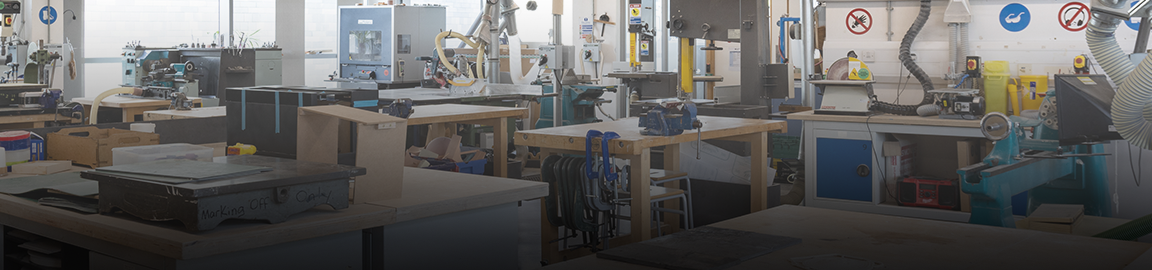
Our MA/MSc Product Design Futures students can benefit from shared use of a dedicated design studio. The Masters studio and school-wide shared facilities include state-of-the art computers and industry standard software. You can also access a range of workshops including model-making, photography studio, virtual reality suite and prototyping lab, Bio Design Lab, Creative Technology Hub for creative technology, and 3D printing.
If you have not used specialist equipment and workshops before, inductions are provided by our experienced technical staff. You will also have free access to online tutorials to familiarise yourself with new software.