BA (Hons) Fine Art
 Option for Placement Year
Option for Study Abroad

Option for Placement Year
Option for Study Abroad
Imagine. Learn. Create.
Art isn’t just in galleries - it’s all around us, in our cities, landscapes, and buildings, and even in our digital spaces. Art shapes how we see the world, reflect on our past, and express the present. At Northumbria, studying the BA (Hons) Fine Art will help you become a thoughtful, skilled artist who understands the power of art and can connect with communities locally and globally.
This course blends theory with hands-on practice to prepare you for many career paths, from community arts and teaching to curating, arts management, and more. You’ll explore the many forms of art with guidance from Northumbria’s experienced art practitioners, historians, and industry partners like The BALTIC Centre for Contemporary Art. Each module is built on active research that brings fresh insights to your learning experience.
The course is dynamic and flexible, allowing you to tailor your studies to fit your goals and giving you a strong foundation for further study or a successful career in the arts.

Cultural partnerships are when groups or institutions work together to share or promote art, traditions, or values. At Northumbria, this includes museums, charities, and education partners teaming up to create an enhanced curriculum designed to support your learning experience and employability. These partnerships help you:
For example, there is the chance to work with The BALTIC Centre for Contemporary Art on developing an exhibition proposal. Here, you will work in teams, as artists with different skill sets and backgrounds. In doing so, you will develop skills in project management and arts business that are important to employers within the creative and cultural industries.
From the start, this course helps you develop essential skills like critical thinking, teamwork, communication, and confidence. As you progress, you’ll gain industry-specific abilities, from using digital editing software to understanding art criticism, research, design, and project management.
As well as working on projects with the BALTIC Centre, you may also wish to organise an external work placement, gaining hands-on industry experience and confidence. Many course modules are designed to boost your employability, helping you gain relevant skills and explore future career paths in the arts.
Imagine. Learn. Create.
Art isn’t just in galleries - it’s all around us, in our cities, landscapes, and buildings, and even in our digital spaces. Art shapes how we see the world, reflect on our past, and express the present. At Northumbria, studying the BA (Hons) Fine Art will help you become a thoughtful, skilled artist who understands the power of art and can connect with communities locally and globally.
This course blends theory with hands-on practice to prepare you for many career paths, from community arts and teaching to curating, arts management, and more. You’ll explore the many forms of art with guidance from Northumbria’s experienced art practitioners, historians, and industry partners like The BALTIC Centre for Contemporary Art. Each module is built on active research that brings fresh insights to your learning experience.
The course is dynamic and flexible, allowing you to tailor your studies to fit your goals and giving you a strong foundation for further study or a successful career in the arts.
Cultural partnerships are when groups or institutions work together to share or promote art, traditions, or values. At Northumbria, this includes museums, charities, and education partners teaming up to create an enhanced curriculum designed to support your learning experience and employability. These partnerships help you:
For example, there is the chance to work with The BALTIC Centre for Contemporary Art on developing an exhibition proposal. Here, you will work in teams, as artists with different skill sets and backgrounds. In doing so, you will develop skills in project management and arts business that are important to employers within the creative and cultural industries.
From the start, this course helps you develop essential skills like critical thinking, teamwork, communication, and confidence. As you progress, you’ll gain industry-specific abilities, from using digital editing software to understanding art criticism, research, design, and project management.
As well as working on projects with the BALTIC Centre, you may also wish to organise an external work placement, gaining hands-on industry experience and confidence. Many course modules are designed to boost your employability, helping you gain relevant skills and explore future career paths in the arts.
UCAS Code
W105
Level of Study
Undergraduate
Mode of Study
3 years Full Time or 4 years with a placement (sandwich)/study abroad
School
Design, Arts and Creative Industries
Location
City Campus, Northumbria University
City
Newcastle
Start
September 2027
Fees
Fee Information
Modules
Module Information
Find out more about what you will be studying on your course.
We are interested in you as an artist and how we can support your learning and ambitions for the future. At Northumbria we take a look at each applicant's portfolio.
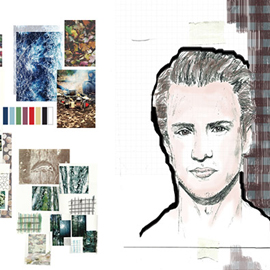
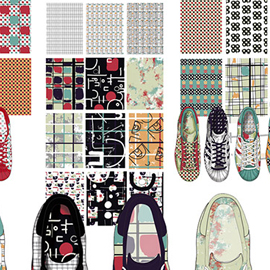
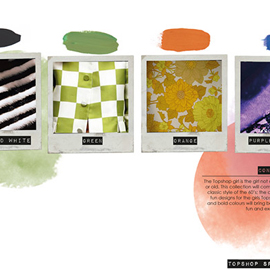
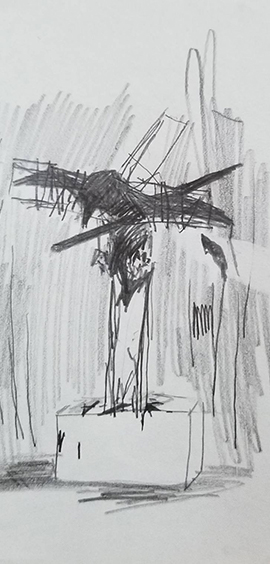
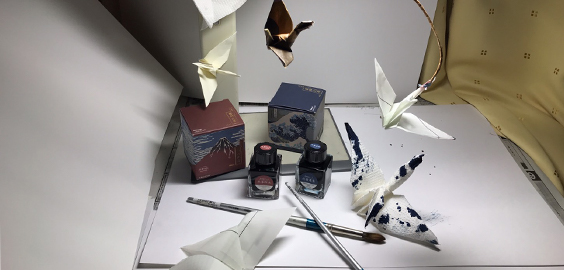
Recently, Northumbria Fine Art students facilitated online workshops and activities for Japanese peers. It was exciting to exchange practice and see the work created.
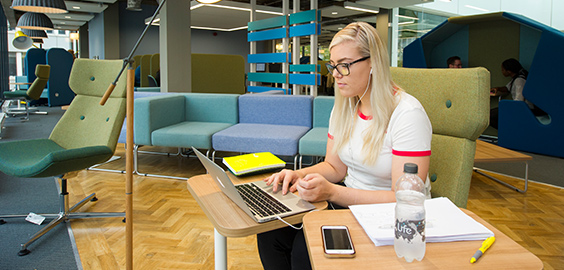
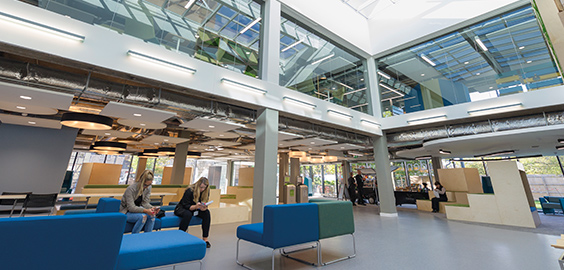
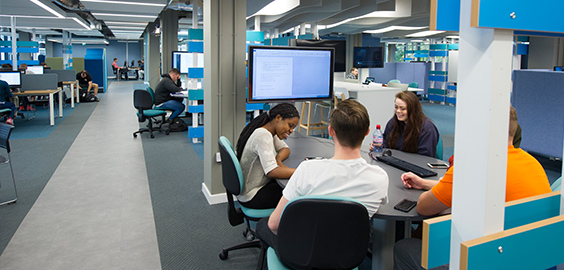
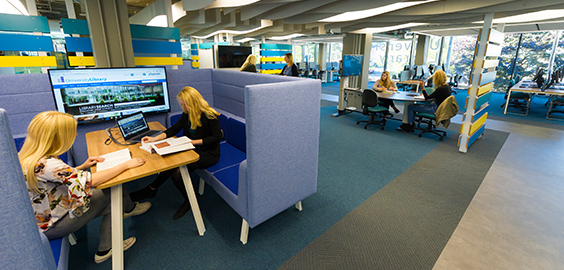
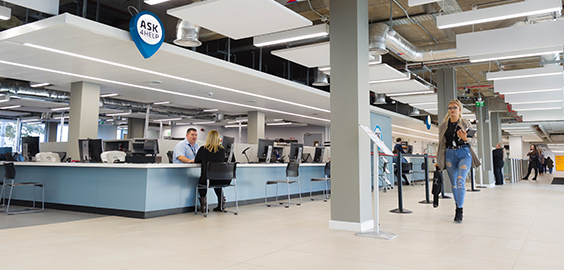
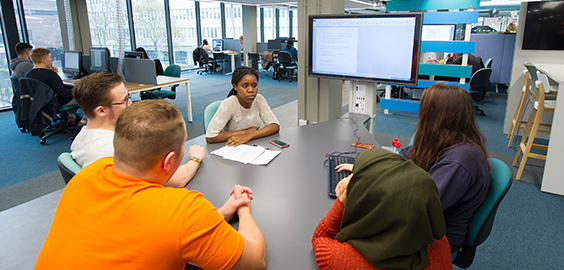
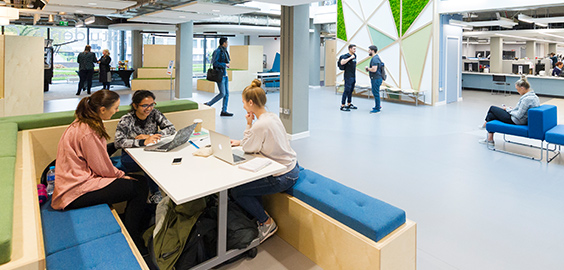
At the heart of each Northumbria campus, our libraries provide a range of study space and technology to suit every learning style.
Spittal Community School visit.
Find out what our graduates are involved in.
I question anyone who thinks that a fine art degree is about painting. It’s about changing your mindset.

Annalisa
Project Manager Assistant/Administrator at GemArts and freelance Project Coordinator at Skimstone Arts.
More about Annalisa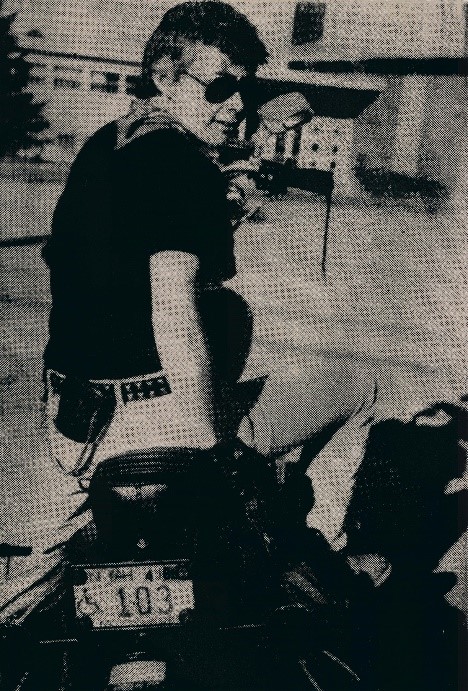

Sophie Crocker
New Writing North Programme Officer in the Participation and Young People team.
More about Sophie
From first year through to final year and beyond graduation, we are here to help.

The School of Design, Arts and Creative Industries is a leading centre for supporting and energising creative practice and academic study. Our inter-disciplinary research and experiential education is committed to the betterment of people, place, cultures, and societies. Our programmes are defined by the way we collaborate with communities, industry, and external partners to inform curriculum, your learning and contribute to wider society. Discover more.
96 to 112 Tariff Points
From a combination of acceptable Level 3 qualifications which may include: A-level, T Level, BTEC Diplomas/Extended Diplomas, Scottish and Irish Highers, Access to HE Diplomas, or the International Baccalaureate.
Find out how many points your qualifications are worth by using the UCAS Tariff calculator: www.ucas.com/ucas/tariff-calculator
Northumbria University is committed to supporting all individuals to achieve their ambitions and we understand that every applicant’s circumstances can be different, which is why we take a flexible approach when making offers for this course. We have a range of schemes and alternative offers to make sure as many individuals as possible are given an opportunity to study at our university regardless of personal circumstances or background. Typically, offers range from 96 to 112 UCAS tariff points, but we’ll assess your individual circumstances and potential when reviewing your application
To find out more, review our Northumbria Entry Requirement Essential Information page for further details www.northumbria.ac.uk/entryrequirementsinfo
Subject Requirements:
There are no specific subject requirements for this course.
GCSE Requirements:
Applicants will need Maths and English Language at minimum grade 4/C, or an equivalent.
Additional Requirements:
A portfolio of creative design work is required. Get advice on preparing your portfolio here:https://www.northumbria.ac.uk/study-at-northumbria/coming-to-northumbria/portfolios/
International Qualifications:
We welcome applicants with a range of qualifications which may not match those shown above.
If you have qualifications from outside the UK, find out what you need by visiting www.northumbria.ac.uk/yourcountry
English Language Requirements:
International applicants should have a minimum overall IELTS (Academic) score of 6.0 with 5.5 in each component (or an approved equivalent*).
*The university accepts a large number of UK and International Qualifications in place of IELTS. You can find details of acceptable tests and the required grades in our English Language section: www.northumbria.ac.uk/englishqualifications
For further admissions guidance and requirements, please visit www.northumbria.ac.uk/admissionsguidance Please review this information before submitting your application.
UK Fee in Year 1: £9,790
The UK tuition fee for 26/27 is £9,790 and is set in line with the UG Government's tuition fee cap. The University may increase this fee in subsequent years in line with any changes to the tuition fee cap. Students will be notified of any increase ahead of it taking effect. The remaining fees relate to the International Soccer Academy and accommodation fees. Accommodation fees may increase in subsequent years. Students will be notified of any increase ahead of the re-issuing of tenancy agreements. Tuition fees in the academic year 2027/28* will be £10,050. Fees are set in line with the UK Government's tuition fee cap. The University may increase fees in subsequent years in line with any changes to the tuition fee cap. Increases will be linked to inflation. For example, increases may be linked to RPIX (Retail Price Index excluding mortgage interest payments) Students will be notified of any increase ahead of it taking effect. Student fee loans rise in line with the tuition fees cap. *if your course is longer than one year
* Fees subject to annual increases over the course of the period of study. Students will be liable for payment of any/all tuition fees which are not sponsored by their employer or other third party.
International Fee in Year 1:
This is the tuition fee for your first year of study. You should expect to pay tuition fees for every year of study. The University may increase fees in the second and subsequent years of your course at our discretion in line with any inflationary or other uplift. Students will be notified of any increase ahead of it taking effect.
Tuition fees in the academic year 2027/28* will be £10,050. Fees are set in line with the UK Government's tuition fee cap. The University may increase fees in subsequent years in line with any changes to the tuition fee cap. Increases will be linked to inflation. For example, increases may be linked to RPIX (Retail Price Index excluding mortgage interest payments) Students will be notified of any increase ahead of it taking effect. Student fee loans rise in line with the tuition fees cap.
This is the programme fee for your first year of study. The programme fee includes the international tuition fee, International Soccer Academy and accommodation fees. Accommodation fees may increase in subsequent years. Students will be notified of any increase ahead of the re-issuing of tenancy agreements.
ADDITIONAL COSTS
MATERIALS This is a studio-based programme and we expect students to require additional art materials to support their project work. The department will be able to provide some generic art materials such as paper, printing inks, clay and plaster, but there will be instances where specialist materials are needed based on individual requirements. In those instances, students will have to bear the additional costs. We anticipate the cost to be approximately £100 on average. PRINTING Students are likely to be producing printed work and as such, will incur additional printing costs. Again this very much depends on an individual basis based on the type of project chosen by the student but we approximate the additional printing cost to be £50.
* At Northumbria we are strongly committed to protecting the privacy of personal data. To view the University’s Privacy Notice please click here
Module information is indicative and is reviewed annually therefore may be subject to change. Applicants will be informed if there are any changes.
SC5000 -
Skills for Academic Success in a UK University (Core – for International and EU students only,0 Credits)
You will develop your understanding of academic conventions in UK higher education aligned to your level of study, including expectations around critical analysis, structure, argumentation, evidencing, and referencing. The module focuses on developing communication strategies that will help you express your ideas clearly and coherently in written assignments and spoken activities. You will also reflect on your current academic and language skills and develop strategies for development ahead of your assessments.
More informationVA4012 -
Strategies in Studio Practice (Core,20 Credits)
You will develop an understanding of the term ‘practice’ and its meaning in the context of art making. Drawing on a range of specific case studies from recent historical and contemporary artists, you will be introduced to a range of strategies for making work in the studio. These approaches will integrate formal, material and conceptual strategies of making. They will afford you the ability to improvise, to work responsively with the qualities of a given material, to establish generative processes, to work within set limits or rules and to employ metacognition in your reflection.
You will learn an appreciation and responsibility for the studio environment. Collaboration and group critique will help initiate a studio culture that is open and constructive. ‘Good studio practice’ will be embedded in the learning and will include induction to technical resources available to the programme.
VA4013 -
Positions in Practice (Core,20 Credits)
This module will introduce you to the idea of an artistic position – you will come to understand how artists map an identity for themselves through specialisation in practice and the specifics of their contextual interests. Building on the research skills developed in semester 1, you will begin your own journey in developing an artistic position by beginning to work through and identify your specific areas of practical and contextual interest.
More informationVA4014 -
Introduction to Contemporary Art (Core,20 Credits)
To enable the development of your own independent art-making, your learning will include practical skills in drawing, in both manual and digital forms, to help visualise and document ideas. You will learn the principles of visual and textual analysis in order to support your critical acuity and academic writing; this will include key academic skills in conducting research, sourcing and referencing. Your studio engagement will be supported by learning necessary skills in presenting, hanging, installing and documenting artworks in both 2D and 3D forms. You will also be required to complete appropriate Health and Safety inductions in order to appreciate good studio practice.
To complement your practical and professional skills, you will receive an introduction to the emergence of modern art and its expansion in the contemporary context. To map the historic development of Western artistic practice, examples will be used from three main periods:
• The growth of the modern city, visualised through 19th Century Impressionism
• The development of ideas of society through 20th century Modernism
• The questioning of society through resistant contemporary art practices. Particularly those associated with gender, race, sexuality and class.
These examples will be used to investigate fundamental considerations about representation, intercultural processes, decolonisation strategies, materiality, process, display, accessibility, networks and viewership, and to help you reflect upon your own creative practice. By studying, analysing and discussing these examples, you will learn key skills in researching, analysing and writing about art, which will give you the core foundational skills for study through your programme.
VA4015 -
Visual Material Culture 1 (Core,20 Credits)
Through this module you will begin to develop a creative and critical research practice that compliments your investigations in the studio. You will learn how to identify and discern different voices and opinions within the field that equip you with essential research skills and offer ways of working through your own thinking and making. The module builds a foundation for you to develop your own artistic and conceptual positions as you move forward through the programme.
More informationVA4016 -
Visual Material Culture 2 (Core,20 Credits)
In this module you will be introduced to some fundamental principals in artistic production; how context contributes to the production of meaning in art making. You will develop your critical reflection from semester 1 while gaining insight to a range of contexts that are informed by material, social, political and historical concerns in art making. You will learn to identify your own perspectives in relation to the subjects you encounter. You will reflect on your own experiences in relation to the context of others and work to draw out critical understandings of how practice is informed by its social, political, historical and environmental experience.
More informationVA4017 -
Understanding Engagement (Core,20 Credits)
The Understanding Engagement module involves work with an external institutional partner to extend your network as artists and practitioners with a live brief co-produced with that partner. It supports the development of your technical and creative skills and combines reflections on studio practice with a sustained analysis of the worlds of contemporary art. Working in peer groups, you will develop a sustained, innovative practice, and this will be within the context of an understanding of contemporary artists, some of whom you will meet during the module. You will learn about the role of studios which will feed into your level 5 studio practice, as well as questions of networking, marketing, branding, audience-building, project management, ethics, and creative skills. This is situated in the wider context of these issues in the creative sector. Working to a live brief with your institution/organisation, you will work within them on creative sites and spaces, on pitching and on networking. These relationships will develop all kinds of soft skills and activities which mutually support the artist and the organisation, and you will be assessed on how you respond to the live brief in creative ways. Understanding the relationship of place to community will enhance your pathways through your degree and beyond.
More informationAD5003 -
Arts Study Abroad (60 credit) (Optional,60 Credits)
The Study Abroad module is a semester based 60 credit module which is available on degree courses which facilitate study abroad within the programme. You will undertake a semester abroad at a partner university equivalent to 60 UK credits. This gives you access to modules from your discipline taught in a different learning culture and so broadens your overall experience of learning. The course of study abroad will be constructed to meet the learning outcomes for the programme for the semester in question, dependent on suitable modules from the partner and will be recorded for an individual student on the learning agreement signed by the host University, the student, and the home University (Northumbria). The module will be assessed by conversion of graded marks from the host University.
Learning outcomes on the year-long modules on which the student is unable to attend the home institution must be met at the host institution, and marks from the host are incorporated into the modules as part of the overall assessment.
SC5000 -
Skills for Academic Success in a UK University (Core – for International and EU students only,0 Credits)
You will develop your understanding of academic conventions in UK higher education aligned to your level of study, including expectations around critical analysis, structure, argumentation, evidencing, and referencing. The module focuses on developing communication strategies that will help you express your ideas clearly and coherently in written assignments and spoken activities. You will also reflect on your current academic and language skills and develop strategies for development ahead of your assessments.
More informationVA5007 -
Art Practice 3: Thinking Through Making (Core,20 Credits)
To support the development of your independent practice you will be tasked with responding to a series of studio project briefs:
• Attitudes, Appropriation & Authorship will afford you an opportunity to think through the specific of the materials and processes you choose to work with, how you transform them and the potential implications of those transformations
• Situation will challenge you to think about the contemporary context in which you are making (the studio, the university, the city, the North East…) and consider the ways in which your work might inform or be informed by these contexts.
Collaboration will give you an opportunity to work together with your peers to help better understand what it is that you are making in the studio. Collaboration offers you a way to think outside of your own assumptions and recognize new critical perspectives on the artwork you make.
These briefs will challenge you to make and think through specific critical ideas that inform contemporary art practice and will allow you to start to see your own work in relation to a wider art world.
VA5008 -
Art Practice 4: Understanding Research (Core,20 Credits)
You will learn about key themes related to historical, theoretical, and critical developments in and influences on contemporary art practice relevant to an understanding of recent debates and developments, allowing you to contextualise your own studio practice within the terms of history and theory in preparation for Level 6. This will allow you to develop a deeper critical understanding of the relationship between form and content in your own art making and you will learn how to develop a professional understanding of appropriate technical and conceptual strategies for the production and presentation of your artworks.
You will develop the ability to reflect critically on the historical and contemporary relationship of artists to society at local, national and global levels, and develop competence in skills enabling you to undertake critical visual analysis, independent research, and present findings through the medium of discursive writing.
This module enables you to learn through the work of your peers and position your evolving practice against contemporary frameworks and theoretical ideas in current art practice. Through the learning you will develop the intellectual and practical skills required to start to assess your own work and studio position allowing you to take responsibility for the development of your visual enquiry. All of your learning underpins your studio practice with a strong subject specific knowledge base and the range of strategies aims to engender your confidence in identifying and understanding new knowledge in relation to your practice.
VA5011 -
Public Engagement (Core,20 Credits)
The learning within the module centres on bringing your studio-centred artmaking and contextual contemporary art knowledge into live work projects within professional artworld work environments through a placement and supporting workshops.
The central topics of the learning are:
• Preparing for effective live working within a professional artworld project.
• Establishing applied knowledge and understanding of the North East regional artworld, its organisations, intuitions and grass-roots ecologies.
• Applying independent artmaking and arts knowledge (developed through the programme) into live work projects within professional artworld contexts.
• Learning (externally to the teaching) through a live work within a professional artworld work context.
• Evaluating and reporting on the learning and knowledge development from a live work within a professional artworld work context.
• Building career and employment knowledge through live working within a professional artworld work context.
• Establishing networks through live working within a professional artworld work context.
Keywords and critical frameworks are:
Live project placement
Contemporary art practice
Collaboration and collective working
Mentorship and professional learning
Networking and careers enhancement
Art Education, Art Research, Contemporary Art Projects
Enhancing cultural capital
Enhancing social capital
In this module you will learn how to engage responsibly and effectively within professional working contexts. You will learn how to contribute through a small peer-group into a collective and collaborative work environment, and you will learn how to evaluate and reflect-on the range of skills and learning you are developing through that process. You will learn how to apply learning to focus-on and expand post University work opportunities and your onward careers ambitions. You will learn to evaluate and report objectively on your work and outputs within live working contexts. You will learn how to meet professional work standards, and mobilise your artmaking in ways open and enhance future work and career opportunities.
VA5012 -
Studio and Gallery (Core,20 Credits)
On this module you will learn how to develop an exhibition proposal in a way that considers the development of your studio work in relation to its audience and the audience experience. In doing so you will learn to establish a wider independent appreciation, knowledge and understanding of the external professional contexts that frame and position the activities and production of your work in an exhibition beyond the studio. In doing so you will extend your understanding of the research-led enquiries that professional artists undertake to develop exhibition proposals, including the research methodologies that artists and gallery professionals use to understand and respond to the diverse social and geographic contexts of any exhibition’s production and presentation. You will learn about methodologies, mediums and materials that artists use to present their ideas in the proposal. You will also learn to enhance your understanding of professional contexts within the contemporary artworld in relation to career pathways and professional opportunities. You will develop transferable professional skills in areas presentation, communication, project management, problem solving and the ability to reflect critically on your actions and achievements.
More informationVA5015 -
Art Discourses and Encounters 1 (Core,20 Credits)
In this module you will have the opportunity to participate in a series of thematic seminars that align with your emerging studio interests and concerns. The thematics will allow you to encounter relevant practices, themes and discourses within contemporary art practice. This will, in turn, inform your own developing critical art-making practice – allowing you to situate your emerging practice within the wider discourses of contemporary art. Themes might include: appropriation, collaboration, situation & context, attitudes in artmaking, interpretation, art and psychoanalysis etc.. You will also learn to be an active participant within collaborative activities and debates which will help you identify and articulate ideas in your own art-making position.
More informationVA5016 -
Art Discourses and Encounters 2 (Core,20 Credits)
This module builds on Art Discourses and Encounters 1 that you will have undertaken in semester 1. You will have a further opportunity to select into a thematic grouping that will explore a particular set of discourses and themes within contemporary art, led by the research Interests of the teaching staff. Themes to choose from might include, worldbuilding, place and communities, identities and technologies. In this module you will develop a deeper understanding of the inter-connection of theory to practice and be able to develop your own personal take on this dynamic in relation to your art-making. You will also have the opportunity to experience collaborative and collective ways of working which will both inform, and expand upon, your own personal ways of working.
More informationAD5001 -
Arts Work Placement Year (Optional,120 Credits)
The Work Placement Year module is a 120 credit year-long module available on degree courses which include a work placement year, taken as an additional year of study at level 5 and before level 6 (the length of the placement(s) will be determined by your programme but it can be no less than 30 weeks). You will undertake a guided work placement at a host organisation. This is a Pass/Fail module and so does not contribute to classification. When taken and passed, however, the Placement Year is recognised in your transcript as a 120 credit Work Placement Module and on your degree certificate in the format – “Degree title (with Work Placement Year)”. The learning and teaching on your placement will be recorded in the work placement agreement signed by the placement provider, the student, and the University.
Specific learning will depend on the nature of the employer and the placement secured. In general terms, this module is an opportunity to gain significant experience of industry practice, and to learn professional, role-specific skills ‘on the job’. It’s also a great opportunity to improve transferable skills such as communication, interpersonal skills, personal organisation, time management, presentation, commercial awareness, entrepreneurial skills, branding, and professional conduct generally; and to enhance your CV and personal portfolio. Students who have carried out placements in previous years often describe it as a transformative experience; they report greatly increased personal confidence both in terms of launching their future careers, and in returning to their final year of study. Your employer will agree in advance what your learning is likely to include, and will help you reflect on this learning at the end of your placement.
Note: Subject to placement clearance; this is a competitive process and a place on the module cannot be guaranteed.
AD5002 -
Arts Study Abroad Year (Optional,120 Credits)
The Study Abroad Year module is a full year 120 credit module which is available on degree courses which include a study abroad year which is taken as an additional year of study at level 5 and before level 6. You will undertake a year abroad at a partner university equivalent to 120 UK credits. This gives you access to modules from your discipline taught in a different learning culture and so broadens your overall experience of learning. The course of study abroad will be dependent on the partner and will be recorded for an individual student on the learning agreement signed by the host University, the student, and the home University (Northumbria). Your study abroad year will be assessed on a pass/fail basis. It will not count towards your final degree classification but, if you pass, it is recognised in your transcript as a 120 credit Study Abroad Module and on your degree certificate in the format – “Degree title (with Study Abroad Year)”.
Note: Subject to placement clearance; this is a competitive process and a place on the module cannot be guaranteed.
SC6000 -
Skills for Academic Success in a UK University (Core – for International and EU students only,0 Credits)
You will develop your understanding of academic conventions in UK higher education aligned to your level of study, including expectations around critical analysis, structure, argumentation, evidencing, and referencing. The module focuses on developing communication strategies that will help you express your ideas clearly and coherently in written assignments and spoken activities. You will also reflect on your current academic and language skills and develop strategies for development ahead of your assessments.
More informationVA6008 -
Final Project (Core,40 Credits)
The learning within the module centres on bringing your studio-centred artmaking (production) into public-reaching sites of presentation through informed strategies of exhibition-making.
The central topics of the learning are:
Bringing independent artmaking to public and artworld audiences.
Identifying and progressing (testing and evaluating) individually appropriate sites of presentation (where and on what terms artmaking meets publics).
Extending and progressing (developing, testing and evaluating) the artmaking (its production) through individually appropriate forms of exhibition-making (how and on what terms artmaking meets publics).
Addressing and negotiating collective and group-centred forms of public exhibition and presentation.
Delivering independent technically resolved artmaking to public audiences through presentation and exhibition.
Delivering an effective and appropriate public-reaching distribution (dissemination) of independent artmaking (practice).
Establishing an effective and appropriate public-reaching representation of independent artmaking (practice).
Keywords and critical frameworks are:
Contemporary art practice.
Critical and contextual artmaking (independent artmaking).
Public-reaching presentation.
Extended forms of exhibition-making.
Group Exhibition (as an expanded term).
Terms:
Exhibition is used both in its artworld context and as a term inclusive of distributed and diverse sites of presentation - not bound exclusively by the gallery.
Exhibition-making is used to signal the continuing production of artmaking within exhibition delivery. And its extended forms within contemporary art practice, including online, digital, virtual, social, workshop, event, publishing forms.
VA6009 -
Independent Research Project (Core,20 Credits)
This module is your opportunity to undertake some extended research into a topic that interests you, in the broad field of art history, theory and material culture. The outcome will be an essay of 3000 words, building on your experience in prior modules. It is sensible to choose an area that has some relevance to your studio practice as the research you undertake will inform your practice and may help you develop your ideas.
While the focus of this module is upon independent research, it will be supported by three workshop-seminars in planning, bibliography building and editing. You will also be assigned an academic supervisor who will offer 90 minutes of 1-2-1 tutorials, usually delivered as three separate tutorials in semester 1.
The main object of this module is to develop a good understanding of building an argument through research. Your essay must engage with scholarly sources, and you will use these sources to develop a critically engaged essay.
VA6010 -
Professional and Self-Organising Practice (Core,20 Credits)
The module is delivered in three-hour seminar sessions that blend lectures, discussions, readings and group exercises. After an introduction to contemporary cultural production and self-organising, every two weeks a new topic will be introduced with a practice-led and theory-led seminar on each. These subjects may include: ways to make your work public, ways to write professionally about your work, how to organise artist-led culture, different aspects of professional production, what independent and institutional curators do, how to cultivate a supportive network, and how to integrate care-led perspectives to your professional practice. Woven throughout these themes is a consideration of regional institutions and culture in the North East, budgeting and writing for diverse audiences, and your use of both physical and digital platforms. In addition to equipping you with practical knowledge and professional skills, the module’s intellectual enquiry is underpinned by a engaged understanding of self-organising, entrepreneurialism, and exploitation in the contemporary cultural sector.
More informationVA6011 -
Sites of Production / Sites of Presentation (Core,40 Credits)
The module supports you in situating and articulating your art-making and artworks to others and in bringing them into public contexts through diverse and distributed spaces of presentation such as exhibition-making, performance, digital interfaces, social and situation-based strategies.
In this module you will continue building on your studio practice you have been developing in Leves 4 and 5, whilst learning more about how audiences might engage with the work you are making. This will help you develop a critical practice that engages with different places where your work might be made visible as well as the different publics that might engage with its new visibility.
We will look at relevant examples of private and public making, as well as the implications these have for exhibition-making in different kinds of visited public and private space. You will also be introduced to practices, sites and interventions that address some of the structures of making work public that may have traditionally benefited particular kinds of work or groups of people whilst disadvantaging others. For example, we will consider how different sites attract different publics or support particular media, and give you the opportunity to imagine how your own work might benefit from or contest these structures.
To start your application, simply select the month you would like to start your course.
Our Applicant Services team will be happy to help. They can be contacted on 0191 406 0901 or by using our Contact Form.
All information is accurate at the time of sharing.
Full time Courses are primarily delivered via on-campus face to face learning but could include elements of online learning.
Most courses run as described on our website and in our marketing materials. Occasionally we may need to make changes, for example due to a change in the law or regulatory requirements, requirements of a Professional, Statutory or Regulatory Body, or our quality assurance processes. Where a change is significant (in line with the Competition and Markets Authority's guidance on "substantial changes"), we will consult with affected students in advance where the change is being decided, and will explain the reason for the change and inform you at the earliest opportunity.
If we make a significant variation to your programme, you are entitled to: request a transfer to an alternative, appropriate programme; withdraw and have your tuition fees adjusted; or raise a complaint through the Student Complaints Procedure.
Optional modules listed on course pages may be subject to change depending on uptake numbers each year. Where a module you selected is withdrawn, the options above apply.
Contact time is subject to increase or decrease in line with possible restrictions imposed by the government or the University in the interest of maintaining the health and safety and wellbeing of students, staff, and visitors if this is deemed necessary in future.
The photography and video on this page are used for illustration. They may have been taken at different times and in different parts of the University, and may show facilities, equipment, staff, students or activities that are not part of this course. They are not a guarantee of the specific facilities or equipment you will use.
The course content, entry requirements and fees sections of this page, together with the Programme Specification, set out what this course includes. Our facilities are updated over time and may change during your studies.
Northumbria University is committed to developing an inclusive, diverse and accessible campus and wider University community and are determined to ensure that opportunities we provide are open to all.
We are proud to work in partnership with AccessAble to provide Detailed Access Guides to our buildings and facilities across our City, Coach Lane and London Campuses. A Detailed Access Guide lets you know what access will be like when you visit somewhere. It looks at the route you will use getting in and what is available inside. All guides have Accessibility Symbols that give you a quick overview of what is available, and photographs to show you what to expect. The guides are produced by trained surveyors who visit our campuses annually to ensure you have trusted and accurate information.
You can use Northumbria’s AccessAble Guides anytime to check the accessibility of a building or facility and to plan your routes and journeys. Search by location, building or accessibility feature to find the information you need.
We are dedicated to helping students who may require additional support during their student journey and offer 1-1 advice and guidance appropriate to individual requirements. If you feel you may need additional support you can find out more about what we offer here where you can also contact us with any questions you may have:
Page last reviewed: 3 October 2026