Three Northumbria University pioneers named among the UK's 50 Future Innovators
An energy efficient cooling system, fully recyclable wind turbine blades and a new breast imaging…

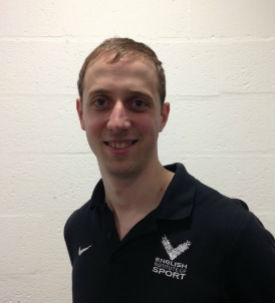
David gained his undergraduate degree in 2010 at the University of Bath in Sport and Exercise Science. He completed a placement year as part of the degree working at the TeamBath high performance centre as a physiologist. David completed his MSc in Applied Sport and Exercise Physiology at St Marys University in 2012. Following his MSc David began a part-time PhD with the English Institute of Sport (EIS) and Northumbria University investigating the benefits of eccentric cycling for improving sports performance. In conjunction with his PhD David also manages the EIS physiology lab based at Loughborough University.
Eccentric muscle contractions are considered a potent stimulus for adaptation due to their ability to generate much greater levels of tension compared to concentric or isometric contractions. Eccentric (isokinetic) cycling is facilitates high volumes of lower limb eccentric contractions whilst virtually eliminating the need for concentric contractions. Our research has examined the familiarisation process to this novel training method and its efficacy as a tool to monitor changes in lower limb eccentric strength. Furthermore we are investigating the effect of session structure (i.e. intervals or continuous) on the in-session demands and post-session consequences of eccentric cycling. Finally we are also examining the effect of a period of chronic eccentric cycling on sports performance in a group of competitive athletes.
Green, D.J., Thomas, K., Ross, E., Pringle, J. & Howatson, G. Familiarisation to maximal recumbent eccentric cycling. Isokinetics and Exercise Science, vol. Preprint, no. Preprint, pp. 1-8, 2016. DOI: 10.3233/IES-160640.

An energy efficient cooling system, fully recyclable wind turbine blades and a new breast imaging…

Researchers at Northumbria University and the University of Edinburgh are Ice coating research…

A Northumbria University graduate who turned his love of cricket into a social enterprise supporting…

Researchers at Northumbria University, Newcastle University, and the University of Glasgow…

A Northumbria University-backed programme giving North-East pupils the chance to do real space…

An international team led by Northumbria University has developed and validated a simple five-factor…

A new national network led by Newcastle University and Northumbria University, in partnership…

A Northumbria University criminologist has been awarded a Philip Leverhulme Prize, one of the…
Durrant Hall
-
Lecture Theatre 003, Business & Law Building
-

Newcastle Cathedral
-
Northumbria University
