New platform maps charity support for the Armed Forces community
Pioneering data platform maps where the Armed Forces community receive support from charities

The ultimate aim of Northumbria’s Department of Sport, Exercise and Rehabilitation Optimising Human Performance research group, led by ProfessorGlyn Howatson, Director of Research and Innovation, is to help leading athletes perform at the highest level and increase their chances of winning medals through rigorous research. To this end, the Department has established a strong working relationship with the EIS, a nationwide network dedicated to improving sporting performance through science, medicine and technology.
Initiated by Professor Howatson, PhD students from the Department are embedded within EIS sites across the country. Sport practitioners in their own right, the students are in a unique position to support athletes in their day-to-day activities with scientific knowledge on, for example, strength and conditioning, physiology and nutrition. The students conduct applied research to answer sport-derived questions, and applying their findings directly to the athletes, coaches and practitioner teams they work with.
 One
project that is currently ongoing is the use of cold therapies, known as
cryotherapy, to help athletes recover more quickly from exercise. In testament
to the success of this research, Dr Jonathan Leeder,
the first student at Northumbria to examine recovery methods such as cold water
immersion, is now part of the EIS Performance Innovation Team; and other
researchers at the University are building on his work through investigations
into novel cooling strategies, which can improve recovery. Dr Leeder
also instigated the development of a “Recovery Tips” custom-built
smartphone app for EIS athletes. Directly informed by Northumbria’s research,
the app records athletes’ wellbeing and daily training load, and provides
best practice information and guidelines relating to recovery. The app includes
Dr Leeder’s work on cold water immersion as well as further research on
compression garments conducted by Dr Jessica Hill and supervised by Professor Howatson. As acknowledged global leaders in the
field of athletic recovery, the approach to recovery has been summarise in an ExpertStatement published by the British Association of Sport and Exercise
Sciences.
One
project that is currently ongoing is the use of cold therapies, known as
cryotherapy, to help athletes recover more quickly from exercise. In testament
to the success of this research, Dr Jonathan Leeder,
the first student at Northumbria to examine recovery methods such as cold water
immersion, is now part of the EIS Performance Innovation Team; and other
researchers at the University are building on his work through investigations
into novel cooling strategies, which can improve recovery. Dr Leeder
also instigated the development of a “Recovery Tips” custom-built
smartphone app for EIS athletes. Directly informed by Northumbria’s research,
the app records athletes’ wellbeing and daily training load, and provides
best practice information and guidelines relating to recovery. The app includes
Dr Leeder’s work on cold water immersion as well as further research on
compression garments conducted by Dr Jessica Hill and supervised by Professor Howatson. As acknowledged global leaders in the
field of athletic recovery, the approach to recovery has been summarise in an ExpertStatement published by the British Association of Sport and Exercise
Sciences.
Northumbria’s influence has extended to Olympic cycling, a sport which has enjoyed recent success for Team GB. MehdiKordi, a PhD student who is studying physiology at Northumbria as well as working with British Cycling, has beeninvestigating the neuromuscular factors that influence the amount of power elite sprint cyclists can generate. Having identified key factors that affect sprint track cyclists’ performance, his profiling and training protocols are now routinely used to assess and train both elite podium and academy cyclists. His studies have also led to new training techniques being developed, which help sprint track athletes increase their peak power output and ultimately improve their performance. In addition Mellissa Harden and Dave Green, two other Northumbria PhD students, are working on use novel training methods to enhance Olympic sprint track cyclist and running performance, respectively.
 Other more recent work with Alex Anastasiou (British Sailing) and a
recently started project with British Gymnastics aims to understand the
physiological determinants and demands of their respective sports. Despite the long tradition of these sports,
very little is known about the physiological aspects of these multi-discipline
events. These, and the aforementioned
projects, have made, and continue to make meaningful impact for our elite sport
success moving in to future Olympic Games and other international competition. Over the
course of the last two Olympic Games, Northumbria has had seven PhD students
working with the EIS high performance centres nationwide, and numerous research
and innovation projects, each of which is applying their investigations to
real-world sporting settings, as Dr Emma Ross,
Head of Physiology at the EIS, reiterates in an interview with The Journal:
“The academic researchers [at Northumbria University] really understand the
challenges of translating research into applied practice and working in the
high performance environment. [Their projects have] directly applicable
outcomes that are currently making performance impact across a number of
sports”.
Other more recent work with Alex Anastasiou (British Sailing) and a
recently started project with British Gymnastics aims to understand the
physiological determinants and demands of their respective sports. Despite the long tradition of these sports,
very little is known about the physiological aspects of these multi-discipline
events. These, and the aforementioned
projects, have made, and continue to make meaningful impact for our elite sport
success moving in to future Olympic Games and other international competition. Over the
course of the last two Olympic Games, Northumbria has had seven PhD students
working with the EIS high performance centres nationwide, and numerous research
and innovation projects, each of which is applying their investigations to
real-world sporting settings, as Dr Emma Ross,
Head of Physiology at the EIS, reiterates in an interview with The Journal:
“The academic researchers [at Northumbria University] really understand the
challenges of translating research into applied practice and working in the
high performance environment. [Their projects have] directly applicable
outcomes that are currently making performance impact across a number of
sports”.
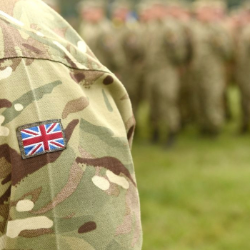
Pioneering data platform maps where the Armed Forces community receive support from charities

A major study co-led by Northumbria University will test whether attachment assessments lead…

New research published today by the AHRC Creative Communities programme provides fresh evidence…

Northumbria University's award-winning Student Law Office is launching SEND Decoded, a series…

The Net Zero Polar Science (NZPS) Doctoral Training Programme (DTP) has welcomed its first…

A new drop-in service is bringing health and wellbeing support for students at both Newcastle…

A new project led by Northumbria University aims to grow optical fibres using proteins, mimicking…

Northumbria University has hosted a major international workshop, bringing together leading…
The Great Hall, Sutherland Building
-

Manchester Marriott Hotel Piccadilly
-

Sutherland Building
Page last reviewed: 25 January 2024
