
New platform maps charity support for the Armed Forces community
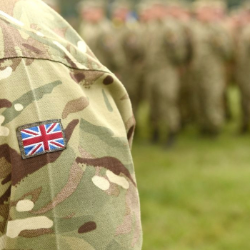
Pioneering data platform maps where the Armed Forces community receive support from charities

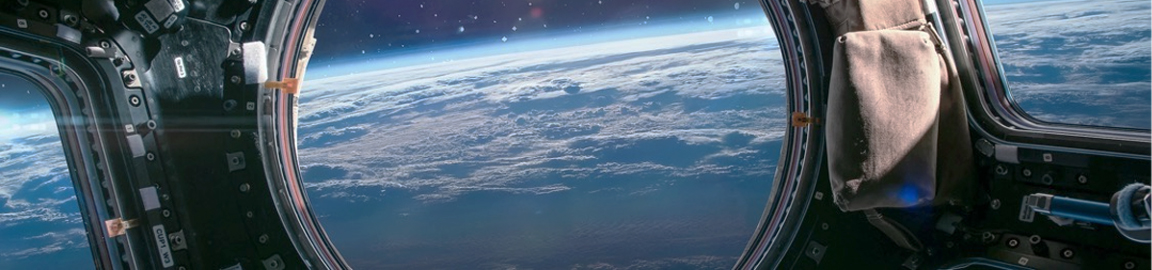
The Personalised Tourniquet System for Spaceflight (PTSS) is a cutting-edge technology designed to deliver Blood Flow Restriction (BFR) applications in space. Developed through collaboration between Northumbria University, Western Clinical Engineering Ltd, Delfi Medical Innovations Inc, and Kayser Space Ltd, supported by ESA, NASA, and the Canadian Space Agency, and funded by the UK Space Agency, Axiom Space, Aurelia Institute and Boryung, the PTSS represents a new class of space health technology: compact, low-resource, yet physiologically powerful.
BFR training involves applying controlled pressure around a limb to partially restrict arterial blood flow during exercise, stimulating musculoskeletal and cardiovascular adaptation even under low mechanical loading. This makes it ideal for spaceflight, where equipment volume and resistance loading are constrained.
Following extensive ground-based testing, the PTSS was selected for in-flight technology demonstration on the SpaceX FRAM2 mission in 2025. Its objectives included validating operational safety, usability in microgravity, and physiological efficacy. The project is part of a broader international effort to identify scalable, adaptable countermeasures suitable for long-duration lunar and Martian missions.
Beyond spaceflight, the PTSS holds transformative potential for clinical rehabilitation and performance training on Earth. Its ability to elicit strong physiological responses under low load is particularly valuable for injured patients, older adults, and individuals with mobility limitations. The PTSS thus exemplifies the lab’s commitment to dual-use innovation, delivering benefits both in orbit and on Earth.

RESEARCH FOCUS
Discover how we study human adaptation to altered gravity and develop next-generation exercise countermeasures

MAJOR RESEARCH CAMPAIGNS
Explore our contributions to international bedrest and parabolic flight campaigns, as well as our in-flight technology demonstrations

VARIABLE GRAVITY SUSPENSION SYSTEM
See how our globally unique space analogue platform enables micro- and hypo-gravity simulation for research and commercial testing

PARTNERSHIPS AND COLLABORATION
Meet our global network of agency, academic, and industry partners shaping the future of space health
COMMERCIAL AND TRANSLATIONAL IMPACT
Discover how we’re bringing space-derived innovations to market and building industry collaborations

MEET THE TEAM
Meet the staff and students working in the Aerospace Medicine and Rehabilitation Laboratory
Pioneering data platform maps where the Armed Forces community receive support from charities

A major study co-led by Northumbria University will test whether attachment assessments lead…

New research published today by the AHRC Creative Communities programme provides fresh evidence…

Northumbria University's award-winning Student Law Office is launching SEND Decoded, a series…

The Net Zero Polar Science (NZPS) Doctoral Training Programme (DTP) has welcomed its first…

A new drop-in service is bringing health and wellbeing support for students at both Newcastle…

A new project led by Northumbria University aims to grow optical fibres using proteins, mimicking…

Northumbria University has hosted a major international workshop, bringing together leading…

Europa Hotel
-
The Great Hall, Sutherland Building
-
Manchester Marriott Hotel Piccadilly
-
Page last reviewed: 29 October 2025
