
I completed a PhD in Medical Sciences at Vrije Universiteit Amsterdam, where I investigated the effects of an orthotic device on clinical and biomechanical outcomes in people with knee osteoarthritis as part of the KNEEMO EU Horizon 2020 Innovative Training Network. I subsequently undertook postdoctoral research at the University of Liverpool, focusing on the development of “smart” footwear for fall prevention in older adults, and at Cardiff University, where I worked on validating wearable technologies for health monitoring. I have also held visiting researcher appointments at the University of Melbourne, University of Southern Denmark, and Peacocks Medical Group.
My research integrates clinical rehabilitation, biomechanics, and digital health technologies. I have authored 12 first-author publications and my research has been featured in CNN, Washington Post and National Geographic. I am recognized as an emerging leader in musculoskeletal biomechanics and digital health, as evidenced by editorial roles at PLOS Digital Health and Communications Medicine, and by serving as a peer reviewer for international journals in medicine and bioengineering (full record on Web of Science). I currently teach on SP5026 Research Design and Analysis and PT4000 Musculoskeletal Anatomy and Physiology. I am a Fellow of the Higher Education Academy (FHEA), and a physiotherapist by training with several years of clinical experience.

Global Question
I am motivated by the question of how biomechanical and neuromechanical principles, combined with wearable technologies and assistive devices, can improve human movement, prevent injury, and optimize functional outcomes in musculoskeletal health.
Research Approach
My research integrates laboratory-based experiments (electromyography, motion capture, force plates), wearable sensor data (smart insoles, inertial measurement units), patient-reported outcomes, and large-scale data analytics to explore the biomechanical and neuromechanical underpinnings of musculoskeletal conditions and functional movement. By combining quantitative biomechanics with analyses of neural control mechanisms and technology-driven interventions, I aim to generate insights that inform clinical practice, technology design, and broader healthcare decision-making.
Current Work
The current focus of my research is on the development, validation, and application of wearable technologies for health monitoring, as well as the design and evaluation of footwear and orthotic interventions to improve stability, gait, and overall musculoskeletal health. My work spans:
- Wearable Technologies for Biomechanical and Neuromechanical Monitoring: Validation and application of smart insoles and inertial measurement units (IMUs) to quantify lower-limb biomechanics and infer neuromuscular control strategies during functional activities such as walking. This includes examining variability, symmetry, and coordination as markers of motor control and adaptation.
- Neuromechanics of Human Locomotion: Investigating how neural control strategies interact with musculoskeletal mechanics to produce stable and efficient gait. This includes analysis of muscle activation patterns, inter-segmental coordination, and movement variability in populations with conditions such as osteoarthritis and anterior cruciate ligament injury.
- Footwear Design and Neuromechanical Adaptation: Developing footwear interventions to prevent falls, enhance stability, and modify lower-limb biomechanics through altered sensory feedback and neuromuscular responses. This includes testing how design features (sole geometry, cushioning, and support structures) influence not only gait mechanics and balance but also proprioceptive feedback, muscle activation strategies, and adaptive neuromuscular control in healthy and clinical populations.
Research Collaborators
My research spans multiple countries and scientific disciplines and includes collaborators from both academia and industry. I work(ed) with colleagues in Australia (University of Melbourne, University of Western Australia), Poland (Wrocław University of Science and Technology), United Kingdom (University of Liverpool, Cardiff University), Netherlands (Aacademic Medical Centers Amsterdam), Norway (Western Norway University of Applied Sciences) and Denmark (University of Southern Denmark), integrating expertise from rehabilitation, biomechanics, rheumatology, orthopedics, biomedical engineering, and geriatrics. My industry collaborations includes manufacturers of footwear (Vivobarefoot), inertial measurement units (Xsens), and smart insoles (XSENSOR).
- Please visit the Pure Research Information Portal for further information
- Biomechanical mechanisms underlying the effect of minimalist footwear on walking stability in persons with a history of falls, Cudejko, T., Akpan, A., D'Août, K. 20 Jan 2026, In: Communications Medicine
- Validity and reliability of wireless pressure insoles for measuring gait biomechanics in healthy adults: A protocol for a systematic review and meta-analysis, Cudejko, T., Al-Amri, M., Szotek, S., Żuk, M., Kobielarz, M., D'Août, K. 21 Nov 2025, In: PLoS One
- Wireless pressure insoles for measuring ground reaction forces and trajectories of the centre of pressure during functional activities, Cudejko, T., Button, K., Al-Amri, M. 11 Sep 2023, In: Scientific Reports
- Validity and reliability of accelerations and orientations measured using wearable sensors during functional activities, Cudejko, T., Button, K., Al-Amri, M. 26 Aug 2022, In: Scientific Reports
- Applications of wearable technology in a real-life setting in people with knee osteoarthritis: A systematic scoping review, Cudejko, T., Button, K., Willott, J., Al-Amri, M. 30 Nov 2021, In: Journal of Clinical Medicine
- Minimal footwear improves stability and physical function in middle-aged and older people compared to conventional shoes, Cudejko, T., Gardiner, J., Akpan, A., D'Août, K. 1 Jan 2020, In: Clinical Biomechanics
- Minimal shoes improve stability and mobility in persons with a history of falls, Cudejko, T., Gardiner, J., Akpan, A., D’Août, K. 10 Dec 2020, In: Scientific Reports
- Decreased Pain and Improved Dynamic Knee Instability Mediate the Beneficial Effect of Wearing a Soft Knee Brace on Activity Limitations in Patients With Knee Osteoarthritis, Cudejko, T., van der Esch, M., van den Noort, J., Rijnhart, J., van der Leeden, M., Roorda, L., Lems, W., Waddington, G., Harlaar, J., Dekker, J. Aug 2019, In: Arthritis Care and Research
- Effect of Soft Braces on Pain and Physical Function in Patients With Knee Osteoarthritis: Systematic Review With Meta-Analyses, Cudejko, T., van der Esch, M., van der Leeden, M., Roorda, L., Pallari, J., Bennell, K., Lund, H., Dekker, J. 1 Jan 2018, In: Archives of Physical Medicine and Rehabilitation
- Proprioception mediates the association between systemic inflammation and muscle weakness in patients with knee osteoarthritis: Results from the Amsterdam osteoarthritis cohort, Cudejko, T., Van Der Esch, M., Van Der Leeden, M., Holla, J., Roorda, L., Lems, W., Dekker, J. 2018, In: Journal of Rehabilitation Medicine
- Please visit the Pure Research Information Portal for further information
- Editorial work: PLOS Digital Health (Journal) 2025
- Editorial work: Communications Medicine (Journal) 2026
- Editorial work: PLoS One (Journal) 2024
- Editorial work: Scientific Reports (Journal) 2024
- Medical Science PhD
- Sports Science MSc
- Rehabilitation Sciences MSc
- Fellow of the Higher Education Academy FHEA
Latest News and Features
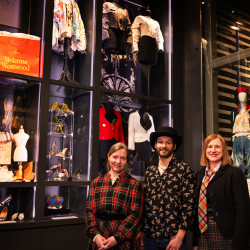
Northumbria University research unlocks the secrets of Vivienne Westwood's craft in a major new exhibition
A fashion researcher and educator from Northumbria University has created what is believed…
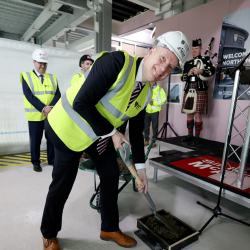
NESST topping out ceremony attendees receive traditional tankards to celebrate build milestone
Topping out ceremony marks pivotal moment for centre backed by £50 million investment set to…
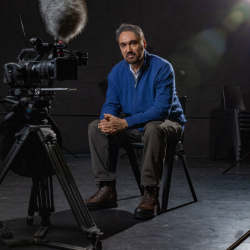
From Netflix to Newcastle Northumbria graduate uses AI to revolutionise film and TV production
A Northumbria University graduate who co-created Bangkok Breaking — one of Thailand's biggest…

Northumbria University researcher brings death-positive arts festival to libraries across England
An arts festival exploring death, dying and end-of-life choices — led by a Northumbria University…
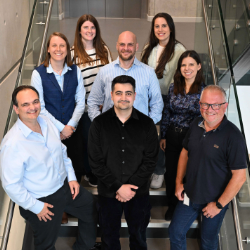
Northumbria University spinout achieves CE marking for deep lung breath sampling device — a first backed by peer-reviewed research
A medical device company spun out of Northumbria University has reached a significant milestone…
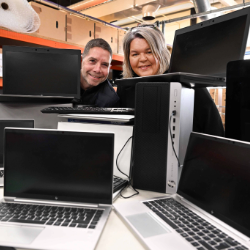
Northumbria University's IT recycling initiative recognised as national best practice
The equivalent weight of one and a half double-decker buses' worth of IT equipment has been…
More events
Upcoming events

From sustenance to complete nourishment in a changing and uncertain climate
Ellison Building A, 001 (ELA 001)
-

Broken Bonds: New Perspectives on Marital Breakdown
The Great Hall
-

Smarter Supply Chains: Digital Innovation for Cost, Efficiency & Carbon
Northumbria University
-

Culture in Conversation: Rethinking Leadership & Organisational Practice
CCE1 Newcastle Business School
-
