
Our members conduct research to understand how information processing and subsequent actions are shaped by goals, knowledge, individual differences, health, and experience. Across our group, we have expertise in auditory, object and face perception, attentional control and working memory, learning and long-term memory, action planning, and motor learning. Our work spans the fundamental to applied spectrum and brings together sensitive behavioural, eye-tracking, motion-capture and electrophysiological techniques. The ultimate goal of our research is to understand how attention, memory, perception and action shape our interactions with the world around us and how those processes differ with age, neurodiversity and psychopathology.
Current Research Programmes:
Attention, memory, perception, and action through the life span
The ability to process and act on information changes with age. Our research in this programme has focused both on understanding children's information processing abilities and the impact ageing has on cognitive performance. This work stream also explores the factors that may mitigate age-related changes in thinking skills, including lifelong musical experience. Such fundamental understanding then informs opportunities for early intervention and treatment.
Examples of recent work:
Comparable rest-related promotion of spatial memory consolidation in younger and older adults.
Attention, memory, perception, and action for wellbeing
Optimal cognitive functioning is integral to healthy living, and efforts to improve wellbeing benefit from research on sources of and support for maladaptive cognition as well as how diversity in cognitive abilities can be understood and supported. Our research in this programme has focused on understanding the nature of perceptual hallucinations in clinical and non-clinical populations, the potential for short bouts of exercise and wakeful rest as a memory-promoting interventions, and the cognitive bases of neurodiversity.
Examples of recent work:
Attention, memory, perception, and action in different social and environmental contexts
Humans operate in diverse social and environmental contexts on a day-to-day basis. Our research in this programme has focused on how social dimensions -- ownership over objects and space, cooperative and competitive orientations, and perception of facial characteristics -- influence basic cognitive mechanisms and how that translates to behaviour.
Examples of recent work:
Affective compatibility with the self modulates the self-prioritisation effect
Methodological issues when using face prototypes: A case study on the Faceaurus dataset
Attention, memory, perception, and action with technology
As technology is increasingly integrated into our society and culture, it is important to understand the cognitive processes that support use of technology as well as the cognitive consequences of technology use. Our research in this programme has focused on the use of artificial intelligence in learning, human augmentation and robotics, esports performance, and effects of screen use.
Examples of recent work:
Maximising Coefficiency of Human-Robot Handovers Through Reinforcement Learning
Staff members
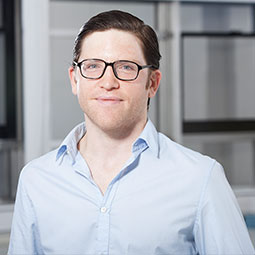
Group lead: Jason Rajsic


Student members




Latest News and Features
New platform maps charity support for the Armed Forces community
Pioneering data platform maps where the Armed Forces community receive support from charities

Northumbria co-leads study on fairer support for families
A major study co-led by Northumbria University will test whether attachment assessments lead…

New AHRC research shows how community innovation can power the next phase of devolution.
New research published today by the AHRC Creative Communities programme provides fresh evidence…

Free sessions to help families navigate the SEND system
Northumbria University's award-winning Student Law Office is launching SEND Decoded, a series…

New Doctoral Training Programme will tackle key polar science questions with a reduced carbon footprint
The Net Zero Polar Science (NZPS) Doctoral Training Programme (DTP) has welcomed its first…

New Student Health Hub brings joint health and wellbeing support
A new drop-in service is bringing health and wellbeing support for students at both Newcastle…

Researchers aim to grow optical fibres using biology instead of machinery
A new project led by Northumbria University aims to grow optical fibres using proteins, mimicking…

Training the next generation of space scientists
Northumbria University has hosted a major international workshop, bringing together leading…
More events
Upcoming events
The Past We Inherit. The Future We Build: Better Decisions Happen Together
The Great Hall, Sutherland Building
-

Next Stop Northumbria
Manchester Marriott Hotel Piccadilly
-

-
Magnetospheric Multiscale Science Working Team Meeting
Sutherland Building
Page last reviewed: 7 August 2025
