
Using state-of-the-art laboratories and real-world assessment techniques, research is produced that can be translated into bespoke interventions to benefit those in healthy, clinical and occupational populations.
Projects and Partnerships
Caregiver Stress Programme
This internationally renowned programme of work is using innovative psychobiological assessment techniques to monitor indices of health and wellbeing, including the measurement of stress hormones and cardiovascular and immune functioning to explore the stress of caregiving. These assessments are used to identify the causes and consequences of stress in informal caregivers and careworkers and to measure the efficacy of bespoke stress-reducing interventions. The programme has received research funding, funded PhD students, and is producing peer-reviewed publications in leading journals in the field. The group is also involved in consultancy activities and training for carers and other stakeholders.
Activities in the programme have included:
Training delivered (four courses per year) as part of the Atlass Programme run by Studio III Training Systems & Psychological Services and accredited by Birmingham City University
Training delivered to Centre for Special Paedagogiske Bornetilbud, Aarhus Denmark
Consultancy provided to Studio III and AT-Autism
Keynotes based on this research have included:
SIKON Conference, Denmark 2020
14th Annual Conference Autism – a hands on approach: ‘Psychophysical effects of caring’ 2017
Research Autism, 2016
International Wellbeing Conference, 2015
Reducing the Impact of Stress on Everyday Functioning in Older Adults
This is a unique collaboration drawing together expertise from psychobiology and stress measurement, nutrition, and ageing. The programme assesses elderly adults and carers and uses a range of innovative indices to assess everyday functioning, that is, activities identified by the population as important to their health and wellbeing. For example, measures of mobility, cognition, socialisation psychological, and physical health. The programme investigates potential stress buffering factors and the role of nutrition and nutritional supplementation as mediators of health and wellbeing. The programme has received £75k of industry funding (Vitabiotics) and university funding for a PhD studentship.
‘Write to Wellbeing’ – Therapeutic Writing
‘Write to Wellbeing’ is a programme of applied research based upon expressive / therapeutic writing. Developed by Dr Michael Smith and Professor Mark Wetherell, the programme involves research on the feasibility and efficacy of expressive writing in a range of populations and assesses a variety of outcomes related to health, wellbeing, and performance. This evidence is then applied in a range of settings. Write to Wellbeing teaches expressive writing techniques and aims to demonstrate why these techniques work. We identify which techniques are most appropriate based on individual characteristics and needs and apply these techniques based upon scientific evidence.
The researchers have previously delivered this programme in schools (to both groups of pupils and teachers), to caregivers, with patient groups (e.g. rheumatoid arthritis), to university staff, and at community workshops. The programme would be suitable for delivery within companies and organisations as part of a wider staff wellbeing initiative.
Assessing stress in Applied Settings
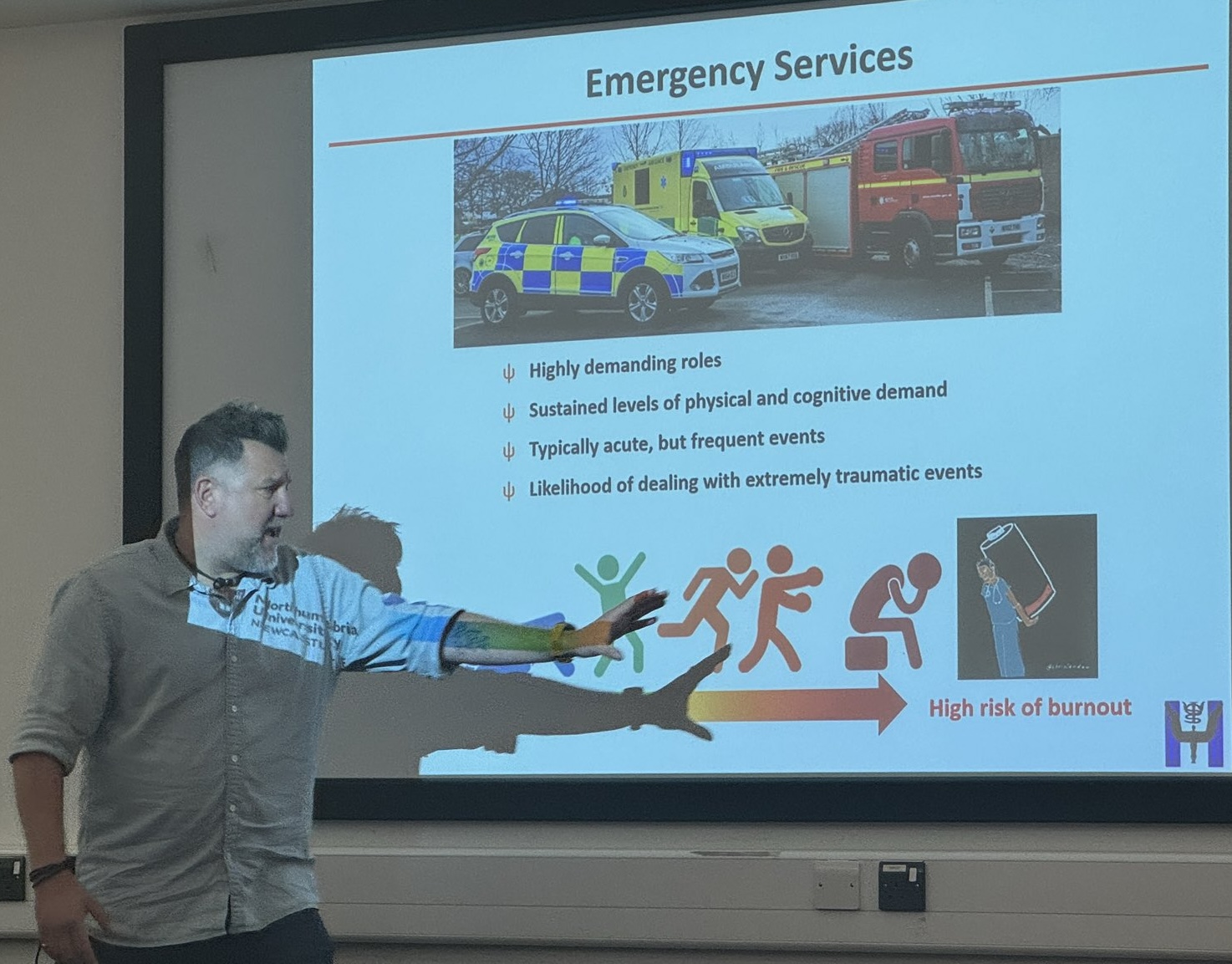
Members of the group measure psychobiological markers of stress in a range of clinical (e.g., rheumatoid arthritis, diabetes, IBS, chronic fatigue), occupational (e.g., medical professionals, firefighters, frontline care staff, prison officers, police force, emergency aircrew), sports (e.g., elite rowers, rugby and football teams), vulnerable (e.g., parent carers and careworkers of individuals with behaviours that challenge), and healthy populations.
Professor Wetherell has recently received funding (Bial Foundation) to assess the psychobiological impact of Pre-Hospital Emergency Care training run by the Great North Air Ambulance Service.
Research from the group was featured in a BBCRadio 4 documentary series assessing health and wellbeing in the music industry. Read related news article.
Staff members
Group lead: Daniel Rippon








Student members


Latest News and Features
New research to boost preventative healthcare in Bolton
A collaborative project evaluating the success of the Making Every Contact Count healthcare…

Northumbria expands results day support for students
Northumbria University is expanding and enhancing the support it provides to students receiving…

Northumbria wins recognition for expanding access to higher education
Northumbria University has been named Higher Education Institution of the Year at a prestigious…

Government should provide more support for people who hoard, say experts
Experts from across the UK have called on the government to do more to address the growing…

Research highlights urgent need for national strategy to combat rising eating disorders
The increasing number of people with eating disorders and a lack of national guidance for support…
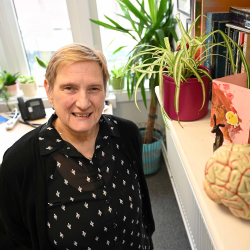
Transforming dementia support through technology network
Researchers have been awarded £1.6 million to develop a network which will support people living…
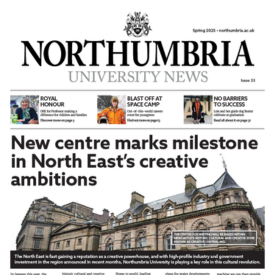
Read the latest issue of Northumbria University News: Spring 2025 edition
The Spring 2025 edition of Northumbria University’s newspaper is available to collect on campus…

The ‘red advantage’ is no longer true for Olympic combat sports
Wearing a red outfit in combat sports has been believed to provide an advantage for athletes,…
More events
Upcoming events
Supporting Survivors of Sexual Violence and Abuse Conference 2026
CCE1 - City Campus East 1
-
