Psychology MSc
21 Months Full-Time | January Start
Option for Placement Year
Option for Study Abroad

International
View our Global FootprintBusiness
Northumbria University is proud to offer a range of Professional, Statutory and Regulatory Body (PSRB) approved & accredited courses and programmes. Explore our list of courses and programmes under our Education and Training page.
More on our Business ServicesResearch
Northumbria is a research-rich, business-focused, professional university with a global reputation for academic quality. We conduct ground-breaking research that is responsive to the science & technology, health & well being, economic and social and arts & cultural needs for the communities
Discover more about our ResearchAlumni
Northumbria University is renowned for the calibre of its business-ready graduates. Our alumni network has over 253,000 graduates based in 178 countries worldwide in a range of sectors, our alumni are making a real impact on the world.
Our AlumniIf you’d like to receive the latest updates from Northumbria about our courses, events, finance & funding then enter your details below.
* At Northumbria we are strongly committed to protecting the privacy of personal data. To view the University’s Privacy Notice please click here
Option for Placement Year
Option for Study Abroad

Are you looking for a master's course that will fascinate your interest in the human mind? Hoping to change direction after an undergraduate degree in a different subject? This British Psychological Society (BPS) accredited Psychology MSc is an essential step on your journey towards a career in Psychology.
You will learn from passionate academic staff, who are involved in cutting-edge research. Northumbria's Psychology research environment is rated excellent *** and world-leading**** internationally (REF, 2021)
You will learn in a professional research environment, with access to state-of-the-art laboratories which are equipped with industry standard equipment. You will learn from those at the forefront of their fields. In fact, our strength in psychology research has significantly increased.
You will develop an advanced understanding of
Successful completion of this master's in psychology will provide you with the Graduate Basis for Chartered Membership with the BPS, the first step towards becoming a Chartered Psychologist.
If you want to specialise in Health, Occupational or Sport and Exercise Psychology then your next step will be a Stage 1 Masters, which we also offer here at Northumbria.
If you want to specialise in Counselling, Educational or Clinical Psychology then you will need to apply for a highly competitive doctoral programme. You are likely to need substantial experience to be successful in gaining a place, and at Northumbria we will support you in finding that experience.
The third route to a career in Psychology is the academic route, and we can support interested students in applying for our MRes and subsequently a PhD. This would qualify you to lecture and carry out psychological research in a university setting.
Our MSc Psychology has been designed with your employability in mind, and will prove valuable even if you decide not to pursue a career in Psychology. Our previous graduates have secured roles in management, advertising, marketing and human resources.
Study pattern
The timetable for the full-time programme is two full days (9am-5pm) per week on a Monday and Tuesday, and for the part-time programme it is one full day per week (Tuesday for year 1, Monday for year 2).
When deciding on which programme to apply for, we would ask applicants to consider carefully the time commitments for the course taking into account work and any other personal commitments. For full-time students we would expect a commitment of approximately 35 hours per week and for part time around 17.5 hours per week. (For both programmes these hours include hours of study on campus.).
![]()
Are you looking for a master's course that will fascinate your interest in the human mind? Hoping to change direction after an undergraduate degree in a different subject? This British Psychological Society (BPS) accredited Psychology MSc is an essential step on your journey towards a career in Psychology.
You will learn from passionate academic staff, who are involved in cutting-edge research. Northumbria's Psychology research environment is rated excellent *** and world-leading**** internationally (REF, 2021)
You will learn in a professional research environment, with access to state-of-the-art laboratories which are equipped with industry standard equipment. You will learn from those at the forefront of their fields. In fact, our strength in psychology research has significantly increased.
You will develop an advanced understanding of
Successful completion of this master's in psychology will provide you with the Graduate Basis for Chartered Membership with the BPS, the first step towards becoming a Chartered Psychologist.
If you want to specialise in Health, Occupational or Sport and Exercise Psychology then your next step will be a Stage 1 Masters, which we also offer here at Northumbria.
If you want to specialise in Counselling, Educational or Clinical Psychology then you will need to apply for a highly competitive doctoral programme. You are likely to need substantial experience to be successful in gaining a place, and at Northumbria we will support you in finding that experience.
The third route to a career in Psychology is the academic route, and we can support interested students in applying for our MRes and subsequently a PhD. This would qualify you to lecture and carry out psychological research in a university setting.
Our MSc Psychology has been designed with your employability in mind, and will prove valuable even if you decide not to pursue a career in Psychology. Our previous graduates have secured roles in management, advertising, marketing and human resources.
Study pattern
The timetable for the full-time programme is two full days (9am-5pm) per week on a Monday and Tuesday, and for the part-time programme it is one full day per week (Tuesday for year 1, Monday for year 2).
When deciding on which programme to apply for, we would ask applicants to consider carefully the time commitments for the course taking into account work and any other personal commitments. For full-time students we would expect a commitment of approximately 35 hours per week and for part time around 17.5 hours per week. (For both programmes these hours include hours of study on campus.).
Level of Study
Postgraduate
Mode of Study
21 months Full Time
3 other options available
School
Psychology
Location
City Campus, Northumbria University
City
Newcastle
Start
January
Fees
Fee Information
Modules
Module Information
Find out more about Psychology at Northumbria

Why Study Psychology
Blog Post
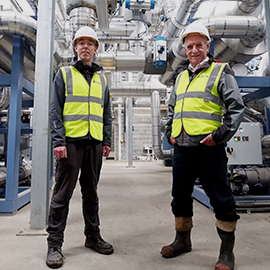
Northumbria psychologists support local residents to change energy use behaviours.
Read the news story.Student wins prestigious award to help improve mental health among farmers and their families.
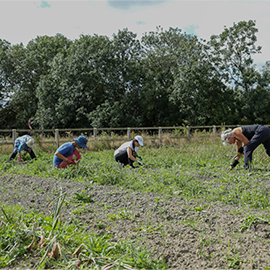
Read the news story.Northumbria research on ASMR finds interesting link.

Read the news story.Discover the funding options available to you.
You will develop a comprehensive knowledge of Psychology through exploring Social, Developmental, Cognitive and Biological Psychology. You will also study individual differences, philosophies and research methods. You will learn through discussion-based sessions, interactive lectures, tutorials and online discussions.
Research workshops will allow you to develop and enhance your qualitative and quantitative methods competence, data collection and analysis. You will be encouraged to take responsibility for your own learning, demonstrating applied understanding and knowledge at the forefront of the discipline. You will learn to defend your work effectively to a wide range of audiences.
Assessment is varied, either exam based or through written assignments such as laboratory reports, research article critiques, data analysis assignments, presentations or conventional essays.
You will also undertake a major research thesis on a topic of your choice, supported by the breadth of expertise amongst our staff
We know that embarking on a masters course is a big decision and knowing whether you will have enough time to balance all of life’s other demands is important.
During this course your on-campus lectures, workshops and seminars will all be timetabled on a Monday and Tuesday. For a masters programme like this we expect a commitment of around 35 hours per week - how you do your self-directed study is completely up to you. We want you to be able to fit your studies in with your life, whether that be at our City Campus Library, the University Library Digital Commons, open 24/7 during term time, or at home with access to e-books and journals - make it work for you.
Our staff are active researchers; passionate about their subject and dedicated to the discovery of new knowledge through innovative and exciting research projects.
You will learn from those at the forefront of their fields.You will learn from dedicated academics extensive research and teaching backgrounds. Current staff research projects include working memory, neurocognitive performance and function, psychobiological pathways and the psychobiology of stress and the nutritional influences on performance and mood.
Read more about our Psychology academics.
You will learn in a professional research environment with access to state-of-the-art laboratories, equipped with industry-standard equipment. You will be able to collect and analyse your data using the most up-to-date software tools.
You will spend much of your on-campus time in the Experimental Psychology Lab, which has been designed to facilitate group work. You will make constant use of Blackboard, where electronic reading lists, lecture capture, interactive workshops, and online submission and feedback tools will support your learning.
Depending on which area you choose to explore for your thesis, you will have access to research equipment including EEG, eye-tracking, virtual reality, galvanic skin response, body scanning, and motion capture.
Research is embedded into the structure of this degree, and from the very beginning you will experience a mix of research-led, research-tutored and research-based teaching.
You will learn how knowledge in Psychology is developed through research and how to design and carry out research studies using a range of methodologies. Developing your own advanced research skills and critical understanding, you will have the opportunity to work alongside active researchers at the forefront of research in the Psychology fields. You will be encouraged to ask and explore innovative research questions, reflecting upon the research process and knowledge creation, culminating in the production of a research thesis.
Psychology can offer you a hugely rewarding career, and this course – which will give you the Graduate Basis for Chartered Membership with the BPS – is an essential first step.
If you want to specialise in Health, Occupational or Sport and Exercise Psychology then your next step will be a Stage 1 Masters, which we also offer here at Northumbria.
If you want to specialise in Counselling, Educational or Clinical Psychology then you will need to apply for a highly competitive doctoral programme. You are likely to need substantial experience to be successful in gaining a place, and at Northumbria we will support you in finding that experience. We will open doors to the many volunteering opportunities at the University and within the sector, and the MSc will also qualify you to apply for a valuable Assistant Psychologist role.
The third route to a career in Psychology is the academic route, and we can support interested students in applying for our MRes and subsequently a PhD. This would qualify you to lecture and carry our psychological research in a university setting.
Our MSc Psychology has been designed with your employability in mind, and will prove valuable even if you decide not to pursue a career in Psychology. You will develop a critical approach to analysing qualitative and quantitative data, which will equip you to make sound informed decisions – one of the most important aspects of leadership. Our previous graduates have secured specialist roles in management, advertising, marketing and human resources, with many moving into the public sector for careers in the police and prison services, health and social services or education.
Take a look at what Northumbria has to offer and discover what studying with us can do for you.
Applicants should normally have:
A minimum of a 2:2 honours degree in any discipline.
International qualifications:
If you have studied a non UK qualification, you can see how your qualifications compare to the standard entry criteria, by selecting the country that you received the qualification in, from our country pages. Visit www.northumbria.ac.uk/yourcountry
English language requirements:
International applicants are required to have a minimum overall IELTS (Academic) score of 6.5 with 6 in each component (or approved equivalent*).
*The university accepts a large number of UK and International Qualifications in place of IELTS. You can find details of acceptable tests and the required grades you will need in our English Language section. Visit www.northumbria.ac.uk/englishqualifications
Full UK Fee: £11,250
Tuition fees in the academic year 2027/28* will be £10,050. Fees are set in line with the UK Government's tuition fee cap. The University may increase fees in subsequent years in line with any changes to the tuition fee cap. Increases will be linked to inflation. For example, increases may be linked to RPIX (Retail Price Index excluding mortgage interest payments) Students will be notified of any increase ahead of it taking effect. Student fee loans rise in line with the tuition fees cap.
*if your course is longer than one year
Full International Fee: £21,500
This is the tuition fee for your first year of study. You should expect to pay tuition fees for every year of study. The University may increase fees in the second and subsequent years of your course at our discretion in line with any inflationary or other uplift. Students will be notified of any increase ahead of it taking effect.
Scholarships and Discounts
ADDITIONAL COSTS
TBC
* At Northumbria we are strongly committed to protecting the privacy of personal data. To view the University’s Privacy Notice please click here
Module information is indicative and is reviewed annually therefore may be subject to change. Applicants will be informed if there are any changes.
HW7000 -
Skills for Academic Success in a UK University (Core – for International and EU students only,0 Credits)
You will develop your understanding of academic conventions in UK higher education aligned to your level of study, including expectations around critical analysis, structure, argumentation, evidencing, and referencing. The module focuses on developing communication strategies that will help you express your ideas clearly and coherently in written assignments and spoken activities. You will also reflect on your current academic and language skills and develop strategies for development ahead of your assessments.
More informationPY0790 -
Quantitative Research Methods (Core,30 Credits)
You will learn how knowledge in psychology is developed through research. You will learn how to design and carry out research studies using a range of quantitative methodologies. The skills in writing reports in line with current conventions in the psychological literature will be developed through practice and detailed formative and summative feedback. The importance of ethical considerations will be constant theme throughout the module and the completion of documentation required for ethical research will be covered in depth.
In parallel, you will acquire an understanding of the following basic principles in statistics: levels of measurement; standardised effect size measures; sample distributions, standard errors and confidence intervals; meta-analysis; statistical significance testing, publication bias, and the problems they cause. From this knowledge base, you will independently read advanced literature on statistics to further your understanding. You will also learn when and how to use a range of frequently used data analysis techniques (e.g. estimation of standardised effect sizes; meta-analysis; ANOVA and ANCOVA; multiple regression; and chi2 to analyse proportions) in order to inform your critical judgement about your own research and that of others. Finally, you will learn about the limitations of statistical inference in some important real-world settings.
PY0791 -
Historical Psychology and Qualitative Research Methods (Core,30 Credits)
You will have the opportunity to learn about the historical development of psychology as a discipline and to gain experience in understanding the methodology and analyses of qualitative research in Psychology.
Historical Psychology: You will be introduced to a series of ‘classic’ studies and asked to evaluate and debate the way that psychological knowledge, methods and ethical approaches may have changed since that original study. Each classic study represents a pathway in the discipline of psychology, embracing diverse areas such as social, developmental, cognitive and health psychology. The assessment will strengthen your ability to critically apply core concepts from one of these classic studies.
Qualitative Research Methods: In this component you will be able to consider a range of qualitative methodologies, thematic analysis, Interpretative phenomenological analysis (IPA), grounded theory, the use of focus groups, and discourse analysis. A session will be dedicated to examining issues on quality and rigour in qualitative review and providing you with experience of critically reviewing a selection of research papers You will also have the opportunity to collect data and choose an appropriate analysis approach in order to interrogate the data.
PY0792 -
Biological, Cognitive and Developmental Psychology (Core,30 Credits)
You will learn about three key domains within the discipline of psychology, biological systems and processes, cognitive processes and developmental processes, and how they provide an understanding to human behaviour.
Biological Psychology: This component will cover the fundamentals of biological psychology and demonstrate the importance of biological systems in human behaviour. This will include knowledge of the biological systems of the body (the brain and nervous and endocrine systems) and communication between these systems via neurons, and hormones; the techniques used to assess brain structure and function; individual differences in their functioning and nutritional and pharmacological interventions that can affect the functioning of these systems. Several health behaviours (feeding, stress, sleep) will also be examined in depth from a biological perspective.
Developmental: This component will cover the historical foundations of child development and fundamental aspects of social and cognitive development in young children and adolescents. Topics may include research methods and ethics, cognitive development, theoretical perspectives including Piaget and Vygotsky, emotional development, attachment theory and developmental disorders, Some of these issues will be considered in depth.
Cognitive; This component will familiarise students with the core areas of cognitive psychology and will demonstrate the importance and relevance of cognitive processes when trying to understand human behaviour within both theoretical and applied contexts. Topics will be drawn from; perception; attention; memory; problem solving; decision making and language. As in the Developmental component there will be an initial emphasis, where relevant, of the historical development of the constructs discussed.
Additionally, in all three components, learners will have the opportunity to develop psychological research skills.
PY0793 -
Individual Differences, Psychometrics and Social Psychology (Core,30 Credits)
You will learn about three key domains within the discipline of psychology, individual differences, psychometrics, and social psychology processes, and how they provide an understanding to human behaviour.
The Individual Differences sessions will examine a range of topics, e.g. historical approaches to intelligence with an emphasis upon contemporary cognitive approaches such as working memory, intelligence and cognitive interventions, and individual differences in cognition such as lifespan differences. Personality sessions will consider the construct of personality, factors in personality, and applications.
The Psychometric sessions of the module will consider topics such as test classification and development, standardisation, reliability, validity, interpretation and applications.
The Social Psychology component will provide you with an understanding of the human as a social being. Topics may include some of the most renowned studies in psychology regarding issues of conformity, aggression, prejudice and interpersonal relationships. Methodological and ethical issues related to the studies that inform social psychology will also be explored.
Thus, in all topics you will have the opportunity to critically consider applications of the constructs.
PY0776 -
MSc Thesis (Core,60 Credits)
In this module, you will be able to independently conceptualise, plan and undertake a novel piece of research that contributes to psychological knowledge and understanding. You will critically evaluate current theories and evidence to generate your own research question. You will use the relevant ethical guidelines to design a feasible project plan. You will develop your independent research skills during this module and identify points of collaboration with supervisors, research staff and other potential stakeholders. You will use a variety of relevant skills, techniques, and research methods to implement your study and finally, you will have the opportunity to disseminate your findings in written form.
More informationThe following alternative study options are available for this course:
Sep start
Sep start
Jan, Apr, Jul start
Our Applicant Services team will be happy to help. They can be contacted on 0191 406 0901 or by using our Contact Form.
Full time Courses are primarily delivered via on-campus face to face learning but could include elements of online learning. Most courses run as planned and as promoted on our website and via our marketing materials, but if there are any substantial changes (as determined by the Competition and Markets Authority) to a course or there is the potential that course may be withdrawn, we will notify all affected applicants as soon as possible with advice and guidance regarding their options. It is also important to be aware that optional modules listed on course pages may be subject to change depending on uptake numbers each year.
Contact time is subject to increase or decrease in line with possible restrictions imposed by the government or the University in the interest of maintaining the health and safety and wellbeing of students, staff, and visitors if this is deemed necessary in future.
Northumbria University is committed to developing an inclusive, diverse and accessible campus and wider University community and are determined to ensure that opportunities we provide are open to all.
We are proud to work in partnership with AccessAble to provide Detailed Access Guides to our buildings and facilities across our City, Coach Lane and London Campuses. A Detailed Access Guide lets you know what access will be like when you visit somewhere. It looks at the route you will use getting in and what is available inside. All guides have Accessibility Symbols that give you a quick overview of what is available, and photographs to show you what to expect. The guides are produced by trained surveyors who visit our campuses annually to ensure you have trusted and accurate information.
You can use Northumbria’s AccessAble Guides anytime to check the accessibility of a building or facility and to plan your routes and journeys. Search by location, building or accessibility feature to find the information you need.
We are dedicated to helping students who may require additional support during their student journey and offer 1-1 advice and guidance appropriate to individual requirements. If you feel you may need additional support you can find out more about what we offer here where you can also contact us with any questions you may have:
Page last updated 05/08/26
If you’d like to receive the latest updates from Northumbria about our courses, events, finance & funding then enter your details below.
* At Northumbria we are strongly committed to protecting the privacy of personal data. To view the University’s Privacy Notice please click here