
Post-graduate Researcher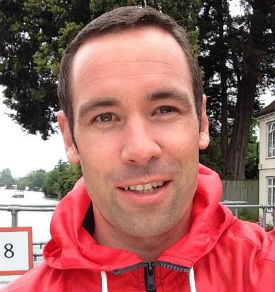
Department: Sport, Exercise and Rehabilitation
Richard is Course Leader for the BSc Sport and Exercise Science at Birmingham City University. He previously worked at St Mary’s University for eight years as Programme Director for the BSc Strength and Conditioning Science, where he also managed the sport science support to The Royal Ballet Company in London. Richard is an Accredited Strength and Conditioning Coach and previously a Director of the UK Strength and Conditioning Association. He has provided coaching support to numerous distance runners over the last 10 years and in 2015 published a book on the topic. This also provided the inspiration his doctoral research.
Qualifications
- Postgraduate Certificate in Education
- MSc Exercise Physiology
- BSc Sport Science with Management
Overview of Doctoral Research
Strength training for young distance runners: current habits and effects on physiological determinants of performance
Strength training has been shown to provide benefits to several physiological parameters that underpin distance running performance, including economy of movement and speed at VO2max. Despite the well-established benefits of resistance training exercise for young athletes, the potential ergogenic effects of strength training on young distance runners are yet to be fully explored. The start point for Richard’s doctoral research was a survey, which aimed to investigate the extent to which young distance runners are currently engaging in strength training compared to recreational and well-trained trained senior runners. Supported by funding from the British Milers Club, Richard has also carried out an intervention study to investigate the effect of a 10-week strength training programme on the physiological determinants of performance in a group of adolescent middle-distance runners. The results were presented at the British Association of Sport and Exercise Science annual conference in November 2016. There is also evidence that high-intensity strength exercise may provide an acute potentiation effect, which subsequently enhances running economy. Using a group of well-trained junior male distance runners, Richard is also investigating the efficacy of this approach to the warm-up of young distance runners.
Publications/Outputs
Published books
Blagrove, R. (2015). Strength and conditioning for endurance running. Wiltshire, UK: The Crowood Press.
Book chapters
Blagrove, R. (in press). Lowering injury risk and improving performance with strength and conditioning. In S. Overall (Ed.), Unlocking personal bests. Berkshire, UK: Myer and Myer.
Peer-reviewed journal publications
Read, P., Hughes, J.D., Blagrove, R., Jeffreys, I., Edwards, M. & Turner, A.N. (2017). Characteristics and experiences of interns in strength and conditioning. Journal of Sports Sciences, 35, 269-276.
Howe, L. & Blagrove. R. (2015). Shoulder function during overhead lifting tasks: implications for screening athletes. Strength and Conditioning Journal, 37, 84-96.
Bridgeman, L. & Blagrove, R. (2014). The effects of an exercise induced muscle damage protocol on the postactivation potentiation response. Journal of Australian Strength and Conditioning, 22(5), 73-75.
Howe, L., Goodwin, J. & Blagrove, R. (2014). Unilateral vs. bilateral lower limb strength training in the development of athletic performance. Professional Strength and Conditioning Journal, 33, 19-24.
Blagrove, R. (2014). Minimising the interference effect during programmes of concurrent strength and endurance training. Part 2: Programming recommendations. Professional Strength and Conditioning Journal, 32, 15-22.
Blagrove, R. (2013). Programmes of concurrent strength and endurance training: how to minimize the interference effect. Part 1: Evidence and mechanisms of interference. Professional Strength and Conditioning Journal, 31, 7-14.
Wild, J., Bezodis, N., Blagrove, R. & Bezodis, I. (2011). A biomechanical comparison of accelerative and maximum velocity sprinting: strength training considerations for the Strength and Conditioning Coach. Professional Strength and Conditioning, 21, 23-37.
Howatson, G., Hough, P., Pattison, J., Hill, J., Blagrove, R., Glaister, M. & Thompson, K. G.(2010). Trekking poles reduce exercise-induced muscle injury during mountain walking. Medicine & Science in Sport & Exercise, 43, 140–145.
Peer-reviewed conference communications
Blagrove, R., Howe, L., Cushion, E., Spence, A., Howatson, G., Pedlar, C., & Hayes, P. (2016). Strength training enhances running economy in adolescent middle-distancerunners. British Association of Sport and Exercise Science Annual Conference, East Midlands Conference Centre, UK, 29th-30th November, 2016 (poster presentation).
Blagrove, R., Powell, K., Patterson, S., Howatson, G., & Hayes, P. (2016). The acute effect of depth jumps on running economy and time to exhaustion in well-trained distance runners. UK Strength and Conditioning Association Annual Conference, Hinkley Island, Leicestershire, UK, 17th-18th Sept 2016 (poster presentation).
Bridgeman, L., & Blagrove, R. (2014). The effects of an exercise induced muscle damage protocol on the post-activation potentiation response. ASCA International Conference on Applied Strength & Conditioning, Victoria, Australia, 7th-9th November 2014 (poster presentation).
Lockwood, J., & Blagrove, R. (2014). Can time-motion data from match-play predict subsequent jump performance and subjective feelings of recovery in youth football? UK Strength and Conditioning Association Annual Conference, Chesford Grange, Warwickshire, UK, 19th-20th July 2014 (poster presentation).
Armitage, M., & Blagrove, R. (2013). The impact of physical load impact on salivary immunoglobulin A, cortisol and testosterone in English academy Premier League football players. UK Strength and Conditioning Association Annual Conference, East Midlands Conference Centre, UK, 31st Aug – 1st Sept 2013 (poster presentation).
Safdari, D., & Blagrove, R. (2013). Strength determinants of 250m rowing ergometer performance. UK Strength and Conditioning Association Annual Conference, East Midlands Conference Centre, UK, 31st Aug – 1st Sept 2013 (poster presentation).
Blagrove, R., & Cotterill, M. (2012). Diurnal variation in Olympic weightlifting performance. UK Strength and Conditioning Association Annual Conference, Royal Holloway University, UK, 15th – 16th Aug 2013 (poster presentation).
Powell, D., & Blagrove, R. (2011). The effect of rest interval duration on potentiation of 10 metre sprint performance after heavy back squats. UK Strength and Conditioning Association Annual Conference, University of Stirling, UK, 18th – 19th June 2011 (poster presentation).
Lovell, C., & Blagrove, R. (2010). Three different intensities of back squat failed to potentiate squat jumps. International Conference for Strength Training, Bratislava, Slovakia, 28th – 30th October 2010 (poster presentation).
PGR Supervision
More events
Upcoming events

Broken Bonds: New Perspectives on Marital Breakdown
The Great Hall
-
Supporting Survivors of Sexual Violence and Abuse Conference 2026
CCE1 - City Campus East 1
-
