New platform maps charity support for the Armed Forces community
Pioneering data platform maps where the Armed Forces community receive support from charities


Daniel Laqua has been involved in a series of projects that shed fresh light on student life and student activism in the first half of the twentieth century.
Together with Georgina Brewis (UCL Institute of Education), Daniel Laqua has led a project on the impact of the First World War on student life in Britain. With funding from an AHRC World War One Engagement Centre (‘Everyday Lives at War’), their research examined the role ex-service students at British universities after the war, with specific consideration to a pioneering government scheme that funded their studies. A journal article with the project’s findings, co-authored with Sarah Hellawell (Sunderland) was published in History: The Journal of the Historical Association and is available in open access.
The specific emphasis on student funding led Laqua and Brewis to embark on a second project, which attracted a 2020 Anniversary Grant from the Society for Educational Studies (SES). This venture involved a detailed analysis of the Scheme for the Higher Education of Ex-Servicemen (1918–1923), raising wider questions about student funding and university access in Britain. Co-authored with Lara Green (Durham University), research relating to this venture appeared in the British Journal of Educational Studies.
Public engagement and knowledge exchange have been integral to these projects. The AHRC-funded project on ex-service students was based on a collaboration with two partner organisations, the National Union of Students (NUS) and the North East branch of the Workers’ Educational Association (WEA). Activities included a workshop with students at the NUS office in London, an outreach event in Newcastle, a pop-up exhibition (e.g., at Durham Record Office, NUS annual conference), material on the NUS website as well as the publication of a pamphlet (Students in England and the Legacy of the First World War). Subsequent seed-corn funding from the ‘Everyday Lives at War’ Centre enabled the team to work with student volunteers and stage a performance/presentation at the ‘Commemoration, Conflict and Conscience’ festival in Bristol (2019). Watch the trailer from this event. The different work on students also resulted in an exhibition, held in association with Northumbria colleague James McConnel at Northumbria’s University Gallery.
As a historian of international movements, Daniel Laqua’s own research has been concerned with transnational student activism before the 1960s. Initial work from this undertaking has appeared in The English Historical Review as an open access article. In this article, Laqua investigates how student leaders in the 1920s and 1930s used a specific organisation – the International Confederation of Students – as well as the structures of the League of Nations to promote their specific interests. Reflecting this interest in student-based internationalism as well as prior cooperation with the NUS, Laqua secured funding from the Northern Bridge Consortium to lead and supervise a PhD project in collaboration with NUS: since 2020, Emily Sharp is pursuing an AHRC-funded doctoral project that explores transnational dimensions of NUS’s work.
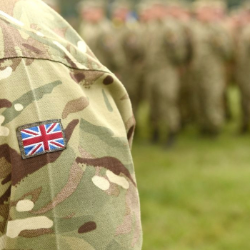
Pioneering data platform maps where the Armed Forces community receive support from charities

A major study co-led by Northumbria University will test whether attachment assessments lead…

New research published today by the AHRC Creative Communities programme provides fresh evidence…

Northumbria University's award-winning Student Law Office is launching SEND Decoded, a series…

The Net Zero Polar Science (NZPS) Doctoral Training Programme (DTP) has welcomed its first…

A new drop-in service is bringing health and wellbeing support for students at both Newcastle…

A new project led by Northumbria University aims to grow optical fibres using proteins, mimicking…

Northumbria University has hosted a major international workshop, bringing together leading…
The Great Hall, Sutherland Building
-

Manchester Marriott Hotel Piccadilly
-

Sutherland Building
Page last reviewed: 25 January 2024
