
Dr Mahmood Aslam is a Lecturer in International Business at Newcastle Business School, Northumbria University, where he serves as Deputy Programme Leader for the BSc International Business Management and leads the module International Business Negotiations. He brings an unusual combination of senior practitioner experience and international scholarship to his work. Before joining Northumbria in 2024, he spent more than thirteen years at a public sector urban planning and development organisation in Pakistan, rising to the post of Director. Working inside a large public institution, balancing the competing demands of citizens, government and business, continues to shape the questions he asks as a researcher.
Mahmood earned his PhD in Strategic Management and Organization from the University of Bayreuth, Germany, with the highest distinction, summa cum laude, supported by DAAD and HEC scholarships. His doctoral and early research examined coworking spaces as new forms of organising, exploring how people, spaces and material artefacts together shape knowledge exchange, innovation, sense of community, permeability and legitimacy. This work has been widely cited and appears in the Journal of Business Research, Journal of Knowledge Management, European Management Journal, International Journal of Entrepreneurial Behavior & Research, Business Horizons and Journal of Small Business Strategy, as well as in the edited volume Inside the Mind of the Entrepreneur and the proceedings of the Academy of Management Annual Meetings.
His current research turns to contestation and legitimacy in international business. He studies how multinational enterprises respond when challenged by boycotts, activists, NGOs and trade unions, and when such pressure becomes not only a threat but a catalyst for change. This agenda is set out in his recent article in the Journal of World Business, “Boycotts and MNCs: threat or catalyst for change? He is extending this work to stakeholder contestation in global supply chains and to legitimacy struggles in public sector transformation.
Mahmood is a Fellow of the Higher Education Academy (FHEA) and welcomes enquiries from prospective doctoral students, collaborators and organisations interested in stakeholder activism, supply chain governance and organisational legitimacy.

My research examines how organisations respond strategically when their legitimacy is contested and their environments become politically and institutionally complex. I focus on three connected areas:
- Contested legitimacy and non-market strategy. How multinational enterprises respond to boycotts, activist campaigns and transnational controversies that bring competing expectations from consumers, NGOs, trade unions, governments and investors, and when such pressure becomes a catalyst for change rather than only a threat.
- MNEs and geopolitical disruption. How firms navigate geopolitical crises, institutional complexity and stakeholder contestation across borders, including in global supply chains.
- Organising, work and legitimacy. How new forms of organising, from coworking spaces to transforming public-sector organisations, build legitimacy, community and innovation, and the paradoxes that arise when organisations change.
I welcome enquiries from prospective doctoral and Master’s students interested in these areas, particularly non-market strategy, stakeholder activism, legitimacy and the political dimensions of international business, as well as collaboration with researchers and organisations working on these questions.
- Please visit the Pure Research Information Portal for further information
- Boycotts and MNCs: threat or catalyst for change? a systematic literature review and future research implications, Aslam, M., Pesch, R., Wanjiru, R. 1 Oct 2026, In: Journal of World Business
- Distinctiveness through community: co-legitimation processes in coworking spaces, Aslam, M., Bouncken, R. 7 Jul 2026, In: International Journal of Entrepreneurial Behaviour and Research
- New work design for knowledge creation and sustainability: An empirical study of coworking-spaces, Bouncken, R., Aslam, M., Gantert, T., Kallmuenzer, A. 1 Jan 2023, In: Journal of Business Research
- The role of sociomaterial assemblage on entrepreneurship in coworking-spaces, Aslam, M., Bouncken, R., Görmar, L. 2 Nov 2021, In: International Journal of Entrepreneurial Behavior & Research
- Bringing the design perspective to coworking-spaces: Constitutive entanglement of actors and artifacts, Bouncken, R., Aslam, M. 1 Feb 2023, In: European Management Journal
- Coworking spaces: Understanding, using, and managing sociomateriality, Bouncken, R., Aslam, M., Qiu, Y. 1 Jan 2021, In: Business Horizons
- Understanding knowledge exchange processes among diverse users of coworking-spaces, Bouncken, R., Aslam, M. 11 Dec 2019, In: Journal of Knowledge Management
- Innovation and logics in coworking spaces. a template for contemporary innovation spaces?, Bouncken, R., Ratzmann, M., Gantert, T., Aslam, M. 1 Aug 2023, In: Academy of Management Annual Meeting Proceedings
- One Size Does Not Fit All: Considering Materiality to Understand Routines in Coworking Spaces, Bouncken, R., Aslam, M. 24 Jan 2023, Awakening the Management of Coworking Spaces, Bingley, Emerald
- Permeability in Coworking Spaces as an Innovation Facilitator, Bouncken, R., Aslam, M. 24 Jan 2023, Awakening the Management of Coworking Spaces, Bingley, Emerald
- PhD April 05 2022
- MSc April 23 2014
- BSc (Hons) March 15 2010
Latest News and Features

North-East pupils tackle real space research through award winning Orbyts programme
A Northumbria University-backed programme giving North-East pupils the chance to do real space…

New dementia risk tool designed for the countries that need it most
An international team led by Northumbria University has developed and validated a simple five-factor…

UK network to accelerate the development of sustainable surface technologies
A new national network led by Newcastle University and Northumbria University, in partnership…

Criminologist wins acclaimed Philip Leverhulme Prize to pioneer a new criminology of the offshore world
A Northumbria University criminologist has been awarded a Philip Leverhulme Prize, one of the…
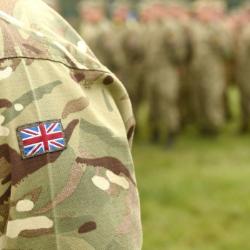
New platform maps charity support for the Armed Forces community
Pioneering data platform maps where the Armed Forces community receive support from charities

Northumbria co-leads study on fairer support for families
A major study co-led by Northumbria University will test whether attachment assessments lead…
More events
Upcoming events

-
Magnetospheric Multiscale Science Working Team Meeting
Sutherland Building

Christmas Market and Tree lighting
Northumbria University
-
What can an engineering education in the North East lead to?
Durrant Hall
-
