

New Doctoral Training Programme will tackle key polar science questions with a reduced carbon footprint
The Net Zero Polar Science (NZPS) Doctoral Training Programme (DTP) has welcomed its first…

Modern technologies, including reality capture and data sensing technologies, artificial intelligence (AI), 3D printing and additive manufacturing, and robotics, are transforming industries worldwide.
In the context of construction, these technologies have the potential to revolutionize processes and increase productivity. The integration of these advanced technologies and off-site methods of construction needs to be fostered to overcome the productivity challenges faced by the construction industry.
Join us at Transforming Construction with Off-Site Methods and Technologies (TCOT 2026), where we're pushing the boundaries of traditional construction practices and embracing the future of building.
This conference is a collaboration between Northumbria University, the University of New Brunswick Off-site Construction Research Centre (OCRC), and CIB International Council for Research and Innovation in Building and Construction.
The conference will be held in Newcastle Upon Tyne, UK, from August 18-20 2026, at Northumbria University. Plenary sessions, presentations of peer-reviewed papers, engaging keynote speakers, technical workshops and industry case studies will inform individuals and organisations of the latest uses of innovative technologies and off-site methods that are critical to the future of the construction industry.
Due to current global flight disruptions, remote presentations are fully supported for all accepted papers with full conference registration fee. Please contact the organisers if you wish to present your paper remotely.
A flyer for the conference is available to download as a PDF here.
Delegates are eligible to claim up to 10 hours of formal Continuing Professional Development (CPD), and we especially welcome delegates from industry.
.png?la=en&h=720&w=1152&modified=20260812111927&hash=387F63FE2108879F12AA09C67C967666)
Dates: Tuesday 18 - Thursday 20 August 2026
Location: Business and Law School, City Campus East (CCE1), Northumbria University, Newcastle upon Tyne, NE2 1XA, UK
Venue Access: The main entrance is step-free with automatic doors and there is lift access to all floors. More information on building access can be found on our AccessAble pages.
Transport: More information on travelling to CCE1 and Newcastle upon Tyne can be found here.
Registration fees:
Full conference (includes access to all workshops): £500+VAT (early bird) / £600+VAT (standard)
One day: £250+VAT (early bird) / £300+VAT (standard)
Workshop Registrations:
We will offer 2 workshops which will take place on Tuesday 18 August 2026, for more details about the workshops please visit the 'Programme and Workshops' section below. Those who register for the full conference will have access to all of the workshops at no additional charge. If you would like to attend only the workshops, there are two pricing options as follows:
Flexible: One-day registration (£250+VAT) + select individual workshops at £75 per workshop
Daily Pass: Bundled £400+VAT for 18 August, including all workshops.
Student Rates: We are able to offer discounted student registration rates. Please contact the organisers for details and eligibility.
Remote presentations: Due to current global flight disruptions, remote presentations are fully supported for all accepted papers with full conference registration fee. Please contact the organisers if you wish to present your paper remotely.
Keynote Sessions: Four pioneering plenary talks and keynote speeches
Previous Conference information: Transforming Construction with Off-site Methods and Technologies, University of New Brunswick, August 20 - 22, 2024.
CONFERENCE PRESENTATION TEMPLATE
A conference presentation template is available to download here (click the 'share' button at the top right to download).
CONFERENCE TOPICS
Transforming Construction with Off-Site Methods and Technologies (TCOT2026) adopts a socio-technical systems perspective to explore how offsite construction research and practice are shaping the future of the built environment. The conference aims to bring together, academic, industry and policy communities to examine the transition toward more industrialised, digitalised, sustainable and resilient systems of practice.
TCOT2026 invites contributions that advance understanding, innovation and implementation across the people, process and technology dimensions. Submissions are welcomed focusing on, but not limited to, the following three overarching themes and their associated sub-topics.
Advanced Technologies & Data
OSC Processes and Systems
People and Management for OSC
Submission Option |
Task |
Deadline |
|
Option 1: Academic Full Papers (7-10 Pages) |
300 Words - Abstract Submission |
open |
|
Notification of Abstract Acceptance |
open | |
|
Full Paper Submission |
01/05/26 | |
|
Notification of Full Paper Acceptance |
15/05/26 | |
|
Camera-Ready Submission |
01/06/26 | |
|
Option 2: Short Papers (3-4 Pages) |
300 Words - Abstract Submission |
open |
|
Notification of Abstract Acceptance |
open | |
|
Final Short Paper Submission |
01/05/26 | |
|
Notification of Short Paper Acceptance |
15/05/26 | |
|
Camera-Ready Submission |
01/06/26 | |
|
Option 3: Presentation Only - Industry Speakers |
300-500 Words - Abstract Submission |
24/04/26 |
|
Notification of Abstract Acceptance |
11/05/26 | |
|
Presentation Slides Submission |
10/08/26 | |
|
Workshop Proposals (CfW) |
Workshop Proposal Submission |
open |
|
Notification of Workshop Selection |
09/03/26 | |
|
Workshops Registration Open |
01/04/26 | |
|
Workshops Registration Deadline |
17/07/26 | |
|
Workshop Delivery Day |
18/08/26 | |
|
Important Dates (all options) |
Early Bird Registration Opens |
15/04/26 |
|
Early Bird Registration Deadline |
14/06/26 | |
|
Regular Registration Deadline |
04/08/26 | |
|
Author/Presenter Registration Deadline |
19/06/26 |
All authors/presenters must register by June 19 2026, otherwise submissions will be withdrawn.
Expressions of interest for workshop delivery can be submitted via the form here.
CALL FOR SUBMISSION
We invite contributions from academic researchers and industry practitioners addressing the conference’s thematic areas and sub-topics. Three types of submissions are available:
All accepted submissions will be included in the conference proceedings and will be considered for conference awards.
For full paper (type 1) and short paper (type 2) submissions, abstract submission is encouraged but not mandatory. For presentation only (type 3) submissions, an abstract submission is required by the stated deadline.
The official language of the conference is English and the formatting instructions for preparing the three types of submissions can be found under the Submission Guidelines (below).
SUBMISSION GUIDELINES
All submissions must be original and not simultaneously under review by another journal or conference.
Submissions are invited under the following three options:
Options 1 & 2: Full Paper and Extended Abstract
These options are recommended for academic researchers but open to all contributors. Please follow the submission steps below:
Deadline: 15th February 2026
Abstracts must not exceed 300 words. Notification of abstract acceptance will be issued on 22nd February 2026.
Deadline: 27 March 2026
Full scientific papers (7-10 pages) should present original research method and theoretical contributions.
Short papers (3-4 pages) may include scientific insights or case studies with intellectual merit.
Both must use the official paper template and follow the formatting instructions provided.
For those who prefer to work in LaTeX, a template is available here.
Step 3 – Camera-Ready Submission (Required)
Deadline: 15 May 2026
Authors upload the final revised version of their paper in the required format, accompanied by the signed Copyright Agreement Form, which will be available through ConfTool.
Deadline: 7 August 2026 (Required)
Presentations will be 15 minutes total. A template slide deck and submission instructions will be shared upon paper acceptance.
Option 3: Presentation Only
This option is recommended for industry practitioners wishing to present practical applications and project case studies, without submitting a paper.
Deadline: 24 April 2026
Abstracts must be 300 - 500 words. Notification of abstract acceptance will be issued by 11 May 2026.
Deadline: 10 August 2026
Presentations will be 15 minutes total. A template slide deck and further submission instructions will be provided after the acceptance.
Paper submission link can be found here.
A copyright agreement for submissions can be downloaded here.
CONTACT
For any questions regarding submissions, please contact:
A programme for the conference is available here.
A full conference programme is available here.
Workshops
Date & Time: 9:00 AM - 12:30 PM, 18 August 2026
Organiser: Stefan Mordue (from Bentley Systems, Inc).
Digital twins are increasingly being explored across construction and infrastructure, but successful implementation requires more than selecting a technology platform. It starts with understanding the problem to be solved, the people involved, the information required and the value a digital twin is expected to deliver.
This interactive workshop introduces a practical, use-case-led approach to developing a digital twin strategy. Drawing on real-world examples from construction and infrastructure, participants will explore what digital twins are (and, more importantly, what they are not) before working in teams to apply the approach to a real-world construction challenge. The focus is on the processes, workflows and strategic decisions that underpin a digital twin, rather than on any individual technology or software platform.
Through a series of facilitated activities, participants will define the problem and use case, identify stakeholders and information requirements, consider available data, and explore the technology, interoperability and governance needed to support their proposed digital twin. Teams will then bring these elements together to develop and present their digital twin strategy.
By the end of the workshop, participants will be able to:
Explain the principles of digital twins and identify relevant applications across construction and infrastructure.
Apply a use-case-led approach to define the stakeholders, information and data requirements for a digital twin.
Develop and communicate a high-level digital twin strategy that considers technology, interoperability, governance and lifecycle requirements.
Workshop 2: Virtual Reality for MMC in Healthcare Projects (CPD-Eligible, 2 hours)
Date & Time: 1:30 PM - 3:00 PM, 18 August 2026
Organiser: Andrew Johnson & Dr. Fadi Castronovo, Okana
The New Hospitals Programme (NHP) mandates Modern Methods of Construction (MMC) via Pre-Manufactured Value (PMV) thresholds, but persistent hurdles—like clinical stakeholders' hesitancy on designs and factory verification delays—threaten timelines and budgets. This practical workshop reveals VR as a game-changer, empowering non-technical users to approve designs early and ensuring pre-manufactured components match intent before production. Far from a gimmick, it grounds VR in live NHP schemes, addressing real delivery pain points for academics, practitioners, and public sector delegates through the P23 MMC Assessment framework.
The session splits into theory and hands-on: First, a presentation unpacks VR's lifecycle role—from overcoming 2D/BIM engagement limits, accelerating design freeze, to factory QA workflows—backed by active project data. Then, small groups map VR's high-impact moments in NHP timelines, debate adoption barriers (technical/cultural), and strategize solutions. The highlight is a live VR headset demo plunging attendees into a fully modelled clinical environment, simulating design sign-offs and production checks for immersive, confidence-building results.
By the end of this workshop, you will be able to:
Exclusive Site Visit NESST Building — Northumbria University Campus
Limited to 20 attendees only — secure your spot early!
Ever wondered what a truly integrated off-site construction project looks like in real life? This is your chance to walk through one.
The North East Space Skills and Technology Centre (NESST) at Northumbria University is not just a landmark building on campus — it's a living showcase of what modern, collaborative, and technology-driven construction can achieve. Delivered by Sir Robert McAlpine on one of Newcastle's most constrained urban sites, NESST pushed the boundaries of off-site innovation at every stage of its construction.
On this exclusive guided visit, you'll see first-hand how a hybrid structural frame — combining Lynx Pre-Cast concrete cores from Ashington and a steel frame fabricated by Harry Marsh in Sunderland — was coordinated to millimetre precision using BIM and laser scanning, dramatically reducing work at height and on-site risk. You'll discover how a fully unitised modular façade system, designed in 3D in Poland and assembled in factory conditions, was installed panel by panel above live traffic lanes without a single scaffold tower in sight. And you'll hear the remarkable story of a packaged plant room — built in Antrim, shipped across the Irish Sea fully charged, and craned into place in a single lift.
This isn't a theory session. It's a real building, with real lessons, delivered by the people who built it.
Learn more about NESST: northumbria.ac.uk/nesst
We are delighted to announce Wates Group as a sponsor of TCOT 2026 – Transforming Construction with Off-site Methods and Technologies!
One of the UK's most respected family-owned construction, development and property services companies, Wates has been delivering landmark projects since 1897. With a strong commitment to modern methods of construction and offsite manufacturing, they are exactly the kind of industry leader that makes TCOT 2026 so exciting.
It means a great deal to have an organisation of Wates' calibre standing behind this event. Their support reflects a shared belief in the future of construction.
.png?modified=20260616100246)
We are honoured to announce Sir Robert McAlpine as a sponsor of TCOT 2026 – Transforming Construction with Off-site Methods and Technologies!
A family-owned British institution proudly building Britain's future heritage since 1869, Sir Robert McAlpine has delivered some of the UK's most iconic projects — from the Olympic Stadium to the Eden Project. Their legacy of engineering excellence, innovation, and sustainability perfectly reflects the spirit of TCOT 2026.
Having a company with over 155 years of industry leadership backing our conference is truly something special.

We are excited to welcome Imex-CGI as a sponsor of TCOT 2026 – Transforming Construction with Off-site Methods and Technologies!
Based in Brest, France, Imex-CGI is a specialist engineering consultancy with over 13 years of experience and more than 1,500 projects delivered across renewable energy, smart-grid systems, solar, wind and hydrogen technologies. Trusted by major industry names, they bring deep technical expertise in designing and delivering complex, sustainable energy solutions — a perfect fit for a conference dedicated to transforming the way we build.
We are thrilled to have an organisation with such forward-thinking credentials helping to make TCOT 2026 possible.

TCOT 2026 offers a variety of partnership opportunities to advertise your organisation and/or products to members of the Architecture, Engineering, Construction, and Facilities Management industry. Our delegates will include industry leaders, academics, students and government and public sector officials. Partnering with this conference will allow your organisation to benefit from association with Northumbria University, IC3 (International Centre for Connected Construction), the University of New Brunswick OCRC, and CIB, while reaching out to a unique, captive audience in an engaging environment. There are many different partnership packages and benefit opportunities available at the conference, and we welcome the opportunity to discuss custom partnership packages that best suit your needs.
Download our Conference Partnership Opportunities Brochure


Zhen Lei is Associate Professor in the Department of Civil Engineering at the University of New Brunswick, where he holds the OSCO Research Chair in Off-site Construction and serves as Scientific Director of the Off-site Construction Research Centre (OCRC).
His research expertise spans construction process simulation and optimisation, Building Information Modelling (BIM), process improvement, and emerging digital technologies. He is a frequent speaker at industry and academic events across Canada and the United States, and his work is documented in over 70 publications in leading journals and conference proceedings.

David Greenwood is Emeritus Professor of Construction Management in the Department of Architecture and the Built Environment at Northumbria University, UK. Before entering academia, he spent a decade working as a Site Engineer and Senior Estimator in the construction industry — a grounding that continues to shape his practical, impact-focused approach to research.
He is co-founder and director of BIM Academy (2013–2023), a joint venture that won the 2017 Times Higher Education Award for most innovative collaboration between industry and academia. A former Fellow of the Chartered Institute of Building and Chair of the Association of Researchers in Construction Management (ARCOM), he has spent over twenty years consulting, training, and lecturing for commercial and governmental organisations around the world.
His academic output includes more than 150 publications, several authored and co-authored textbooks, and research funded by the EPSRC, AHRC, and UK and international government agencies. Throughout his career, he has been a consistent advocate for initiatives that drive better practice across the construction industry.

Professor Mathew Aitchison is Chief Executive Officer of Building 4.0 Collaborative Research Centre and a Professor of Architecture at Monash University.
Building 4.0 CRC is an industry-led research initiative co-funded by the Australian Government and its work is focused on building better, smarter, safer, faster, and more sustainably, particularly in housing.
Prior to taking up the role of CEO of Building 4.0 CRC, Mathew led the establishment of Monash University’s Future Building Initiative.
He was previously a Professor of Architecture at the University of Sydney where he was Director of the Innovation in Applied Design Lab (IAD Lab).
Over the past decade, Mathew has directed a series of large, collaborative research projects exploring the future of building.
https://www.linkedin.com/in/mathew-aitchison-2452b671

With over 15 years of research at Luleå University of Technology as her foundation, Helena has spent her career turning academic insight into real-world impact in industrialized and modular construction.
From 2010 to 2022, she led R&D and Design at Lindbäcks Bygg, one of Sweden's leading modular multi-family building companies, where she navigated the critical balance between standardization and flexibility that defines successful offsite construction.
In 2022, Helena brought her expertise to the global stage as CTO at Volumetric Building Companies in the US, where she established operations at the former Katerra facility in Tracy, California, and built out the team in Berwick — driving industrialized construction forward on an international scale.
Since late 2023, she has returned to Europe as Business Leader for VBC International, where she continues to shape the future of modular construction across the region.
Helena knows how to make modular construction work — and she loves doing it.

Jeff Rankin is a Professor and holder of the M. Patrick Gillin Chair in Construction Engineering and Management in the Department of Civil Engineering at the University of New Brunswick. He holds a PhD in Civil Engineering from the University of British Columbia, he is also currently the President of the Canadian Society for Civil Engineering
His career bridges academia and industry. Before joining UNB, he served as Executive Director of the Construction Technology Centre Atlantic, acting as an innovation broker for the region's construction sector. His hands-on construction experience spans project and construction management roles across a wide range of project types — from high-rise buildings to major infrastructure, including the Confederation Bridge.
Today, his research focuses on improving construction industry performance through innovation: the thoughtful adoption of advanced technologies and sustainable practices in the delivery of public infrastructure.

Pamela Bell is Professor of Practice for Advanced Construction at Te Herenga Waka – Victoria University of Wellington, where her work sits at the intersection of design, business, and innovative construction methods. Her subject matter expertise spans offsite manufacturing, design-thinking, dynamic strategy, and future-focused governance — with a particular passion for affordable housing supply and added-value timber manufacture.
Pamela founded OffsiteNZ in 2010 — New Zealand's peak body for innovative construction — out of her Master of Architecture thesis Kiwi Prefab, which was later published as a book and presented as a museum exhibition. She led the organisation until 2019, when offsite construction reached a genuine tipping point of awareness across government, industry, and the public.
Her career defies easy categorisation. She has served as Chief Everything Officer at Building Institute Aotearoa, Chair of the NZ Construction Industry Council, and board director across a wide range of built environment organisations including Urban Plus, Abodo Wood, BRANZ, and ConCOVE. She is also an active Innovation Consultant working with start-ups and commercial organisations in the sector.
Beyond construction, Pamela's background includes high-performance sport (1998 Winter Olympics), entrepreneurship across ventures including Fruition Apparel and NZ Snowboard Academy, and academic course design — she created the Design + Business course at Victoria University to open up broader career pathways for architecture and design students. She has also led workshops and written for the New Zealand Institute of Directors on the interface between design thinking and governance.
Pamela is a 2019 Victoria University of Wellington Alumni Award recipient.

Tom Harrison was the Chief Operating Officer of Turner & Townsend one of the world’s award leading project and cost management companies. He was also an influencing force in helping grow the business to 5000 people and 105 offices in 30 countries.
Since retiring, he has served as a governor at Northumbria University where he gained his Degree and was awarded an Honorary Doctorate.
He now chairs the International Centre for Connected Construction (IC3) and is also a Trustee of the Venerable English College in Rome.

BEng(Hons) Mech Eng, DMS , AMIMechE
Stephen is a recognised Modern Methods of Construction subject matter expert with over 28 years of leadership experience across offsite manufacturing, modular construction, and large scale infrastructure delivery. A Mechanical Engineer by background, he has worked at board and executive level across the full MMC lifecycle, from strategy, business case development, and concept design through to manufacturing, logistics, site delivery, and handover.
His experience spans both structural and non-structural systems in steel, concrete, timber and MEP prefabrication, factory and site operations, supplier capability assessments, and governance of safety, quality, commercial and production performance across residential, healthcare, education, defence, and government infrastructure sectors.

Jeff leads Cast’s Advisory service, supporting clients across the real estate sector to navigate market change and achieve sustainable growth. His work spans government bodies at every level, housing associations, institutional funders, housebuilders, global developers, contractors, and MMC manufacturers.
He has delivered major projects for government, developers, and investors—covering business cases, digital tools, investment due diligence, and market entry—is trusted by regional and national organisations to drive innovation, and leads the West Midlands Advanced Construction Cluster, representing more than 40 innovative businesses while helping them to scale effectively and profitably.

Tony is the CEO of Merit, a Northumberland-based offsite construction specialist delivering buildings through a uniquely vertically integrated approach. Leveraging advanced 4D BIM and achieving up to 75–90% offsite manufactured value, Merit is at the forefront of modern methods of construction.
With over 25 years of experience in the cleanroom industry, Tony brings extensive expertise in delivering complex cGMP and semiconductor installation projects. His work spans high-technology sectors where the integration of innovative design, factory-based manufacturing, automation, process equipment, and fast-track delivery is critical.
At Merit, Tony leads at the strategic level, driving innovation and ensuring the company’s building platform consistently delivers successful, high-performance outcomes for clients.
Professor Mohamad Kassem

Mohamad Kassem is Professor of Digital Construction and Founder and Lead of the Digital Innovation in Construction and Engineering Lab (NU-DICE) at Newcastle University, UK. His research focuses on developing digital innovation technologies and processes to address productivity, circularity and decarbonisation challenges in construction and the built environment. He has led over £12 million in funded research and published more than 170 peer-reviewed outputs.
Professor Kassem is also recognised for his sustained collaboration with the private and public sector, working closely with policymakers, clients, contractors, consultants and technology providers. He has served as a digital transformation advisor to the European Commission, the UK Foreign and Commonwealth Office, the Construction Industry Training Board, the Centre for Digital Built Britain (University of Cambridge), and the governments of Brazil, Mexico and others—supporting national-scale digital strategies in more than 11 countries. His work has been recognised with awards such as the Scherer Award from the European Council for Computing in Construction, the RISE Award for Digital Innovation in Sustainability, and an Enterprise Fellowship.
Professor Richard Laing

Richard Laing is Professor of Urban Collaboration at Northumbria University and Co-Chair of TCOT2026, bringing over two decades of internationally recognised research to the conference. His work sits at the intersection of collaboration, community participation, and digital innovation — exploring how emerging technologies can transform the way we engage people in decisions about our built environment. With a particular focus on visualisation and its role in evaluating open spaces, built heritage, and urban design, he has led externally funded research worth over £3.5 million, resulting in more than 100 publications. Prof. Laing is a Chartered Surveyor, Fellow of the RSA, and member of the EPSRC Peer Review College, he has also represented the RICS on the European Construction Technology Platform and co-chaired BuiltViz since 2007. As Co-Chair of TCOT2026, he brings vision, energy, and a deep commitment to bridging academia and industry in pursuit of a more innovative and productive built environment sector
Brandon Searle

Brandon Searle is the Director of Innovation and Operations at the UNB Off-site Construction Research Centre (OCRC) and a driving force behind its growth into a nationally recognised hub for construction innovation. With a background that spans public sector capital projects and five years as an infrastructure management consultant at WSP, Brandon brings a rare blend of strategic vision and hands-on industry experience to everything he does. Since joining UNB in 2019, he has been instrumental in building partnerships, attracting investment, and expanding the OCRC's reach — including assembling an executive board of construction leaders from across Canada. Beyond his role at UNB, he serves as Board Member and Secretary for Building Transformations (formerly CanBIM), contributes to the CIB Off-site Construction working group, and is an active member of the Canadian Society for Civil Engineering's Construction Division. His passion for collaboration and innovation makes him a natural champion for the kind of transformative thinking that TCOT2026 is all about.
Dr. Ala Suliman

Dr. Ala Suliman is an Assistant Professor in the Department of Architecture and Built Environment at Northumbria University and an Adjunct Professor at the University of New Brunswick (UNB), where much of his research journey began. His research sits at the crossroads of digital innovation and construction management, exploring how digital technologies can transform how we plan, deliver, and evaluate built environment projects. He was also the driving force behind both TCRC 2022 and TCOT 2024 and played a pivotal role in establishing the formal MoU between Northumbria University and UNB in 2024 — a partnership that continues to grow. As Co-Chair of TCOT2026, he brings vision, energy, and a deep commitment to bridging academia and industry in pursuit of a more innovative and productive construction sector.
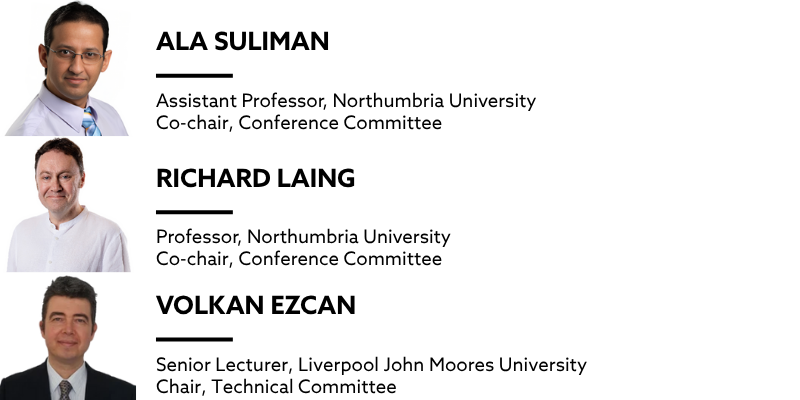
The conference is being organised by the conference committee below and the Northumbria University Event Management Team - Venues at Northumbria.
Thanks to our partners at the NewcastleGateshead Initiative (NGI), attendees can take advantage of special, discounted hotel rates across a range of conveniently located city hotels. Don't miss out — view the hotel selection, compare rates, and book now!

The Conference Dinner will be held on Wednesday 19 August 2026 at St. James' Park, home of the world-famous Newcastle United Football Club.
Dinner menu details will be posted soon.

For general information or enquiries about the conference please email the Conference Committee on tcot.2026@northumbria.ac.uk.
For information about submissions please email Vokan Ezcan on volkan.ezcan@unb.ca .

The Net Zero Polar Science (NZPS) Doctoral Training Programme (DTP) has welcomed its first…

A new drop-in service is bringing health and wellbeing support for students at both Newcastle…

A new project led by Northumbria University aims to grow optical fibres using proteins, mimicking…

Northumbria University has hosted a major international workshop, bringing together leading…
.png?modified=20261006102851)
Researchers at Northumbria University and Imperial College London have launched an international…

Graduate entrepreneurs from Northumbria University are celebrating after winning recognition…

Researchers at Northumbria University's Centre for Responsible AI are working with Face Equality…

Northumbria University and Lockheed Martin Space UK have signed a new Master Research Agreement,…

Europa Hotel
-
The Great Hall, Sutherland Building
-
Manchester Marriott Hotel Piccadilly
-
Page last reviewed: 11 August 2026


