
Scientists have found evidence that the Asian continent was free of permafrost all the way to its northerly coast with the Arctic Ocean when Earth’s average temperature was 4.5˚ C warmer than today, suggesting that the whole Northern Hemisphere would have also been free of permafrost at the time.
The stark findings indicate that if average global temperatures were to rise by this amount in the future, permafrost found in the Northern Hemisphere today would thaw.
Such a temperature increase would release up to 130 billion tonnes of carbon currently frozen in the ground over the coming decades.
The international team of researchers, which included experts from Northumbria and Oxford universities in the UK, Bern University in Switzerland, Geological Surveys of Israel and of the United States, came to this conclusion after studying more than 60 mineral deposits obtained from caves in the Lena River delta region of north-eastern Siberia.
Their findings are published this week in Nature Communications.

Cave mineral deposits such as stalagmites and stalactites can only form when rain and snow meltwater seep through soil and rocks, slowly forming deposits in caves below the ground. These deposits cannot form when the ground above the caves is frozen, as it is today across large areas of Siberia and other regions bordering the Arctic Ocean.
The study relied on a high-precision technique which uses the radioactive decay of naturally occurring uranium in the deposits to form lead, known as uranium-lead dating.
By measuring the tiny amounts of uranium and lead found in deposits obtained from caves in the Taba-Ba’astakh cliffs in the far north of Siberia in a specialist laboratory at the University of Oxford, the authors of the study were able to determine that the minerals formed 8.7 million years ago during the late Miocene period.
The presence of water to form the cave deposits indicates that the ground temperature was above 0˚C meaning that the permafrost currently found in the region was absent 8.7 million years ago.
Existing records from other regions demonstrate that, at that time in the past, average global temperatures were 4.5˚ C higher than those experienced today.
This indicates that warming of 4.5˚ C is sufficient to melt the vast majority of permafrost in the Northern Hemisphere, with permafrost-free conditions extending all the way to the northerly coast between Asia and the Arctic Ocean.
Today’s permafrost contains vast amounts of carbon, captured as dead plant material is frozen into the soil layer. Thawing of the permafrost would release this carbon back to the atmosphere and would further increase warming.

Dr Sebastian Breitenbach, Head of the Environmental Monitoring and Reconstruction research group at Northumbria University, explained: “Our findings provide direct quantitative evidence that if our climate warms by 4.5˚ C, the permafrost currently covering Canada, Siberia, Mongolia, America – in fact much of the Northern Hemisphere – would thaw. Only permafrost in high mountains and deep underground would survive.
“This thaw would release billions of tonnes of carbon from the ground into the atmosphere, enhancing further warming. This finding is a real warning to us all. It shows how sensitive our climate system is and where we might be headed if we don't act to limit our climate emissions now.”
Dr Anton Vaks, lead author of the new paper and a Research Scientist from Geological Survey of Israel, explained: “After much searching, we were fortunate to find well-preserved datable cave deposits in the heart of today’s Siberian permafrost. We can see that this present-day tundra region experienced a warmer climate, with mean annual global temperatures above 0°C and with permafrost-free conditions. This indicates that most of the Siberian landmass and likely similar regions in the Northern Hemisphere were permafrost-free when the deposits formed at Taba-Ba’astakh.”
Professor Gideon Henderson of the University of Oxford, an author of the study, added: “Caves can be our time machines. They capture a history of the climate and environment for millions of years of Earth history, which we can now read accurately using precise chemical analyses. By doing so, we can predict the future, using past conditions as an analogue for the future to understand the impact of the warmer world we are heading into.
“This new study provides valuable new constraints on the magnitude of warming required to completely destroy permafrost in the northern hemisphere and remove one of the biggest continental stores of carbon.”
The study was funded by the Natural Environment Research Council and the Leverhulme Trust.
The paper, Arctic speleothems reveal nearly permafrost-free Northern Hemisphere in the late Miocene, is now published in Nature Communications.
For more information on Dr Breitenbach's research, visit the Northumbria Research Portal.
DOI number: https://doi.org/10.1038/s41467-025-60381-5
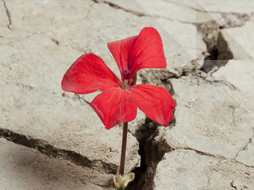
Geography At Northumbria University Encompasses All Of Our Work In Physical And Human Geography, Environmental Science And Management, Health & Safety, And Disaster Management.
This is the place to find all the latest news releases, feature articles, expert comment, and video and audio clips from Northumbria University
Northumbria University News is packed full of news and features covering everything from research projects and business partnerships to student and staff awards.
Latest News and Features

Criminologist wins acclaimed Philip Leverhulme Prize to pioneer a new criminology of the offshore world
A Northumbria University criminologist has been awarded a Philip Leverhulme Prize, one of the…

New platform maps charity support for the Armed Forces community
Pioneering data platform maps where the Armed Forces community receive support from charities

Northumbria co-leads study on fairer support for families
A major study co-led by Northumbria University will test whether attachment assessments lead…

New AHRC research shows how community innovation can power the next phase of devolution.
New research published today by the AHRC Creative Communities programme provides fresh evidence…

Free sessions to help families navigate the SEND system
Northumbria University's award-winning Student Law Office is launching SEND Decoded, a series…

New Doctoral Training Programme will tackle key polar science questions with a reduced carbon footprint
The Net Zero Polar Science (NZPS) Doctoral Training Programme (DTP) has welcomed its first…

New Student Health Hub brings joint health and wellbeing support
A new drop-in service is bringing health and wellbeing support for students at both Newcastle…

Researchers aim to grow optical fibres using biology instead of machinery
A new project led by Northumbria University aims to grow optical fibres using proteins, mimicking…
More events
Upcoming events

Next Stop Northumbria
Manchester Marriott Hotel Piccadilly
-

-
Magnetospheric Multiscale Science Working Team Meeting
Sutherland Building

Christmas Market and Tree lighting
Northumbria University
-
