-
Study
-
Quick Links
- Open Days & Events
- Real-World Learning
- Unlock Your Potential
- Tuition Fees, Funding & Scholarships
- Real World Learning
-
Undergraduate
- Application Guides
- UCAS Exhibitions
- Extended Degrees
- School & College Outreach
- Information for Parents
-
Postgraduate
- Application Guide
- Postgraduate Research Degrees
- Flexible Learning
- Change Direction
- Register your Interest
-
Student Life
- Students' Union
- The Hub - Student Blog
- Accommodation
- Northumbria Sport
- Support for Students
-
Learning Experience
- Real-World Learning
- Research-enriched learning
- Graduate Futures
- The Business Clinic
- Study Abroad
-
-
International
International
Northumbria’s global footprint touches every continent across the world, through our global partnerships across 17 institutions in 10 countries, to our 277,000 strong alumni community and 150 recruitment partners – we prepare our students for the challenges of tomorrow. Discover more about how to join Northumbria’s global family or our partnerships.
View our Global Footprint-
Quick Links
- Course Search
- Undergraduate Study
- Postgraduate Study
- Information for Parents
- London Campus
- Northumbria Pathway
- Cost of Living
- Sign up for Information
-
International Students
- Information for International Students
- Northumbria and your Country
- International Events
- Application Guide
- Entry Requirements and Education Country Agents
- Global Offices and Regional Teams
- English Requirements
- English Language Centre
- International student support
- Cost of Living
-
International Fees and Funding
- International Undergraduate Fees
- International Undergraduate Funding
- International Masters Fees
- International Masters Funding
- International Postgraduate Research Fees
- International Postgraduate Research Funding
- Useful Financial Information
-
International Partners
- Agent and Representatives Network
- Global Partnerships
- Global Community
-
International Mobility
- Study Abroad
- Information for Incoming Exchange Students
-
-
Business
Business
The world is changing faster than ever before. The future is there to be won by organisations who find ways to turn today's possibilities into tomorrows competitive edge. In a connected world, collaboration can be the key to success.
More on our Business Services-
Business Quick Links
- Contact Us
- Business Events
- Research and Consultancy
- Education and Training
- Workforce Development Courses
- Join our mailing list
-
Education and Training
- Higher and Degree Apprenticeships
- Continuing Professional Development
- Apprenticeship Fees & Funding
- Apprenticeship FAQs
- How to Develop an Apprentice
- Apprenticeship Vacancies
- Enquire Now
-
Research and Consultancy
- Space
- Energy
- AI and Tech
- CHASE: Centre for Health and Social Equity
- NESST
-
-
Research
Research
Northumbria is a research-rich, business-focused, professional university with a global reputation for academic quality. We conduct ground-breaking research that is responsive to the science & technology, health & well being, economic and social and arts & cultural needs for the communities
Discover more about our Research-
Quick Links
- Research Peaks of Excellence
- Academic Departments
- Research Staff
- Postgraduate Research Studentships
- Research Events
-
Research at Northumbria
- Interdisciplinary Research Themes
- Research Impact
- REF
- Partners and Collaborators
-
Support for Researchers
- Research and Innovation Services Staff
- Researcher Development and Training
- Ethics, Integrity, and Trusted Research
- University Library
- Vice Chancellors Fellows
-
Research Degrees
- Postgraduate Research Overview
- Doctoral Training Partnerships and Centres
- Academic Departments
-
Research Culture
- Research Culture
- Research Culture Action Plan
- Concordats and Commitments
-
-
About Us
-
About Northumbria
- Our Strategy
- Our Staff
- Our Schools
- Place and Partnerships
- Leadership & Governance
- University Services
- Northumbria History
- Contact us
- Online Shop
-
-
Alumni
Alumni
Northumbria University is renowned for the calibre of its business-ready graduates. Our alumni network has over 253,000 graduates based in 178 countries worldwide in a range of sectors, our alumni are making a real impact on the world.
Our Alumni - Work For Us
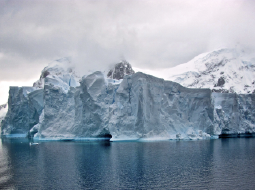
In an article written for The Conversation*, both from Northumbria University, Hilmar Gudmundsson, Professor of Glaciology and Dr Brad Reed, Research Fellow in the Department of Geography and Environmental Sciences, alongside Mattias Green, Professor in Physical Oceanography at Bangor University discuss their research into the activity of the Pine Island glacier in the west Antarctic ice sheet.
Pine Island glacier is one of the fastest flowing outlets of ice from the west Antarctic ice sheet, draining an area three-quarters the size of the UK. In recent decades, the glacier has been retreating rapidly and losing ice, contributing more to global sea level rise than any other Antarctic glacier.
The speed of the glacier’s retreat and the rate that is has been losing ice has led to concerns about how stable the region is. Model results show that this region of west Antarctica could collapse in the future. If it does, then it could raise global mean sea level by several metres.
There have been periods of rapid global sea-level rise in the past (by 1cm–2cm per year). This probably happened because glaciers were losing mass at an accelerated rate. One of the key mechanisms responsible for this is known as “marine ice sheet instability”.
When glaciers, like those in west Antarctica, experience a small retreat due to some change in the climate, they can continue retreating even if the change is reversed. Essentially, the glacier gets pushed beyond a tipping point, whereby it experiences rapid mass loss until it reaches a new state.
This kind of retreat is irreversible because the change in climate needed for the glacier to recover its original position is much greater than what initially caused it to retreat. This instability mechanism is well understood in theory, and models show it could happen in west Antarctica in the future. But until now there has been no proof that it had happened in the past.
In a new study, we found that Pine Island Glacier experienced irreversible mass loss and retreat, starting in the 1940s. Our model suggests that a temporary increase in melting under its floating ice shelf was enough to push the glacier past a tipping point.
This phase of accelerated retreat had finished by the 1990s. But, in a separate study where we used the same model, we found that the glacier will cross future tipping points unless global warming is kept within safe limits.
What happened?
Before the 1940s, Pine Island Glacier extended further than it does today. Its grounding line – the point at which glacial ice begins to float in the ocean rather than being in contact with the ground – was situated 40km further downstream on a shallow ridge on the seabed. This ridge provided a stable position for the glacier, keeping it in place, possibly for at least 5,000 to 10,000 years.
Recent observations show that ocean conditions beneath the floating ice shelf change from year to year. Every so often, warmer waters come into contact with the floating underside of the ice, causing a lot of melting from below. In the 1940s, a climate anomaly in west Antarctica, which has been linked to a large El Niño event, possibly triggered a temporary change in ocean conditions.
We found that an increase in melting due to changed ocean conditions beneath the ice shelf would have led to the thinning of its grounded ice further upstream. This caused a gap to open between the grounded glacier and seabed, allowing warmer ocean waters to flow beyond the ridge. These results are supported by evidence recovered from the sediments under the present-day ice shelf.
Once warmer waters circulate beneath the newly exposed ice, it triggers further melting and thinning, at an even faster rate. Our model shows that this sparked rapid retreat and accelerated ice flow over the following two to three decades, culminating with the detachment of the ice shelf from the ridge between the late 1970s and the early 1980s. The pattern and timescale of retreat shown in our model is consistent with observations of changes in the glacier.
Irreversible change
After the ice shelf detached from the ridge, there was a slowdown in ice flow and a more gradual retreat. This retreat only stopped when the grounding line reached a shallow section of bedrock in the early 1990s.
Our analysis shows that the phase of rapid retreat between the 1940s and 1970s was irreversible. If ocean conditions cooled and there was lower melting beneath the shelf during that period, then this would have been unable to stop the ongoing mass loss.
These results show us that if there is a significant increase in melting at the base of a glacier’s floating ice shelf, it can retreat past a tipping point. This means that even if conditions cool down, the loss of ice mass may be irreversible.
The future implications of this are clear. What occurred before could happen again. If we cross future ice sheet tipping points, simply reverting back to the previous climate conditions might not be enough to fix the damage.
*This article was originally published by The Conversation. Please see here for republishing guidelines.
Geography At Northumbria University Encompasses All Of Our Work In Physical And Human Geography, Environmental Science And Management, Health & Safety, And Disaster Management.
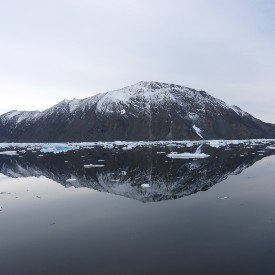
The guiding vision of Extreme Environments is to understand and harness the physical and biological environments that operate under extreme conditions and stresses, and to develop research that will have tangible impacts on an environmental, technological, economic and societal basis at regional, national and global levels.
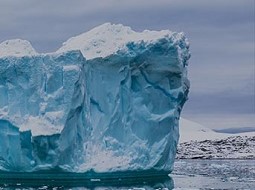
Northumbria's academics are studying the future of ice sheets and glaciers worldwide in a warming world. This involves understanding the causes of ongoing changes in Antarctica, Greenland and alpine areas, as well as assessing future changes and resulting impacts on human environments globally.
This is the place to find all the latest news releases, feature articles, expert comment, and video and audio clips from Northumbria University
Latest News and Features
£1.3m national study launches to evaluate changes to police involvement in mental health crisis responses
A major new research project will examine how changes to police involvement in mental health…
Royal Honour as leading researcher awarded Polar Medal
Professor John Woodward has been awarded The Polar Medal in recognition of his outstanding…
Report calls on the UK banking industry to consider interventions that "design out" economic abuse
Researchers have published the findings of a ground-breaking study which brought together victim-survivors…
Northumbria's ‘Banana Split: Unpeeling a New Energy Source’ project highly commended at prestigious Green Gown Awards
A Northumbria University research project has been highly commended at the 2025 Green Gown…
Northumbria ranked most sustainable university in the North East for fifth consecutive year
Northumbria University has been rated as ‘1st class’ for sustainability and is once again the…
Northumbria expert delivers training to help address victim-blaming language
A Northumbria University academic is leading pioneering training to support police forces across…
Northumbria University launches national AI challenge inviting young people to imagine a hopeful future
Northumbria University has launched the Hopeful Futures AI Challenge, a groundbreaking national…
Student volunteering partnership expands following five years of community impact
Following the success of a Law in the Community project, Northumbria University is expanding…
Upcoming events
Collaborating for Capability: Shaping the Future of Supply Chain Talent
City Campus East, Northumbria University CCE1-403
-
Archives to Action: Historical Evidence for Policy Reform
Virtual Workshop
-
Viruses of Microbes-UK (VoM-UK) Conference 2026
Northumbria University