
We are a successful group pursuing high-international-priority research across the broad remit of Solar and Space Physics. The group demonstrates international leadership across theory, numerical modelling, observations of solar and space plasma, data intensive science, and a growing reputation for space-related hardware.
Our Solar and Space Physics research has been supported with core funding from STFC and NERC as well as funding from EU Horizon 2020, European Space Agency (ESA), UK Space Agency (UKSA), the US Air Force, the National Solar Observatory (USA), the Leverhulme Trust, and the Royal Astronomical Society. The Group leads an STFC Centre for Doctoral Training in Data Intensive Science. Members of the group, including Prof Jonathan Rae, Prof Clare Watt, Dr Shaun Bloomfield and Dr Andy Smith also contribute to the ongoing UKRI SWIMMR (Space Weather Instrumentation, Measurement, Modelling and Risk) national space weather programme in support of the UK Met Office. The group includes 1 Future Leader Fellow (Dr Richard Morton), 2 Royal Society University Research Fellows (Dr Luca Franci, Dr Julia Stawarz), 1 NERC Independent Research Fellow (Dr Andy Smith), 1 STFC James Webb Fellow (Dr Henrik Melin) and 2 STFC Ernest Rutherford Fellows (Dr John Coxon, Dr Stephanie Yardley).
Group members sit on various national and international panels including the STFC Education, Training and Careers Committee (Prof James McLaughlin), STFC Solar System Advisory Panel (Dr Patrick Antolin and Dr Charlotte Goetz), STFC Project Peer Review Panel (Prof Robert Wicks), UKSA’s Space Programme Advisory Committee (Prof Clare Watt) and ESA’s Space Science Advisory Committee (Prof Jonathan Rae).
Group leadership and contacts
Contact: Prof. James McLaughlin
This research group forms part of the Department of Mathematics, Physics and Electrical Engineering. and part of the wider 'Space' research theme across the University, i.e. www.northumbria.ac.uk/space
Academic team
- Dr. Patrick Antolin
- Dr. Sarah Bentley
- Dr. Shaun Bloomfield
- Dr. Gert Botha
- Dr. John Coxon (STFC Ernest Rutherford Fellow)
- Dr. Luca Franci (Royal Society University Research Fellow)
- Dr. Charlotte Goetz
- Dr. Natasha Jeffrey
- Dr Oleg Kirillov
- Prof. James McLaughlin
- Dr Henrik Melin (STFC James Webb Fellow)
- Dr. Richard Morton (UKRI Future Leader Fellow)
- Prof. Jonathan Rae
- Dr. Daniel Ratliff
- Dr. Stephane Regnier
- Prof. Eamon Scullion
- Dr. Andy Smith (NERC Independent Research Fellow)
- Prof. Tom Stallard
- Dr. Julia Stawarz (Royal Society University Research Fellow)
- Dr. Matthew Townson
- Prof. Clare Watt
- Prof. Robert Wicks
- Prof. Graham Wynn
- Dr. Stephanie Yardley (STFC Ernest Rutherford Fellow)
- Fiona Hackney (NUdata Centre for Doctoral Training Manager)
- Alex Tempest (IT Service Delivery Technician for the Solar and Space Physics research group)
Research Fellows
- Dr. Jeffersson Agudelo
- Dr. Suman Chakraborty
- Dr. Tim Duckenfield
- Dr. Nassima Khorchef
- Dr. Ahmad Lalti
- Dr. Biswajit Ojha
- Dr. Ross Pallister
- Dr. Amna Riaz
- Dr. Luiz Schiavo
- Dr. Rahul Sharma
- Dr. Ansu Sun
- Dr. Edris Tajfirouzeh
- Dr. Emma Thomas
Visiting Fellows
- Prof. Ian Mann (Royal Society Wolfson Visiting Fellow)
- Prof. Peter Young (Visiting Professor)
- Prof. Valentina Zharkova (Emerita Professor)
- Dr. Ruhann Steyn (North-West University, South Africa)
PhD students
- Mr Adam Toulson (PhD student working with Daniel Ratliff)
- Mr Atlas Patrick (PhD student working with John Coxon)
- Mr Daniel Roll (PhD student working with Prof Lok)
- Ms Dovile Rasinskaite (PhD student working with Clare Watt, Sarah Bentley and Jonathan Rae)
- Mr Dylan Weston (PhD student working with Jonathan Rae)
- Ms Emily Grant (PhD student working with Clare Watt)
- Ms Ishbel Wright (PhD student working with Jonathan Rae)
- Mr Harry Birch (PhD student working with Stephane Regnier)
- Ms Hemanthi Miriyala (PhD student working with Richard Morton)
- Mr Jordan Talbot (PhD student working with James McLaughlin and Gert Botha)
- Ms Katie Knowles (PhD student working with Tom Stallard)
- Ms Kendra Gilmore (PhD student working with Sarah Bentley)
- Mr Lewis Dean (PhD student working with Stephane Regnier)
- Mr Luis Guzman (PhD student working with Clare Watt)
- Mr Luke McMullan (PhD student working with Patrick Antolin)
- Ms Maria Hasler (PhD student working with John Coxon)
- Mr Matthew Billcliff (PhD student working with Andy Smith)
- Mr Matthis Houles (PhD student working with Andy Smith)
- Ms Nikita Balodhi (PhD student working with Patrick Antolin and Richard Morton)
- Ms Paloma Jol (PhD student working with Shaun Bloomfield)
- Ms Paola Tiranti (PhD student working with Henrik Melin)
- Ms Paulina Pilapaña (PhD student working with Julia Stawarz)
- Mr Ruben Doyle-Morgan (PhD student working with Charlotte Goetz)
- Mr Ryan Smith (PhD student working with James McLaughlin)
- Mr Samuel Carter (PhD student working with Natasha Jeffrey)
- Mr Samuel Hor (PhD student working with Patrick Antolin)
- Ms Shannon Killey (PhD student working with Jonathan Rae, Sarah Bentley and Clare Watt)
- Mr Shivdev Turkay (PhD student working with Eamon Scullion
- Ms Sian Ford (PhD student working with Graham Wynn)
- Mr Stephen Bannister (PhD student working with Shaun Bloomfield)
- Mr Utsav Panchal (PhD student working with Robert Wicks)
- Mr Vincent Briat (PhD student working with Jonny Rae)
- Mr Vishal Singh (PhD student working with Gert Botha)
- Mr Yash Saneshwar (PhD student working with Eamon Scullion)
- Mr Zach Wilson (PhD student working with Craig Warren)
STFC Centre for Doctoral Training in Data Intensive Science
We lead an STFC Centre for Doctoral Training in Data Intensive Science, called NUdata, which is a collaboration between Northumbria and Newcastle Universities, STFC, and a portfolio of over 40 industrial partners, including SMEs, large/multinational companies, Government and not-for profit organisations, and international humanitarian organisations. Together, the two Universities cover a broad range of STFC science, from planets to cosmology. The consortium will train a new generation of PhD students with the skills required to address the data challenges presented by the STFC core-science programme, as well as applying those skills to different sectors of the broader economy. This will be done in an environment that is inclusive and values contributions to Equality, Diversity and Inclusion at all levels.
You can find out details of the Centre for Doctoral Training at https://research.northumbria.ac.uk/nudata/ including details of our 40+ industry partners.
Space Technology
The Department of Mathematics, Physics and Electrical Engineering has recently been successful with significant funding for space technology research from the UK Space Agency, the Science and Technology Facilities Council, Lockheed Martin, and the Office for Students. Therefore, we are now making a significant strategic investment to hire staff into key areas to enhance and expand our expertise in space-related technology. This strategic investment provides the opportunity for multiple appointments across multiple academic grades, including the potential to establish a small research group.
We are about to finish building and start commissioning the new Northumbria Space Technology Laboratory, which includes all of the state of the art facilities needed for environmental testing of small payloads for space as well as a dark room for class-4 lasers and optical system testing. We have a vibration shaker, an X-ray dose chamber and (arriving in January) a thermal vacuum chamber, all suitable for launch and low Earth orbit testing. We are seeking staff to use this facility to bring space instrumentation development and technology innovation that links to our existing areas of research excellence in the Faculty. That means: aurora, cameras, climate monitoring, comets, the cryosphere, geography, hyperspectral imagery, LIDAR, machine learning and AI, optical communication, outer planets, photovoltaics, sensors (IR, UV, visible) solar physics, space plasma, space weather, spectroscopy, telescopes.
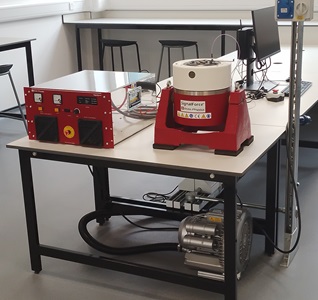
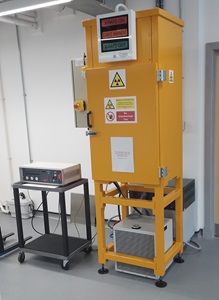
See www.northumbria.ac.uk/NESST for further details.
Press Releases
Examples of recent successes:
- Northumbria University announces £50m space skills, research and development centre set to transform the UK space industry
- Telescope reveals unexpected activity above Jupiter’s Great Red Spot
- Mystery of ‘slow’ solar wind unveiled by Solar Orbiter mission
- Telescope to provide insight into Solar System lightshows
- Solar physicist honoured by Royal Astronomical Society
- Northumbria University preparing for satellite launch after £5m boost for satellite communications research
- £1.29 million funding boost for solar scientists
- Unveiling Jupiter’s upper atmosphere
- Northumbria University and Lockheed Martin detect nanojets with machine learning algorithms
- Scientists are using deepfake AI images to understand the Sun’s atmosphere
- Solar astronomers discover ‘shooting stars’ on the Sun’s corona
- Artificial intelligence used to predict space weather
- Lockheed Martin and Northumbria University join forces to support the development of space skills, research and technology
- North East satellite partnership expected to boost UK’s share of global space market
- UK Space Agency funds further research into new laser-based satellite communications system
- Minister for Science, Research and Innovation opens £2million investment in region’s Engineering and Environment students
Research relationships
The group’s recent research achievements include the discovery of coronal reconnection nanojets (Antolin et al., 2021, Nature Astronomy, 5, 54), revealing the source of Jupiter’s x-ray auroral flares (Yao et al., 2021, Science Advances, 7, 28), creating global maps of the solar magnetic field (Yang et al., 2020, Science, 368, 694), and uncovering a basal contribution from p-modes to the Alfvénic wave flux in the Sun’s atmosphere (Morton, Weberg & McLaughlin, 2019, Nature Astronomy, 3, 223).
To view research papers emanating from this group, please click here to view Northumbria Research Link, our open access repository of research output from Northumbria University.
This group is a part of the University’s multi-disciplinary research into the theme of Space.Research
- Applied Statistics
- Quantum and Molecular Photonics
- Mathematics of Complex and Nonlinear Phenomena (MCNP)
- Northumbria Space Technology Laboratory
- Photovoltaics
- Solar and Space Physics
- Electrical Power and Control Systems
- Optical Communications Research Group (OCRG)
- Renewable Energy Technologies and Materials
- Smart Materials & Surfaces Laboratory (SMSL)
- Faculty Education Research Group



Get an insight into life at Northumbria with videos and 360 panoramas of the Department of Mathematics, Physics and Electrical Engineering
+
With a wide range of undergraduate, postgraduate and distance learning Mathematics, Physics & Electrical Engineering courses, whatever you want to get out of university, let us show you why you want Northumbria University, Newcastle!

+
Our Mathematics, Physics & Electrical Engineering students learn from the best – inspirational academic staff with a genuine passion for their subject. Our courses are at the forefront of current knowledge and practice and are shaped by world-leading and internationally excellent research.

+
Looking to study in with us in September? Our Undergraduate Open Day Events are the perfect opportunity for you to find out as much as you can about our wide range of courses and world-class facilities.
Latest News and Features
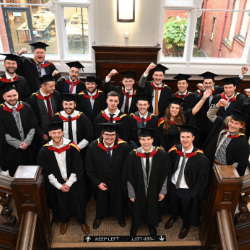
First cohort of Civil Engineering Degree Apprentices graduate from Northumbria
The inaugural cohort of Civil Engineering degree apprentices have graduated from Northumbria…

Space sector growth in the UK under spotlight at major industry event
The role the space sector is playing in driving economic growth in the UK was highlighted this…
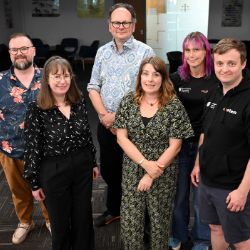
Northumbria University STEM outreach project wins Institute of Physics award
Researchers from an outreach group at Northumbria University are celebrating after winning…
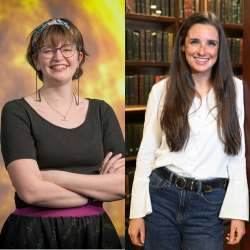
Northumbria researchers announced as winners of Future Leaders Fellowships
Two talented researchers from Northumbria University have been awarded a share of £120 million…

Northumbria expands results day support for students
Northumbria University is expanding and enhancing the support it provides to students receiving…

OLED materials have potential new uses in detecting pesticides for the farming industry
Researchers are set to shine a different kind of light on the farming industry after receiving…
