
Any Questions?
Our Applicant Services team will be happy to help. They can be contacted on 0191 406 0901 or by using our Contact Form.
Accuracy of information
All information is accurate at the time of sharing.
How your course is delivered
Full time Courses are primarily delivered via on-campus face to face learning but could include elements of online learning.
Changes to your course
Most courses run as described on our website and in our marketing materials. Occasionally we may need to make changes, for example due to a change in the law or regulatory requirements, requirements of a Professional, Statutory or Regulatory Body, or our quality assurance processes. Where a change is significant (in line with the Competition and Markets Authority's guidance on "substantial changes"), we will consult with affected students in advance where the change is being decided, and will explain the reason for the change and inform you at the earliest opportunity.
If we make a significant variation to your programme, you are entitled to: request a transfer to an alternative, appropriate programme; withdraw and have your tuition fees adjusted; or raise a complaint through the Student Complaints Procedure.
Optional modules listed on course pages may be subject to change depending on uptake numbers each year. Where a module you selected is withdrawn, the options above apply.
Contact time
Contact time is subject to increase or decrease in line with possible restrictions imposed by the government or the University in the interest of maintaining the health and safety and wellbeing of students, staff, and visitors if this is deemed necessary in future.
Images and video
The photography and video on this page are used for illustration. They may have been taken at different times and in different parts of the University, and may show facilities, equipment, staff, students or activities that are not part of this course. They are not a guarantee of the specific facilities or equipment you will use.
The course content, entry requirements and fees sections of this page, together with the Programme Specification, set out what this course includes. Our facilities are updated over time and may change during your studies.
Accessibility and Student Inclusion
Northumbria University is committed to developing an inclusive, diverse and accessible campus and wider University community and are determined to ensure that opportunities we provide are open to all.
We are proud to work in partnership with AccessAble to provide Detailed Access Guides to our buildings and facilities across our City, Coach Lane and London Campuses. A Detailed Access Guide lets you know what access will be like when you visit somewhere. It looks at the route you will use getting in and what is available inside. All guides have Accessibility Symbols that give you a quick overview of what is available, and photographs to show you what to expect. The guides are produced by trained surveyors who visit our campuses annually to ensure you have trusted and accurate information.
You can use Northumbria’s AccessAble Guides anytime to check the accessibility of a building or facility and to plan your routes and journeys. Search by location, building or accessibility feature to find the information you need.
We are dedicated to helping students who may require additional support during their student journey and offer 1-1 advice and guidance appropriate to individual requirements. If you feel you may need additional support you can find out more about what we offer here where you can also contact us with any questions you may have:
Latest News and Features
UK network to accelerate the development of sustainable surface technologies
A new national network led by Newcastle University and Northumbria University, in partnership…

Criminologist wins acclaimed Philip Leverhulme Prize to pioneer a new criminology of the offshore world
A Northumbria University criminologist has been awarded a Philip Leverhulme Prize, one of the…
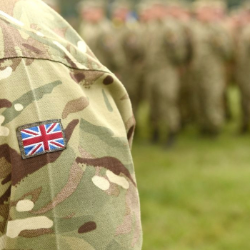
New platform maps charity support for the Armed Forces community
Pioneering data platform maps where the Armed Forces community receive support from charities

Northumbria co-leads study on fairer support for families
A major study co-led by Northumbria University will test whether attachment assessments lead…

New AHRC research shows how community innovation can power the next phase of devolution.
New research published today by the AHRC Creative Communities programme provides fresh evidence…

Free sessions to help families navigate the SEND system
Northumbria University's award-winning Student Law Office is launching SEND Decoded, a series…
Social
More events
Upcoming events

Next Stop Northumbria
Manchester Marriott Hotel Piccadilly
-

-
Magnetospheric Multiscale Science Working Team Meeting
Sutherland Building

Christmas Market and Tree lighting
Northumbria University
-
