
Northumbria University delivered fifteen innovative public engagement events as part of the 2025 ESRC Festival of Social Science, which concluded with a celebration event earlier this month – and with dates for the 2026 festival now confirmed, the University is already inviting ideas for what comes next.
The 2026 festival will run from 17 October to 7 November, with the theme of Money, Finance and the Cost of Living. Northumbria is now actively seeking proposals from researchers keen to create events that explore this theme with public audiences across the North East.
From personal finances and teaching children about money, to understanding the cost of living crisis and how businesses work, the theme offers wide scope for creative, participatory, and community-focused events.
 The 2025 festival's theme of ‘Our Working Lives’ provided a framework for exploring critical social issues through creative, participatory, and accessible formats.
The programme was delivered in partnership with Newcastle University and funded via their ESRC Impact Accelerator Account.
Northumbria's programme showcased research spanning health and wellbeing, social justice, environmental sustainability, digital technologies, and community activism.
Events attracted diverse audiences including families, young people, professionals, and community groups, with venues ranging from university facilities to community spaces across Newcastle, Gateshead, and North Tyneside.
Northumbria's 2025 festival programme demonstrated the University's commitment to making research accessible and relevant to public audiences.
The events addressed the festival's central theme while encompassing a wide spectrum of social science topics, including:
Health and Wellbeing:
- Dr Gavin Tempest's Kid, You'll Move Mountains engaged children aged four to seven in discovering how physical activity benefits lifelong health through interactive games and challenges at Sports Central.
- Dr Órla Meadhbh Murray's Challenging Gut Stigma workshop at ReCoCo addressed the often-taboo topic of gut conditions in workplace environments, with an academic presentation from Dr Elisabeth Griffiths on disability law alongside collective discussions on how to challenge gut stigma.
Technology and Society:
- Genavee Brown's Workers through AI's Eyes exhibition at the Life Science Centre challenged visitors to examine bias in AI-generated images of professionals, providing critical digital literacy resources for families and young people.
- Dr Stacey Pitsillides partnered with Newcastle City Library and Tyneside Cinema as part of the ongoing Dead Good Film Club series to present Soylent Green: We Are What We Eat, combining a creative writing workshop using AI co-authors with a screening and panel discussion exploring capitalism, death, and dignity in times of environmental crisis.
Arts, Labour, and Creative Economies:
- The Artists' Graft hybrid talk, led by PhD student Kat Bevan and Dr James O'Keeffe, brought together artists, researchers, and organisers at the Star and Shadow Cinema to examine the realities of artistic labour and the power of collective action in shaping creative work futures.
Community Activism and Social Justice:
- Carly Guest facilitated Women United will Never Be Defeated at Customs House, South Shields, where participants created found poetry and mono-prints inspired by memories of the miners' strike and community organising.
- Sarah Peck's Creating stories from the Archives at a local Gurdwara combined a communal langar meal with a creative collage workshop exploring the Indian Workers' Association archive, examining migration, workers' rights, and activism.
Raising Awareness of Critical Issues:
- Dr Sarah Ralph-Lane and Dr Clare Wiper, in partnership with the Employers' Initiative on Domestic Abuse, created Domestic Abuse Does Not Respect Office Hours, a powerful sound installation staged in an office environment that used victim-survivor testimonies to demonstrate the workplace impact of domestic abuse and the crucial role employers can play in providing support.
Heritage and Environment:
- Dr Lucy Grimshaw's Waggonways: Amazing Paths Through Time celebrated North East waggonways through both a family activity day and evening performance at The Common Room, exploring how these historic coal transport routes now serve as vital green corridors for walking, cycling, and community wellbeing.
Urban Ecology and Interspecies Coexistence:
- Dr Jiayi Jin, Dr Ayse Ozbil Torun, and Dr Bing Zhai launched Voices of the Tyne: Share Your Vision for a City with Kittiwakes, a hybrid art call and architecture competition. This innovative long-term engagement project, partnering with the Baltic Centre for Contemporary Art and RIBA Young Architectural Practitioners Forum invited the public to reimagine urban spaces that support the unique Tyne kittiwake colony while meeting human needs, exploring themes of biodiversity, environmental justice, and more-than-human urban design.
Community-Led Urban Development:
- Cheng Siew Goh's Your Voice, Your Neighbourhood event at Wallsend Library engaged local residents in envisioning the future of their community and neighbourhood through interactive mapping activities, directly informing the design of an eco-housing development and community hub.
Events employed innovative engagement methodologies including sound installations, creative workshops, interactive exhibitions, collaborative art-making, hybrid delivery formats, public competitions, and extended engagement projects.
Many incorporated elements that extended beyond traditional academic dissemination, such as creative collage-making and art calls that invited public co-creation of knowledge.
Claire Hutchinson, Public and Community Engagement Officer at Northumbria University's Research and Innovation Services, reflected on the festival's success: “This year's Festival of Social Science demonstrated the power of connecting research with communities in meaningful, creative ways.
“The diversity of our programme – from children exploring physical activity through play, to adults examining workplace stigma, to families celebrating local heritage, to interdisciplinary teams reimagining our relationship with urban wildlife – shows how social science touches every aspect of our lives.
“The enthusiasm and engagement we witnessed across all fifteen events reinforced why this work matters. Researchers stepped outside traditional academic spaces to meet communities where they are, creating conversations that will continue long after the festival ends.
It's been a privilege to support colleagues across the faculties in developing these innovative approaches to public engagement."
Looking ahead to 2026, the festival will offer a dynamic space to explore, debate and engage with the themes of money, finance and the cost of living. Events should aim to be both stimulating and practically relevant, offering attendees real tools and ideas that connect to their everyday lives.
Claire added: "We look forward to building a creative and compelling programme, and welcome proposals on any aspect of this theme."
At Northumbria’s School of Humanities and Social Sciences, we empower you to understand the world – and shape its future.
This is the place to find all the latest news releases, feature articles, expert comment, and video and audio clips from Northumbria University
Latest News and Features
From Netflix to Newcastle Northumbria graduate uses AI to revolutionise film and TV production
A Northumbria University graduate who co-created Bangkok Breaking — one of Thailand's biggest…
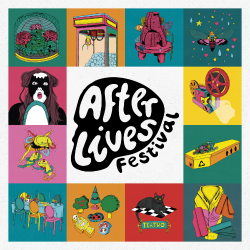
Northumbria University researcher brings death-positive arts festival to libraries across England
An arts festival exploring death, dying and end-of-life choices — led by a Northumbria University…
Northumbria University spinout achieves CE marking for deep lung breath sampling device — a first backed by peer-reviewed research
A medical device company spun out of Northumbria University has reached a significant milestone…
Northumbria University's IT recycling initiative recognised as national best practice
The equivalent weight of one and a half double-decker buses' worth of IT equipment has been…
Scientists solve decades-long mystery about why Saturn appears to change its spin
Researchers at Northumbria University have used the most powerful space telescope ever built…
Northumbria University professor named among UK's most outstanding health and care research leaders
A Northumbria University professor has been appointed as one of the UK's most influential health…
From campuses to communities: Newcastle's fifth Climate Change Forum forges greener future for city
Newcastle's fifth Climate Change Forum drew a full house – and an energising conversation about…
'Safer Stadiums' research shares women's experiences at men's football games
New research led by Northumbria University highlights the experiences of women who attend men's…
More events
Upcoming events

From sustenance to complete nourishment in a changing and uncertain climate
Ellison Building A, 001 (ELA 001)
-

Broken Bonds: New Perspectives on Marital Breakdown
The Great Hall
-

Smarter Supply Chains: Digital Innovation for Cost, Efficiency & Carbon
Northumbria University
-

Culture in Conversation: Rethinking Leadership & Organisational Practice
CCE1 Newcastle Business School
-
