
 Sodium-ion batteries (SIB’s) are among the most promising
candidates for large-scale energy storage because of their low cost and high
abundance of the raw materials. Hard carbons instead of graphite are the most
studies anode materials due to their low cost and good reversible capacities.
However, Na-ion storage mechanisms corelating with the details of their
structures and the mechanisms underlying sodium storage are still a matter of
interest for battery scientists. Hard carbons (HC) are a form of non-graphitizable,
amorphous and disordered carbon structures consisting of graphene nanosheets
with significant turbostratic disorder and curvature.
Sodium-ion batteries (SIB’s) are among the most promising
candidates for large-scale energy storage because of their low cost and high
abundance of the raw materials. Hard carbons instead of graphite are the most
studies anode materials due to their low cost and good reversible capacities.
However, Na-ion storage mechanisms corelating with the details of their
structures and the mechanisms underlying sodium storage are still a matter of
interest for battery scientists. Hard carbons (HC) are a form of non-graphitizable,
amorphous and disordered carbon structures consisting of graphene nanosheets
with significant turbostratic disorder and curvature.
In this project, we want to discover a design principle based on sp3 hybridisation of carbon for high capacity in which HC structure should have slightly defective large graphitic domains and a plenty of small-size pores. In most of the previous studies, annealing temperature is used to control the geometry and structure of HC. However, it is difficult to get the optimized HC adjusting the annealing temperature since the high temperature enlarges and thickens graphitic domains, leading to small total pore volume and large-size pore. Based on our expertise in modulating the structures of HC, we would discover and design optimal sp3 configuration of HC for maximisation of Na-ion intercalation of SIB’s.
Electrodes will be prepared by using physical vapor deposition (PVD) techniques. Materials characterisation will be carried out using both conventional and cutting-edge neutron and x-ray scattering methods (solid-state nuclear magnetic resonance (NMR), XRD SEM, TEM, XANES and XAFS). The synthesized materials will be electrochemically tested in Na-ion battery configuration. Looping from synthesis, materials investigations and electrochemical performance tests, materials discovery and design genome will be created for the optimised Na-ion conducting materials. The atomic structure of the materials and their properties will be modelled using DFT calculations.
Faculty: Engineering and Environment
Department: Mechanical and Construction Engineering
Principal Supervisor: Dr Shahid Rasul
Recent publications by supervisors relevant to this project
- S Rasul, S Suzuki, S Yamaguchi, M Miyayama, “High-capacity positive electrodes for secondary Mg-ion batteries”, Electrochimica Acta 82, 243-249, 2012.
- S Rasul, S Suzuki, S Yamaguchi, M Miyayama, “Synthesis and electrochemical behaviour of hollandite MnO2/acetylene black composite cathode for secondary Mg-ion batteries”, Solid State Ionics 225, 542-546, 2012.
- S Rasul, S Suzuki, S Yamaguchi, M Miyayama, “Manganese oxide octahedral molecular sieves as insertion electrodes for rechargeable Mg batteries”, Electrochimica Acta 110, 247-252, 2013.
- A Alazmi, O El Tall, S Rasul, MN Hedhili, SP Patole, PMFJ Costa, “A process to enhance the specific surface area and capacitance of hydrothermally reduced graphene oxide”, Nanoscale 8 (41), 17782-17787, 2016
- S Rasul, A Alazmi, K Jaouen, MN Hedhili, P Costa, “Rational design of reduced graphene oxide for superior performance of supercapacitor electrodes”, Carbon 111, 774-781, 2017
Eligibility and How to Apply
Qualification
Applications are invited from exceptional candidates who have a good first or upper second class degree (or equivalent) in engineering or materials science. Students who are not UK/EU residents are eligible to apply, provided they hold the relevant academic qualifications, together with an IELTS score of at least 6.5. This project is well suited to motivated and hard-working candidates with a keen interest in design, materials and manufacturing. The applicant should have excellent communication skills including proven ability to write in English.
For more information and informal enquiries please contact Dr Shahid Rasul at shahid.rasul@northumbria.ac.uk
Further details of the application process and entry requirements can be found here: https://www.northumbria.ac.uk/research/postgraduate-research-degrees/how-to-apply
Deadline for applications: 1st December for March (following year) start; 1st July for October (same year) start.
Start Dates: March and October of each year


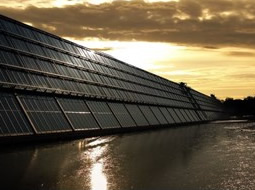
Researchers within our Future Engineering multidisciplinary research theme are exploring what technologies will be heating our homes and driving our cars in 20 years time.
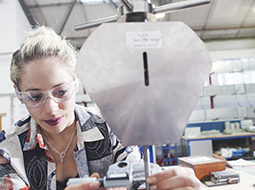
Get an insight into life at Northumbria with videos and 360 panoramas of the Department of Mechanical and Construction Engineering.
Page last updated 25/01/24
