
Postgraduate research is a central and exciting part of our research culture. Comprised of our MSc and PhD students, the postgraduate student community forms an important and lively part of that culture. Our PGR community is thriving and we are able to nominate applicants for funded studentships through the AHRC’s Northern Bridge and the ESRC’s NINE consortiums. We offer a stimulating environment for discussions of research, for instance at regular Staff-Postgraduate research seminars. Students participate in the full range of on-campus research and are seen as valued members of the Departments of Social Sciences and Social Work, Education and Community Wellbeing.
Our PhD students are undertaking a diverse range of cutting edge projects. Further details of our PhD students, including details of their research and contact information, can be found below.
If you are interested in commencing postgraduate study, please contact Dr. Ruth Lewis.
Shannon Allen

Title: Examining differences in the impact of moral injury between UK Service Police and non-Service Police veterans
Summary: The aim of this research is to replicate and extend previous findings by investigating differences in how moral injury manifests across various military populations at risk of exposure to potentially morally injurious events. The study will explore the processes underlying moral injury, the impact of moral challenges on psychological wellbeing and the strategies used by UK Service Police and non-Service Police veterans to cope with subsequent distress. This will inform the development of interventions to mitigate the harmful consequences of moral injury and address gaps in the wider moral injury literature.
Achievements (Publication):
- Williamson, V., Murphy, D., Stevelink, S. A., Allen, S., Jones, E., & Greenberg, N. (2020). The impact of trauma exposure and moral injury on UK military veterans: a qualitative study. European Journal of Psychotraumatology, 11(1), 1704554.
Supervisors: Gavin Oxburgh, Matthew Kiernan
Jane Brough
Title: What is the motivation of food bank volunteers? A North East Case Study
Summary: This project examines the motivation of food bank volunteers in three different settings in the North East. It is an ethnographic study using Grounded Theory. Participant observation and interviews have been employed as the principal forms of data collection.
Supervisors: Jamie Harding, Rachael Chapman and Siobhan Daly
Desiree (Daisy) Campbell
Title: Motorsport, Media and Women: British sports media's representations of women racing drivers between 2010 and 2020
Summary: I am a Sociology PhD student based in the Media Department at Northumbria University. My research project is interdisciplinary drawing connections between sport, sociology and media studies. Underpinned through a gendered lens, this research investigates how the British sports media has represented women racing drivers over the past decade and explores women racing drivers' experiences with the media. My research project is comprised of both qualitative and quantitative research methods in the shape of a mixed-methods media analysis of British national newspapers and motorsport magazines, and qualitative semi-structured interviews with women racing drivers. My research interests cover a range of sport and exercise disciplines including sports sociology, sports media studies and sports history.
Education/Academic Qualifications: MSc Sport and Exercise (Distinction), School of Health and Social Care, Teesside University, Oct 2018
Supervisors: Mr Roger Domeneghetti and Dr Ruth Lewis
Email: desiree.campbell@northumbria.ac.uk
Jo Curtis

Title: The paradoxical persistence of torture by States who condemn it
Summary: State-sponsored torture is internationally condemned, yet reportedly occurs in 141 of the world’s 195 countries. To gain a full picture of why this might be, my PhD studies perpetrators, victims, bystanders, whistle-blowers, and advocates in multiple countries who have ratified the UN convention against torture, yet reportedly persevere in its use.
It aims to explore:
- How and why states/individuals justify torture despite the wide-spread knowledge that torture is ineffective, immoral, and illegal.
- What state agents believe are true acts of torture, and vulnerabilities pre-empting torture.
- How access to justice can be increased by understanding what motivates people to act against torture despite having much to lose.
- Mechanisms of victimisation by exploring demographic and socio-economic characteristics of victims.
Publications:
- Peer-reviewed publication in Law and Human Behavior doi: 10.1037/lhb0000227
- Provisional acceptance of manuscript for a Special Issue of the Journal of Police and Criminal Psychology on Police Investigations and Investigative Practices
- Reviewer for Cyberpsychology, Behavior and Social Networking (Aug 2020 – present)
- Two poster presentation submissions accepted for the inaugural BPS Cyberpsychology Conference, delayed to July 2021
- Symposium presentation: International Association of Conflict Management (2015); Clearwater Beach, FL
- Individual Presentation: “Summer School” (2015); University of Twente, Netherlands
Supervisors: Prof. Gavin Oxburgh, Dr Javier Trevino Rangel
Nick Gibbs

Title: Insta-muscle: Examining performance enhancing substance trade and male gym culture
Summary: Working within the schools of ultra-realism and deviant leisure, my PhD concerns the supply and consumption of image and performance enhancing drugs (IPEDs) in the city of Stoke-on-Trent. The project is a connective ethnography, as fieldwork took place both online and offline, in order to capture a fuller picture of the local market and how patterns of supply and use fit within our globalised, digitised world.
Supervisors: Dr Alexandra Hall (principal supervisor); Dr Thomas Raymen; Professor Simon Winlow
Email: nicholas.gibbs@northumbria.ac.uk
Rachael Giles-Haigh
 Title: Intimate Partner Violence and Abuse Amongst Men Who Have Sex with Men and the Criminal Justice System
 Summary: The purpose of my research is to investigate the experiences and perspectives of men who have sex with men (MSM) and have been victims of intimate partner violence and abuse (IPVA) when in a same-sex romantic relationship, including the role of the Criminal Justice System (CJS). The thesis focuses specially on sexual minority men as the majority of previous research investigating IPVA, and sexual minorities has focused on the LGBTQ+ community as a whole or same-sex couples.
This research will explore men’s experiences of violence and abuse, their help seeking strategies and their experiences/perceptions of police responses, using interpretative phenomenological analysis. The remaining studies will be analysed using thematic analysis and will investigate police and judicial responses to male same-sex IPVA. Specifically, perceptions and attitudes, decision-making processes, rates of attrition and barriers to achieving a conviction.
The intention of this thesis is to gain a unique insight into the lived experience of sexual minority men who have been in violent and abusive relationships. A key aim of this research is to make recommendations to the CJS based on the research findings to aid future best practice.
Supervisors: Professor Gavin Oxburgh and Dr Ruth Lewis
Lynne Graham
Title: A qualitative, mixed methods, ethnographic study of organised fox-hunting and anti-hunt activism in England and Wales
Summary: From an insider perspective, this qualitative ethnographic study examines Fox Hunting with Hounds. Exploring power relations, I approach fox hunting as a “crime of the powerful” examining what happens when the law is at odds with the interests of the powerful? Likewise, when crimes of the powerful are directed towards non-human animals?
Through the perceptions and lived experiences of those involved, I investigate how power dynamics play out on the front line and if/how they shape the policing of fox hunting and anti-hunt hunt activism in practice. Conclusions aim to propose species centred interventions.
Supervisors: Dr Nathan Stephens-Griffiths, Professor Tanya Wyatt
Website: www.Lynne-a-graham.co.uk
Email: lynne.graham@northumbria.ac.uk
Twitter: LynneAGraham1
Hollie Heron-Stamp

Title: LGBTQ+ Police Experiences; Still an Incongruent Identity
Summary: This research is an investigation of the dual identity that LGBTQ+ police officers possess, in a traditionally conservative career, with a history of marked tensions with the LGBTQ+ community. Through qualitative interviewing this project will explore, how or if, the introduction of equality social policy, diversity and inclusion training has impacted the lives of LGBTQ+ police officers, both within their police career and the LGBTQ+ community.
Supervisors: Professor Gavin Oxburgh and Dr Adele Irving
Thomas Chukwuma Ijere
Title: Personalized Political Communication in the era of Media Abundance: A comparative study of practices in the United States, United Kingdom and Nigeria
Summary: The research project is a multi-method qualitative comparative study of modern campaign practices in the United States, United Kingdom and Nigeria. Designed to contribute to the gap in knowledge on the technological dimension and features of modern campaigns, the study focuses on the 2008 and 2012 Obama campaigns as a technologically innovative exemplar to explore changes and emerging practices in campaigning across three democracies.
Publication:
- Ijere, T. C. (2020) Directions of Political Communication in Africa: Methodology for the search of an African Model and Epistemology. In Ndlela M., and Mano W. (eds) Social Media and Elections in Africa, Volume 1. Palgrave Macmillan.
Supervisors: Dr. Andrew Mullen (principal supervisor)/ Dr. Gabriel Moreno-Esparza (second supervisor)
Email: thomas.ijere@northumbria.ac.uk
Sarah Lea

Title: An Ethnographic Study Exploring the Food Habitus of Families with Children and the Impact of Food Environment within a Working-Class Community.
Summary: My research study examines food habitus and food environment by using ethnographical methods to explore the macro, meso and micro levels of the foodscape in the North East towns of Hebburn and Jarrow. For the micro, the lived experiences of school age children and their families will be examined using a variety of methods including photo elicitation and observation. The meso level will include researching the schools, local organisations and businesses, as well as online communities and forums.Finally, to consider the macro lens of a community, considered an important part of forming habitus and the foodscape, an investigation of the political and cultural history of the towns and the use of visual methods to analyse photographs of the local area.
The research also aims to discover whether government funded holiday clubs, provisions, or local organisations, make an impact on the food habitus of children and their families within these local towns.
Supervisors: Professor Paul Stretesky and Professor Greta Defeyter
Email: sarah.lea@northumbria.ac.uk
Louise Maxwell

Title: Prisons and prison regimes in a post COVID world – what can be learnt from the experience of prisons in England and Wales during the COVID-19 pandemic and how can this inform better ways of working?
Summary: Focusing on COVID-19, my research will look into the impact on the people working in prisons during a pandemic. The research will fill the gap in the expanding literature on COVID-19 in prisons by conducting a comprehensive and updated scoping review and by studying those who work in the prison environment. The findings from the review and the study will be evaluated against existing prison practices and policies in England and Wales to help inform policy, shape research priorities and prepare for future pandemics.
Supervisors: Louise Ridley and Professor Paul Stretesky
Sara McHaffie
Title: Co-producing articulations of autistic women’s feminist consciousness
Summary:
Currently, there is no body of work by, for and about autistic women from a feminist perspective. It is therefore difficult to use an ‘autistic feminist’ perspective as an analytical framework to explore issues affecting autistic women and girls.
This standpoint might enable autistic women to contribute to intersectional feminist ideas which enrich feminist understandings of women’s experience.
I aim to interview people who draw on ideas from feminism and from the autistic people’s movement. I would then like to share some of these ideas with a group of autistic women who will discuss them over several weeks alongside discussions about our lives and whether the ideas relate to our experiences. I plan to use an approach informed by Participatory Action Research, alongside creative methods.
Previous education: MSc Public Sociology, Queen Margaret University, September 2021 Dissertation: “The lived experience of accessing public space within a group of Muslim and/or Black, Asian and Minority Ethnic women in Edinburgh: Attitudes and Activism expressed through film”
Supervisors: Dr Ruth Lewis and Dr Edmund Coleman-Fountain.
Contact: sara.mchaffie@Northumbria.ac.uk
Sophie Mitchell

Title: The traumatic impact of maternal imprisonment
Summary: This project has been funded by Lady Edwina Grosvenor in order to research the impact of imprisonment on mothers and their families in line with the work of her charity One Small Thing. My background has been in working for a women’s mental health charity, particularly focusing on domestic abuse and those involved with the criminal justice system. During the project I have volunteered with the charity Birth Companions, working with pregnant women in prison and also NEPACS.
The research is a qualitative project examining the impact of imprisonment on mothers and their families with particular regard to the inter-generational trauma that it produces. Taking a socio-ecological approach it will look at trauma as a wide-ranging concept that has both individual, family and wider societal implications at different stages of women’s contact with the criminal justice system. The research will focus on narratives from mothers who have been in prison and in addition views of staff working with women in the community.
Achievements: Forthcoming chapter in the Handbook of Women’s Experiences in Criminal Justice
Supervisors: Prof Pamela Davies, Dr Pauline Ramshaw
Lee Moffett
Title: Keeping our wits about us: The development of a bespoke interview model for police informant de-briefs
Summary: With the growing emphasis on protecting public safety, there is an ever-increasing demand to detect criminal or terrorist conspiracies at an early stage. Consequently, senior law enforcement officers are increasingly reliant on well validated intelligence from Covert Human Intelligence Sources (CHIS). As such there is a growing need for intelligence interviews with CHIS to incorporate a psychological approach to gathering and assessing the information they provide. My research will examine the conversational management perspectives of both police 'handlers' and CHIS to develop a bespoke interview model which can be employed in police informant de-briefs with greater efficacy than existing interview models.
Achievements:
- International Investigative Interviewers Research Group (IIIRG) Conference Presentation 2016, "Are all lies alike? A comparison of linguistic cues to deceit among suspects and informants."
- International Investigative Interviewers Research Group (IIIRG) Conference Presentation 2019, "Inside the shadows: A practitioner’s view of human source interactions."
Supervisors: Prof. Gavin Oxburgh, Dr. Paul Dresser and Dr. Fiona Gabbert
Email: lee.moffett@northumbria.ac.uk

Jeannie O'Beirne
Title: An investigation into the relationship between literacy and crime
Summary: The ability to read and write is fundamental to an individual's social mobility; it can help individuals escape poverty and impact health and employment opportunities. While reading and writing can drastically affect relationships in business, friendships, and families, it can crucially contribute to the breakdown of family relationships, particularly the relationship between parent and child.
Equally, the ability to read and write effectively can help individuals make sense of their role in society, gain self-respect, and increase personal confidence. This study investigates the relationship between literacy skills and criminal behaviour to determine whether the inability to read and write is a predictor of criminal behaviour. The study will explore the life experiences of male prisoners aged 21 and over.
Supervisor: Professor Simon Winlow
Email: jeannie.obeirne@northumbria.ac.uk
Joseph Pattison
 Title: Exploring Hegemony in Modern Military Video Games: the case of Russian representation
Summary: Modern military video games have enjoyed immense popularity within recent decades, players find themselves fighting virtual wars often reminiscent of recent real-life conflicts. This had led to an increasing number of scholars analysing the influence of such games and the particular ideologies present in the narratives. For example, a lot of studies have highlighted the role military video games have in glorifying the War on Terror by recreating the US invasions of Iraq and Afghanistan in virtual spaces which emphasises the promotion of US hegemony through pro-war as well as anti-Muslim content. However, Muslims are not the only group portrayed negatively in these games with Russians also featuring predominantly as antagonists the player must fight against.
This research seeks to analyse the representation of Russia in modern military video games to understand how hegemony and counterhegemony operate through new digital interactive media. The research will consist of a thematic analysis of popular military shooter titles including Call of Duty as well as qualitative interviews with both consumers and producers for their own input on the discourses and themes in such video games.
Supervisors: Dr Leonie Jackson and Dr Helena Farrand Carrapico
Tom Ratcliffe

Title: Contested cultural-natural landscapes in the Anthropocene: connecting community influence, landscape and heritage within the North York Moors National Park
Summary: This is an AHRC funded PhD research project which investigates how people identify with the landscapes within the North York Moors National Park and the role communities have in influencing decisions about landscape change or protection in a National Park. The project examines the power structures within these politicised, contested landscapes including the mapping of land ownership in the park.
Using data collected from qualitative interviews, including walking interviews as the primary method, with key stakeholder organisations and a wide range of communities across the National Park, the project investigates three case studies in the North York Moors:
- Goathland parish
- The Woodsmith Mine
- Fylingdales Moor Conservation Area
The thesis argues that North York Moors communities could be better represented in landscape change and management negotiations.
Supervisors: Prof. Keith Shaw, Dr. Joan Heggie (Teesside University)
Email: thomas.ratcliffe@northumbria.ac.uk
Michael Smith
Title: Will increasing police diversity raise public confidence? A critical analysis.
Summary: The primary purpose of this study is to investigate the potential relationship between the perceptions and attitudes towards the diversity of police officers and confidence in the police in England and Wales. The results of this research may help identify the extent to which (if any) the topics are related and the circumstances or groups of the population in/to which the topics are most closely interlinked (if any). The findings will additionally identify the factors which most strongly influence confidence in the police in 2021.
Supervisors: Professor Mike Rowe and Doctor Ali Malik
Email: michael9.smith@northumbria.ac.uk
(Dr) Heather Sutherland
Title: Student Stories: Self Reflections on Mental Health and Wellbeing Across Undergraduate University Experiences
 Summary: With increasing numbers of undergraduate students reporting lower levels of wellbeing and poorer mental health, this research aims to explore and examine the elements, events, shape and timepoints, indeed the overall experiences, that are important to students themselves in relation to their mental health and wellbeing. Drawing on narrative interviewing methods, this project provides current first and final year undergraduate students uninterrupted time to reflect on and talk about their mental health and wellbeing experiences, as a means to both enhance broader understanding of student mental health and wellbeing and inform university support mechanisms and resources in this area.
 Achievements
My PhD is based within the Office for Students funded project “Mental health and analytics: a continuum approach to understanding and improving student mental health”, based at Northumbria University.
Publications:
- Sutherland, H. (2009). ‘The BBC: A Public Service Sound?’ in Harper, Graeme et al. (Eds). Sound and Music in Film and the Visual Media: An Overview. Continuum.
- Sutherland, H. (2010) ‘Competitive Writing: BBC ‘Public Service’ Television Light Entertainment and Comedy in the 1970s and 1980s’. Journal of Screenwriting, 2(1), 7-23.
- Sutherland, H. (2010). “It Ought To Be A Dream”: Archives and Establishing the History of BBC Light Entertainment Production, 1975-87. Critical Studies in Television, 5(2), 154–170
- Sutherland, H. (2011). ‘“Embedded Actors” as Markers of Authenticity: Acting the Real in “Troubles” Docudramas’, Studies in Documentary Film, 4(3), 267-282.
- Bignell, J., Paget, D. J., Sutherland, H. A.and Taylor, L. (2011) ‘Narrativising the facts: acting in screen and stage docudrama’. In: Tönnies, M. and Flotmann, C. (eds.) Narrative in Drama. Contemporary Drama in English (18). Wissenschaftlicher Verlag Trier, Trier, pp. 21-52
- Sutherland, H. (2013). ‘‘Trousered’ and ‘Sexless’ at the BBC: Women Light Entertainment Makers in the 1970s and 1980s’. Journal of British Cinema and Television, 10(3), 650-663.
- Sutherland, H. (2019).‘The Clef and the Hummingbird’ in Heilmann, L. (ed.) Still With Us: Voices of Sibling Suicide Loss Survivors.
- Sutherland, H. (2020) ‘Student-ing, Parenting and Locking Down During the COVID 19 Pandemic’
- Sutherland, H. (2020). ‘Reflections on Student-ing and Parenting during the COVID 19 Pandemic’
- Sutherland, H. (2020). ‘Embracing the Not Normal’
- Blog: ‘Sibling After Suicide’
- Blog: ‘HigherEd Minds’
- Previous PhD (2007, Supervised by Professor David Hendy and Professor Jean Seaton): ‘Where is the Public Service in Light Entertainment? An Historical Study of the Workings of the BBC Television Light Entertainment Group, 1975–1987’. Completed with AHRC funding as part of the official history of the BBC Vol. VI project led by Professor Jean Seaton (University of Westminster).
Supervisors: Professor Peter Francis and Dr James Newham
Email: heather.sutherland@northumbria.ac.uk
 Tania Thomas
Title: Hearing a different drummer: life histories of
happiness in adults with congenital heart disease
Summary: Due to medical advances, adults with
congenital heart disease (CHD) are a growing population. Previous research has
indicated that those with CHD are at increased risk of psychosocial stressors
and that their heart conditions may impact aspects of life such as employment,
relationships, and education. My research seeks to qualitatively explore
happiness and wellbeing in adults with CHD using biographical and narrative
approaches. The research will investigate how adults with CHD conceptualise and
experience happiness and wellbeing across the life course, including how
wellbeing emerges and changes over time and in relation to sociological
factors.
Supervisor: Dr Mark Cieslik
Latest News and Features
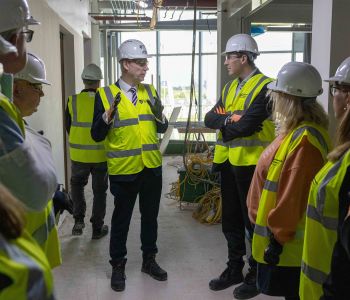
Northumbria's world-leading research showcased to UK's national science funders
The governing body of UK Research and Innovation (UKRI) has visited Northumbria University…
Northumbria University appoints new Deputy Vice-Chancellor and Provost
Northumbria University has announced that Professor Andy Dougill will become its new Deputy…
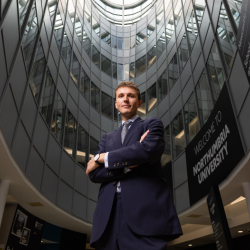
From care leaver to government AI leader: Northumbria graduate's extraordinary journey
A Northumbria University graduate who grew up in the care system in County Durham has been…
Mission Research: UKRI Community Innovation Practitioner Awards Scaled to Empower Place-Based Innovation Across All 4 Nations
The Creative Communities programme, funded by the UKRI Arts and Humanities Research Council…

Northumbria expands results day support for students
Northumbria University is expanding and enhancing the support it provides to students receiving…

Northumbria wins recognition for expanding access to higher education
Northumbria University has been named Higher Education Institution of the Year at a prestigious…
Researchers explore an alarming rise in digital violence against women
An international team of researchers have been awarded over £1 million in funding to explore…

Annual showcase REVEALs next generation of creative and cultural talent
A student showcase which is one of the highlights of the North East’s cultural calendar is…
More events
Upcoming events

IPE Conference 2026
Northumbria University
-

Christmas Market and Tree lighting
Northumbria University
-
Snowball 2026
Northumbria University
-

Northumbria University Carol Service 2026
Newcastle Cathedral
-
Page last updated 25/01/24
